
Methods guides
Methods and materials for paver patio.
The options, and what each one does
Paver Patio is sold as one product and behaves as several. The table separates them by what they are made of and where they fit.
| Option | What it is | Where it fits |
|---|---|---|
| Concrete pavers | Pressed cement | Widest choice, cheapest |
| Clay brick | Fired clay | Colour-fast, higher cost |
| Travertine | Natural stone | Cool underfoot, premium |
| Permeable | Open joints and gravel base | Runoff compliance |
| Flagstone | Irregular stone | Mortared or dry-laid |
How the choice is made
The decision order is the same in every project: diagnose the problem, set the budget, then pick the material. Buyers who start with the material usually re-do the job. A contractor who quotes a method before inspecting the site is guessing.
What we check before recommending a method
- Does the material match the exposure — sun, salt, freeze-thaw, water?
- Is the substrate or structure adequate for it?
- Does the warranty cover the failure mode that actually happens?
- Is the maintenance schedule realistic for the owner?
The cost hub carries the installed ranges, and the comparison hub puts the two closest options side by side.
Which option lasts longest?
It depends on exposure more than on brand. The premium material installed badly fails before the mid-range material installed properly.
Can I change method later?
Sometimes, at a cost. Ask what the removal and disposal line would be before choosing the cheaper option now.
All methods guides
Clay Brick Installation: Sand-Set vs Mortar
Clay brick installation is usually sand-set over a compacted base. See pattern layout, cutting, joint width, compaction, and the mortar-set alternative.
Read the guide →
Concrete Pavers Installation: Step by Step
Concrete pavers installation runs from excavation and compacted base to bedding, laying, cutting, and joint sand. See the sequence, tools, and cost math.
Read the guide →
DIY paver patio: what you can and cannot do
A realistic split of DIY paver patio work by task, with tool costs, a 200 sq ft material budget, and the jobs that should go to an installer.
Read the guide →
Flagstone installation
How flagstone patios are built: excavation, compacted base, bedding, layout and jointing, with the base and drainage work that decides whether stones stay put.
Read the guide →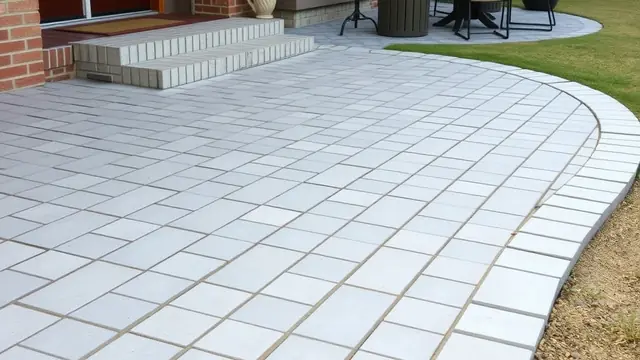
How Long Does Paver Patio Last? 20 to 30 Years
A paver patio lasts 20 to 30 years and often longer. Here is what fails first, how each material compares, and the maintenance that adds years.
Read the guide →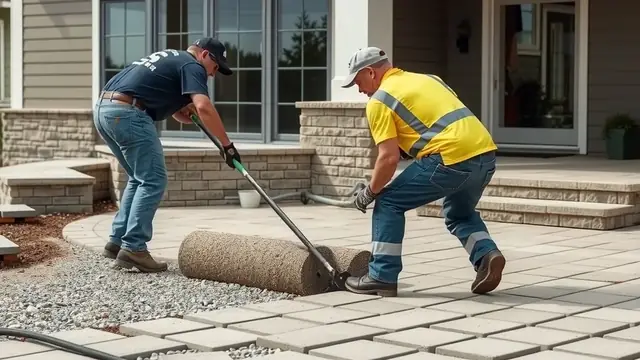
Paver Base Preparation: Depth and Compaction
Paver base preparation means 4 to 6 inches of compacted aggregate, placed in lifts and sloped to drain. See depth by use, gravel type, and compaction steps.
Read the guide →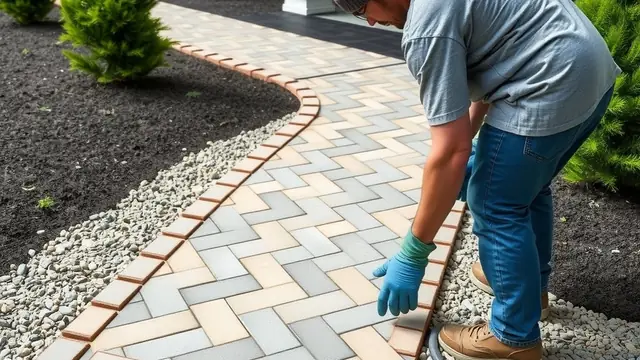
Paver Patio and Walkway Layout Guide
Plan and lay out a paver patio and walkway with proper base prep, slope, edge restraints, and joint sand.
Read the guide →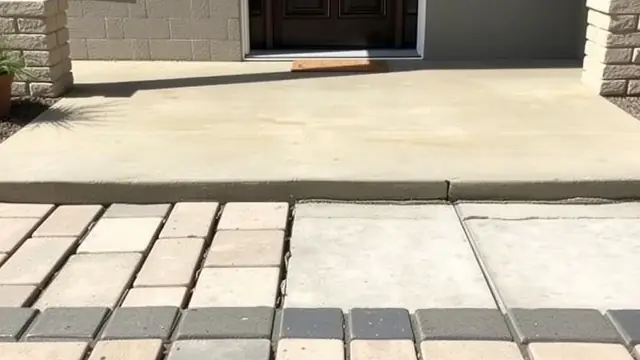
Paver vs Concrete: Cost, Drainage, and Repairs
Pavers cost $8 to $15 per square foot installed and poured concrete $6 to $12. Compare construction, drainage, repairs, and 20-year cost with real arithmetic.
Read the guide →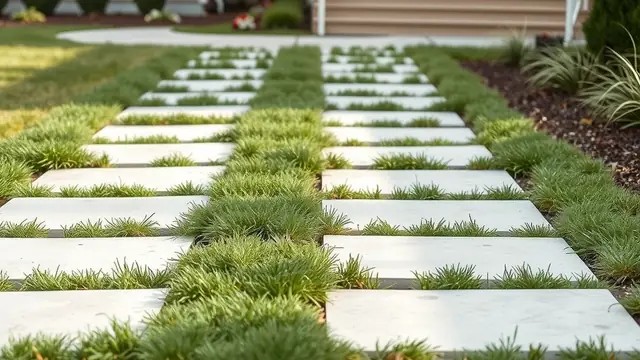
Pavers in Grass Walkway: Options and Costs
Learn how to install pavers in grass for walkways, including stepping stones, grid systems, costs, and base prep tips.
Read the guide →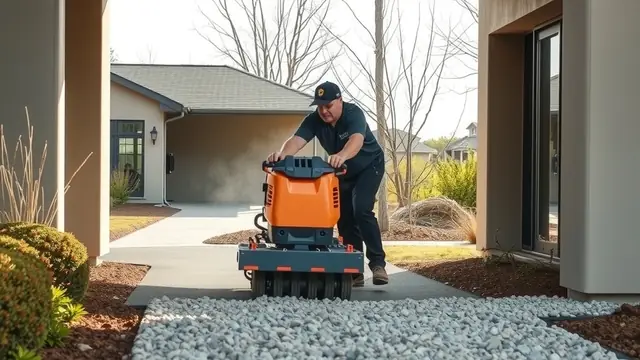
Permeable Installation: Base, Slope, and Storage
Permeable paver installation explained: open-graded base, storage depth, slope, underdrains, edge restraint, and the site checks that decide whether it works.
Read the guide →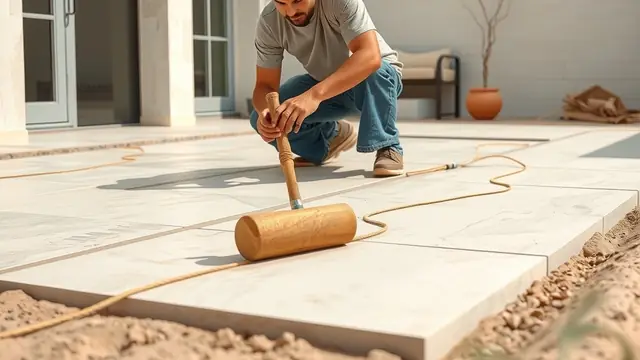
Travertine Installation: Base, Layout, and Setting
Travertine installation: base depth, sand-set versus dry-set, slope, cutting, joints, and sealing, plus the costs and mistakes that decide the result.
Read the guide →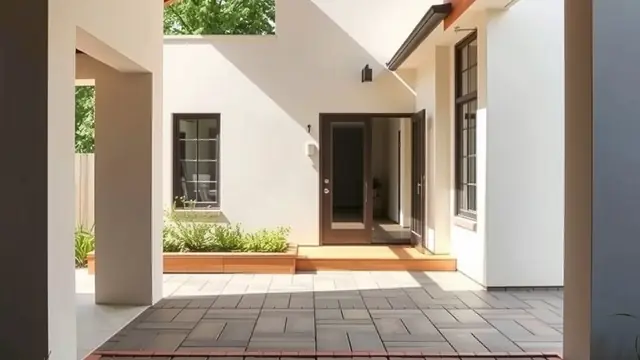
Types of paver patio
Types of paver patio: practical numbers, costs, and trade-offs, written independently.
Read the guide →
Paver Patio Installation: What It Involves
A step-by-step look at paver patio installation, from base prep and material costs to sealing and long-term care.
Read the guide →