DIY paver patio: what you can and cannot do
A realistic split of DIY paver patio work by task, with tool costs, a 200 sq ft material budget, and the jobs that should go to an installer.
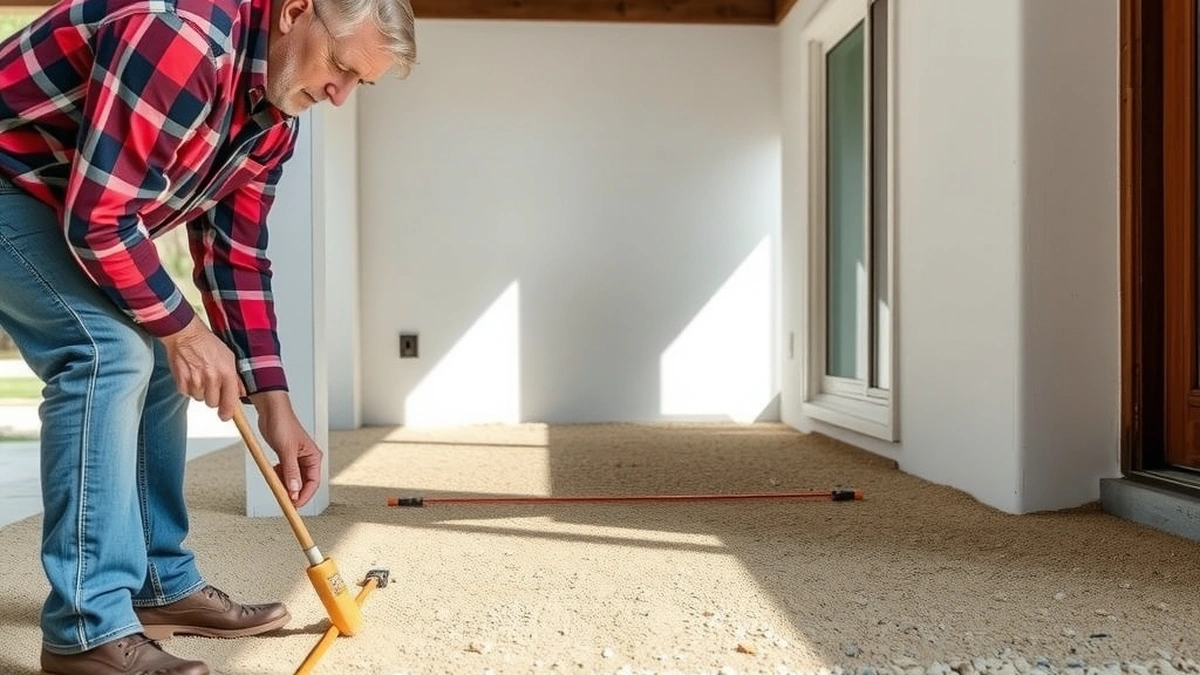
You can dig, base, screed, lay, cut, and sand a flat paver patio up to about 400 square feet yourself. Leave steps, retaining walls, drainage redesign, and anything tight against a basement to an installer.
- Practical DIY size limit
- 200–400 sq ft
- Concrete pavers installed
- $8–$15 per sq ft
- Estimated DIY materials
- $4–$6 per sq ft
- Compactor rental
- $70–$110 per day
Some links on this page are affiliate links.If you buy through them we may earn a commission at no extra cost to you. We do not accept payment for rankings. Read the full disclosure.
You can build a paver patio yourself on a flat, well-draining site up to roughly 400 square feet, provided you rent a plate compactor and a wet saw and you are honest about the excavation. You should not do it yourself when the patio meets the house above a basement, when the subgrade is clay or fill, when the design includes steps or a retaining wall, or when the layout has to satisfy a pool or egress requirement. Everything else is repetitive labor with a few places to get it badly wrong.
What DIY Actually Saves
A DIY paver patio is a patio you excavate, base, and lay yourself, buying the units and aggregate and renting compaction equipment instead of paying an install crew. The saving is the labor line, not the material.
Take a 200-square-foot patio in concrete pavers at $8 to $15 per square foot installed: 200 × $8 = $1,600 and 200 × $15 = $3,000. Materials and rental for the same area typically land near $4 to $6 per square foot — an estimate, since paver choice and local aggregate prices move it. That is $800 to $1,200, so the labor you are replacing is roughly $800 to $1,800. Two weekends and a rental bill eat a meaningful part of that on a small job. The saving gets better as square footage grows, because setup time stops dominating.
The Parts You Can Do
| Task | DIY verdict | What it takes |
|---|---|---|
| Layout and string lines | Yes | Two lines, a level, and patience squaring corners |
| Excavation | Yes, small areas | Shovel, wheelbarrow, somewhere to put the spoil |
| Base spreading and compaction | Yes | Plate compactor, 2-inch lifts, several passes |
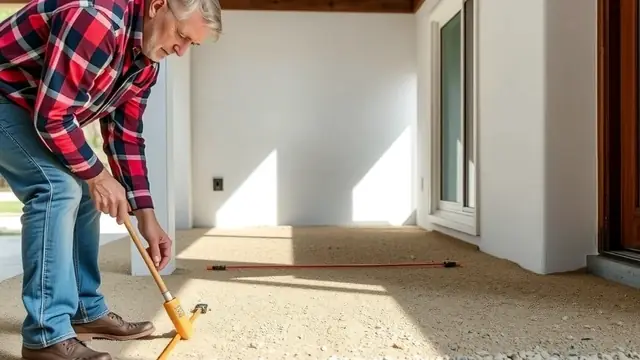
| Bedding sand and screeding | Yes | Steel pipe rails and a straightedge |
| Laying and pattern | Yes | Kneepads and a consistent joint width |
| Cutting borders and curves | Yes, slowly | Rented wet saw with a diamond blade |
| Edge restraint and joint sand | Yes | Spikes, restraint, polymeric or plain sand |
| Steps, walls, grade changes | No | Structural design and code clearance |
| Drainage redesign | Usually no | Falls, inlets, and where water leaves the lot |
The dividing line is structural. A flat field of pavers on a compacted base is a assembly problem. Steps, walls, and anything holding back soil are engineering problems, and a failed retaining wall is a much more expensive mistake than a wavy patio.
Where DIY Jobs Fail
Four failures account for most bad DIY patios. The first is excavation depth: pavers plus one inch of sand plus 4 to 6 inches of compacted base means digging 6 to 8 inches, and homeowners routinely dig 4 and then wonder why the patio sits above the door threshold.
The second is compaction. Base aggregate has to go down in lifts of about 2 inches and be compacted wet enough to lock, with multiple passes per lift. A hand tamper does not reach that density. The third is slope: the surface needs to fall about 1/8 inch per foot away from the house, and a patio that is flat or tipped toward the foundation will pool.
The fourth is the edge. Without an edge restraint spiked into the base, the perimeter pavers creep outward, joints open, and the field loosens from the outside in.
Tools and Rental Costs
You will need a plate compactor (roughly $70 to $110 per day), a masonry saw with water ($60 to $100 per day), a long straightedge or screed, string lines, a 4-foot level, a rubber mallet, and a shovel and wheelbarrow. A hand tamper for tight corners costs about $40 to buy. Add delivery charges if you are having aggregate dropped rather than hauling it.
Do not skip the utility locate. Call 811 before you dig, and mark any private lines — irrigation, landscape lighting, a gas line to a grill — that the public locate service does not cover.
The Order of Work
- Call 811 and mark utilities, then stake the outline and check it against the house for square.
- Excavate to full depth, keeping the subgrade sloped away from the building.
- Spread base aggregate in 2-inch lifts and compact each lift, checking slope with a level as you go.
- Set edge restraint along the perimeter and spike it into the compacted base.
- Screed a one-inch sand bed over screed rails, then lay pavers from a straight reference line.
- Cut the border and any obstructions, sweep joint sand in, compact the field once more, and top up the joints.
That sequence is the whole job. The pieces that separate a patio that lasts 25 years from one that needs paver patio repair in two are all in steps 2 through 4.
A 200 Square Foot Budget
At 200 square feet with concrete pavers at $8 to $15 installed, the professional price is $1,600 to $3,000. A DIY version typically breaks down as pavers at $3 to $6 per square foot, base and bedding aggregate at roughly $1 per square foot, edge restraint and joint sand at a few hundred dollars for the job, and $150 to $250 in rental for a weekend.
Add 5 to 10 percent waste for cuts. That puts a realistic cash budget near $900 to $1,400 for the same patio, plus your time. Compare that against our paver patio cost per square foot breakdown before you decide the saving is worth it.
When to Stop and Hire
Hire when the patio ties into the house above a basement or crawl space, when the site needs more than 8 inches of excavation, when the design has steps, seat walls, or a fire feature with a foundation, when the ground is expansive clay, or when local code requires engineered details for a pool deck.
Hire also when the patio is large. Beyond about 400 square feet the material volume, the cutting, and the number of compaction passes turn into a week of work, and a crew with a skid steer will finish in three days. The installation guide shows what that crew is actually doing, which is useful whether you hire or build. And if you build it yourself, plan on re-sanding joints early and sealing only after the surface has dried out — sealing runs $1 to $3 per square foot hired out, and it will not fix a base that was never compacted.
Frequently asked questions
Can a beginner really lay a paver patio?
Yes, on a flat site with good drainage and a simple running bond pattern. The work is repetitive rather than technical, but the base has to be excavated to depth and compacted in lifts or the surface will move within a season.
How deep do I dig for a paver patio?
Add the paver thickness, one inch of bedding sand, and the compacted base depth. For a patio that means roughly 6 to 8 inches of total excavation, more if the subgrade is soft or the patio needs to meet an existing door threshold.
Do I need a plate compactor or can I hand tamp?
A plate compactor is worth the rental on anything larger than a walkway. Hand tamping rarely reaches the density a base needs, and the difference shows up as ruts and rocking pavers after the first wet winter.
How much does it cost to fix a bad DIY base?
Base repair runs $4 to $8 per square foot because the pavers come up, the aggregate is reworked or replaced, and everything is relaid. On a 300-square-foot patio that is $1,200 to $2,400 before any new material.
Can I cut pavers with a circular saw?
A circular saw with a diamond blade will cut concrete pavers slowly and with a lot of dust. A rented masonry saw with water is faster, cleaner, and produces straighter cuts on border courses and around curves.
Is sealing a DIY job?
It can be. Sealing costs $1 to $3 per square foot when hired out, and the material alone is a fraction of that. The risk is over-application, which leaves a milky film, so apply in thin coats and only on a dry surface.
Sources
Some links are affiliate links.If you buy through them we may earn a commission at no extra cost to you. We do not accept payment for rankings. Read the full disclosure.