Paver Patio Repair: When It Is Worth It
A practical guide to deciding whether to repair or replace a paver patio, with cost ranges and base-prep priorities.
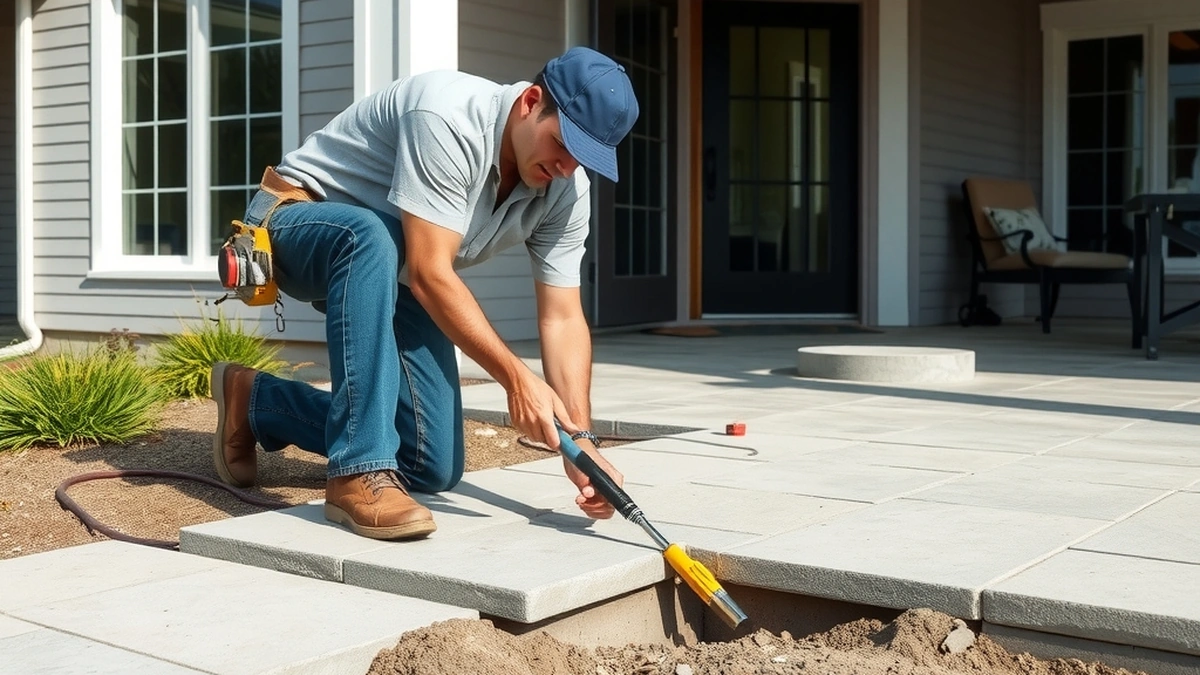
Repair is worth it when damage is localized and the base is sound; full replacement makes more sense when settlement, drainage failure, or widespread cracking affects more than about one-third of the patio.
- Typical repair scope
- Resetting loose pavers, replacing cracked units, re-sanding joints, spot base repair
- Concrete pavers
- $8–$15 per sq ft
- Brick pavers
- $10–$20 per sq ft
- Travertine pavers
- $15–$30 per sq ft
- Permeable pavers
- $12–$25 per sq ft
Some links on this page are affiliate links.If you buy through them we may earn a commission at no extra cost to you. We do not accept payment for rankings. Read the full disclosure.
Paver patio repair is worth it when the damage is isolated and the base underneath is still stable. If only a few pavers are cracked, loose, or uneven, resetting those units and refreshing the joint sand usually costs far less than tearing out the whole patio. When settlement, poor drainage, or base failure has spread across most of the surface, replacement is the better investment.
Signs Your Paver Patio Needs Attention
Not every crack or uneven paver means the patio is failing. Start by walking the surface and noting where problems appear.
Common warning signs include:
- Individual pavers that rock or shift underfoot
- Cracked or chipped paver units
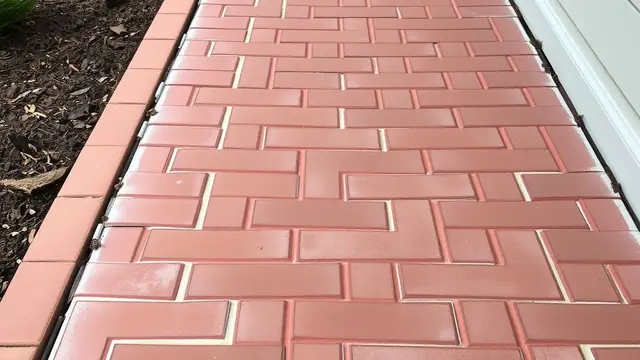
- Gaps opening between pavers where joint sand has washed out
- Low spots that hold water after rain
- Edges that have crept away from the border restraint
A single rocking paver is often just a bedding-sand issue. Several low spots in one corner may point to a local base washout. Widespread tilting across the entire patio usually means the base was never compacted properly or water has been undermining it for years.
Repair Versus Replacement: The One-Third Rule
Paver Lab uses a simple guideline: if damage affects roughly one-third or less of the patio area, repair is usually worth it. Beyond that, the labor and material costs of patching start to approach the price of a new installation, and you still inherit the old base.
Here is how the math can look for a 200-square-foot patio.
Concrete pavers at $8 to $15 per sq ft:
- Low end: 200 sq ft × $8 = $1,600
- High end: 200 sq ft × $15 = $3,000
Brick pavers at $10 to $20 per sq ft:
- Low end: 200 sq ft × $10 = $2,000
- High end: 200 sq ft × $20 = $4,000
Travertine pavers at $15 to $30 per sq ft:
- Low end: 200 sq ft × $15 = $3,000
- High end: 200 sq ft × $30 = $6,000
Permeable pavers at $12 to $25 per sq ft:
- Low end: 200 sq ft × $12 = $2,400
- High end: 200 sq ft × $25 = $5,000
If only 40 square feet need attention, that is 20 percent of the patio. Even at the high end for travertine, the material cost for that section is roughly $1,200, plus base repair if needed. Full replacement of the same 200-square-foot travertine patio could run $3,000 to $6,000 before base work.
Base repair adds $4 to $8 per sq ft wherever the existing base must be excavated and recompacted. For 40 square feet, that is $160 to $320. For the full 200 square feet, it is $800 to $1,600. Those numbers explain why spot repairs make financial sense only when the base is sound outside the damaged zone.
What a Repair Actually Involves
Paver patio repair usually follows these steps:
- Remove the affected pavers and set them aside if they are still usable.
- Excavate the base material under the damaged area only if it is soft, washed out, or improperly sloped.
- Add and compact new base material in thin layers, matching the depth and slope of the surrounding patio.
- Set a bedding layer, typically coarse sand, and screed it level.
- Reset the original pavers or install matching replacements.
- Compact the surface gently with a plate compactor using a pad to avoid chipping the pavers.
- Sweep joint sand into the gaps and compact again until the joints are full.
If the pavers are older, finding an exact color match can be difficult. Weathering changes the appearance of concrete, brick, and natural stone. In some cases, it is better to replace pavers in a visible section rather than insert one new unit among faded old ones.
Paver Type and Repair Cost
The type of paver affects both material cost and how easy the patio is to repair.
Concrete pavers are the most common and generally the most affordable, at $8 to $15 per sq ft. They are uniform, which makes replacement straightforward.
Brick pavers cost $10 to $20 per sq ft. They can be more brittle than concrete, and older brick may be hard to match.
Travertine costs $15 to $30 per sq ft. It is a natural stone, so color and thickness vary. Repairing travertine often means sourcing from the same lot or accepting a visible patch.
Permeable pavers run $12 to $25 per sq ft. These require open-graded base materials and careful joint filling to maintain drainage. A repair that clogs the joints defeats the purpose of the system.
Sealing is a separate maintenance step, not a structural repair. It costs roughly $1 to $3 per sq ft and can help protect the surface from stains and joint-sand loss, but it will not fix a sinking paver or correct drainage.
When Repair Is Not Worth It
There are clear situations where repair is only a short-term delay of replacement.
If the patio slopes toward the house foundation, water is likely collecting where it should not. Resetting a few pavers will not change the overall grade. The base must be excavated and regraded so water runs away from the structure.
If more than one-third of the pavers are uneven, the base has likely failed across the whole area. Patching one section after another becomes a cycle of recurring costs.
If the edge restraints have failed and pavers are spreading outward, the entire perimeter needs attention. Edge restraints keep the interlocking system tight; without them, pavers shift under normal foot traffic.
If the patio was installed without a proper compacted base, no amount of surface repair will make it stable. In that case, removal and full reinstallation following proper base preparation is the only lasting fix.
Base Preparation Comes First
At Paver Lab, our guiding principle is base preparation first, surface second. A paver patio is only as stable as what lies beneath it. The pavers themselves are the wear surface; the base carries the load and manages water.
Before approving any repair, check the base depth and compaction. Walk the patio after a heavy rain. Water should drain off the surface within a reasonable time, not pond for hours. If ponding is localized, spot base repair may solve it. If the whole patio holds water, the base or grading is the problem, not the pavers.
For more on what goes into a new installation, see our paver patio installation guide. For ongoing care after a repair, review our paver patio maintenance recommendations.
Deciding Based on Age and Plans
A patio’s age matters less than its condition, but it still factors into the decision. A ten-year-old patio with a solid base and a few cracked pavers is a strong repair candidate. A twenty-year-old patio with thin, worn pavers and a crumbling base may be near the end of its useful life, even if the damage currently looks small.
Also consider how long you plan to stay in the home. If you are selling soon, a full replacement may not return its full cost at resale, but a neat, safe repair can remove a red flag from a home inspection. If you plan to stay for years, fixing the base properly now prevents repeated surface repairs later.
For context on long-term expectations, see how long a paver patio lasts. For a broader cost comparison, read paver patio vs concrete patio.
Get a Clear Estimate Before Committing
Ask any contractor to separate surface repair from base repair in the estimate. Surface work includes resetting pavers and replacing joint sand. Base work includes excavation, new aggregate, and compaction. If a quote bundles them together, you cannot tell whether you are paying for a necessary structural fix or cosmetic patching.
Measure the damaged area yourself so you can verify the square footage in the estimate. A 10-foot by 10-foot section is 100 square feet. At $4 to $8 per sq ft for base repair, that section would cost $400 to $800 if the base must be redone. Add paver material and labor, and the total becomes easier to compare against full replacement.
Repair is worth it when the problem is small, the base is sound, and the cost is a fraction of replacement. When the base has failed or the damage is widespread, replacement is the honest choice.
Next, compare how much does paver patio cost, paver patio installation, paver patio maintenance before you commit.
Frequently asked questions
When should I repair instead of replace?
Repair is worthwhile when the damage is limited to a few sunken or cracked pavers and the underlying base remains stable and well-drained.
How much does paver patio repair cost?
Costs vary by paver type and the extent of base work; expect material ranges from $8 to $30 per sq ft, plus $4 to $8 per sq ft for base repair when needed.
Can I reset one loose paver myself?
Yes. A single loose paver usually means joint sand loss or a minor bedding issue, which a homeowner can often fix with basic tools and replacement sand.
Does sealing prevent paver damage?
Sealing helps protect the surface and joints, costing roughly $1 to $3 per sq ft, but it will not fix a failing base or correct drainage problems.
How long does a paver patio last?
A properly built paver patio can last decades, though individual pavers may need resetting or replacement over time as the base settles.
What if my patio slopes toward the house?
That indicates a drainage or base problem that usually requires excavation and regrading; spot repairs alone will not correct the slope.
Sources
Some links are affiliate links.If you buy through them we may earn a commission at no extra cost to you. We do not accept payment for rankings. Read the full disclosure.