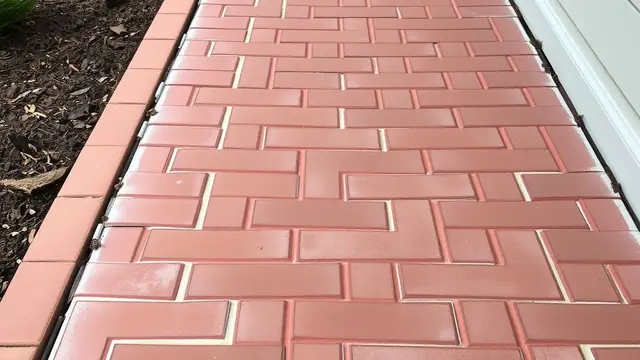
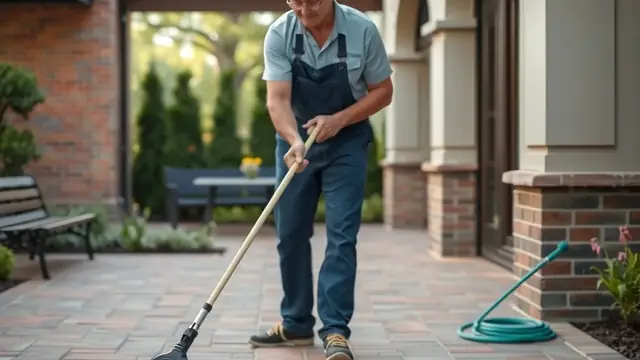
Clay Brick Maintenance: A Practical Schedule
Clay brick maintenance by season: cleaning, joint sand, sealing decisions, and the repairs worth scheduling, with costs per square foot and a yearly checklist.
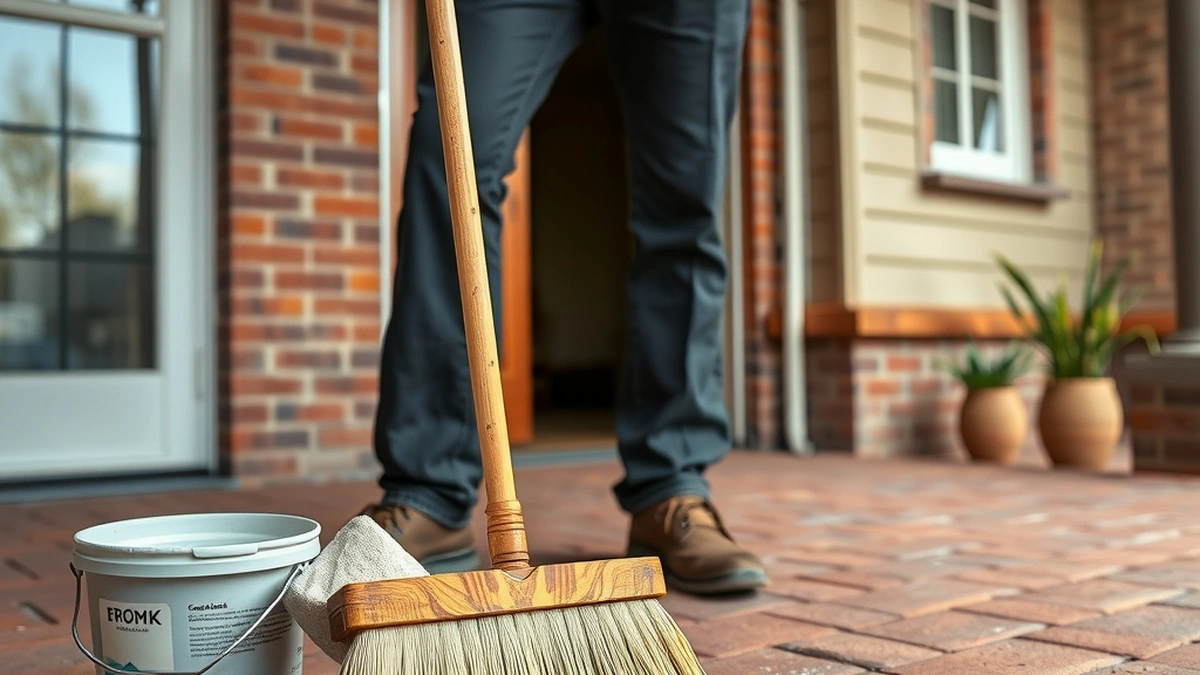
Clay brick maintenance is four tasks: sweep and rinse, refill joint sand, clean stains, and reseal only when needed. Budget $1 to $3 per square foot for sealing and $4 to $8 for base repair if a section settles.
- Weekly effort
- Sweep and spot clean
- Annual task
- Refill joint sand
- Sealing rate
- $1–$3 per sq ft
- Sealing interval
- 3–5 years, if at all
- Base repair
- $4–$8 per sq ft
Some links on this page are affiliate links.If you buy through them we may earn a commission at no extra cost to you. We do not accept payment for rankings. Read the full disclosure.
Clay brick maintenance is mostly water management with a broom. Sweep regularly, rinse a few times a year, keep the joints full of sand, and deal with stains before they set. Sealing is optional and often oversold; the tasks that actually extend a brick patio’s life cost time rather than money.
What Clay Brick Maintenance Actually Involves
Clay brick maintenance is the routine care that keeps a fired clay paver field stable, draining, and free of staining — sweeping, washing, refilling joints, controlling growth, and repairing base movement when it appears.
It is worth being clear about what maintenance cannot do. It cannot restore a base that was never compacted, and it cannot undo spalling. What it does is slow the two failure paths that brick is prone to: water sitting in joints and water sitting against the brick face.
Most of the annual cost is optional. Joint sand for a 200-square-foot patio runs roughly $40 to $80 in material. Sealing, if you choose it, adds $200 to $600 at $1 to $3 per square foot. Base repair, if it is needed, is the expensive line at $4 to $8 per square foot.
The Year at a Glance
| Season | Task | Why it matters |
|---|---|---|
| Spring | Deep clean, inspect joints, refill sand | Removes winter growth before traffic season |
| Late spring | Seal, if the surface is due | Needs 48 hours of dry weather and 50°F or above |
| Summer | Spot clean spills, pull weeds | Stains set faster in heat |
| Fall | Clear leaves, check drainage paths | Wet leaf litter stains and holds moisture |
| Late fall | Confirm slope away from the building | Prevents freeze damage at the edges |
| Winter | Avoid rock salt, use sand for grip | Salt draws moisture into the brick face |
Cleaning Without Damaging the Face
Dry debris first. A stiff broom or a leaf blower removes grit that would otherwise be ground into the surface. Then rinse with a hose at household pressure.
For general grime, a pH-neutral cleaner or a diluted oxygen-based detergent works on clay brick. Mix according to the label, apply with a soft brush or a low-pressure sprayer, let it dwell for the recommended time, and rinse thoroughly. Work in sections so the cleaner does not dry on the surface.
Avoid three things: muriatic acid on anything but a stubborn mineral stain, aggressive pressure washing, and wire brushes. Each removes a little of the fired skin, and the brick never gets it back. Algae and moss respond to the same oxygen-based treatment plus better airflow and light.
Sealing: When It Helps and When It Does Not
A penetrating sealer soaks into the clay and lines the pores, so water beads instead of soaking in. It slows staining and reduces joint sand loss. It does not make the patio waterproof and it does not stop efflorescence permanently.
A film-forming sealer sits on top and can look glossy for a season. On brick in a freeze-thaw climate, that film is a liability: it traps moisture in the unit, and trapped moisture is what spalls brick.
The test is simple. Drip water onto the surface. If it beads and sits, the sealer is still working. If it darkens the brick and disappears within a minute, it is time to reseal — typically every three to five years. Application needs 48 hours without rain and temperatures above 50°F. Our paver sealing cost guide breaks down the per-square-foot math.
Joint Sand, Weeds, and Growth
Joint sand is the locking mechanism. When it drops below the chamfer, brick loses its lateral grip, water runs straight into the base, and weeds move in.
Refill once a year, and again after any pressure washing or heavy rain event that visibly scours the joints. Spread kiln-dried sand over the dry surface, sweep it into the joints, and compact with a plate compactor fitted with a rubber pad. Top up a second time if the sand settles.
Polymeric sand costs more and holds up better on slopes and near pools, but it needs to be installed dry and activated with a light mist. Do not use it on a patio that drains poorly — it will fail along with the drainage.
Repairs Worth Scheduling
Some repairs are annual, some are one-time. Sorting them avoids paying for work that is not due:
- Joint top-up: every year, cheap, DIY.
- Weed and moss control: spring and fall, cheap, DIY.
- Sealing: every three to five years if used at all.
- Edge restraint check: annually. A loose restraint lets the field spread, and spreading opens joints.
- Base repair: as needed. Rocking pavers, puddles, and cracks that follow a line of units all point here.
Base repair is the one line item that should never be deferred. A 100-square-foot failed section at $4 to $8 per square foot is $400 to $800. Left alone for two seasons, the failure spreads and the same repair covers twice the area. See clay brick problems for the symptoms that justify opening the surface.
A Year of Maintenance in Six Steps
- Sweep weekly during growing season. Ten minutes with a stiff broom keeps grit, seeds, and leaf litter out of the joints.
- Deep clean in spring. Oxygen-based cleaner, soft brush, thorough rinse, dry weather.
- Inspect and refill joints before summer. Sand should sit 1/8 inch below the chamfer across the whole field.
- Test the sealer in late spring. Water beading means skip the year; water soaking in means reseal.
- Clear the drainage path in fall. Leaves block the slope, and blocked slope means standing water at the edge.
- Walk the perimeter after the first freeze. Any paver that rocks or any joint that has opened gets fixed before spring thaw.
Two of those steps are free, two cost under $100 in material, and one — sealing — is optional. That is the whole maintenance program. The paver patio maintenance schedule covers the same calendar for other paver types.
Frequently asked questions
How often should clay brick pavers be cleaned?
Sweep weekly and rinse the surface two or three times a year. A deeper clean with a pH-neutral or oxygen-based cleaner handles algae, moss, and grime once a year, ideally in spring before the traffic season starts.
Do clay brick pavers need sealing every year?
No. A penetrating sealer typically lasts three to five years on a patio. Test by dripping water on the surface: if it soaks in within a minute instead of beading, the sealer has worn through.
How do I stop weeds growing between brick pavers?
Keep the joints full. Weeds establish in joints that have lost sand. Refill with kiln-dried sand or polymeric sand, compact it lightly, and pull any growth before it seeds.
What is the best way to remove efflorescence from brick?
Start with a dry stiff brush and wait for a dry spell. If it persists, use a proprietary efflorescence remover rather than muriatic acid, which can etch the brick face and open the pores further.
Can I use a pressure washer on a brick patio?
Yes, at low pressure with a wide fan tip and the nozzle kept moving. High pressure strips joint sand, damages the fired face, and drives water into the brick, which leads to spalling in freezing weather.
How much does it cost to maintain a brick patio each year?
Routine care is mostly labor. Joint sand for a 200-square-foot patio costs about $40 to $80, a sealer application runs $200 to $600, and occasional base repair runs $4 to $8 per square foot.
Sources
Some links are affiliate links.If you buy through them we may earn a commission at no extra cost to you. We do not accept payment for rankings. Read the full disclosure.