Concrete Pavers Problems and How to Fix Them
The real concrete pavers problems are settlement, joint sand loss, efflorescence, chips, weeds, and edge spread. Causes, fixes, and per-square-foot costs.
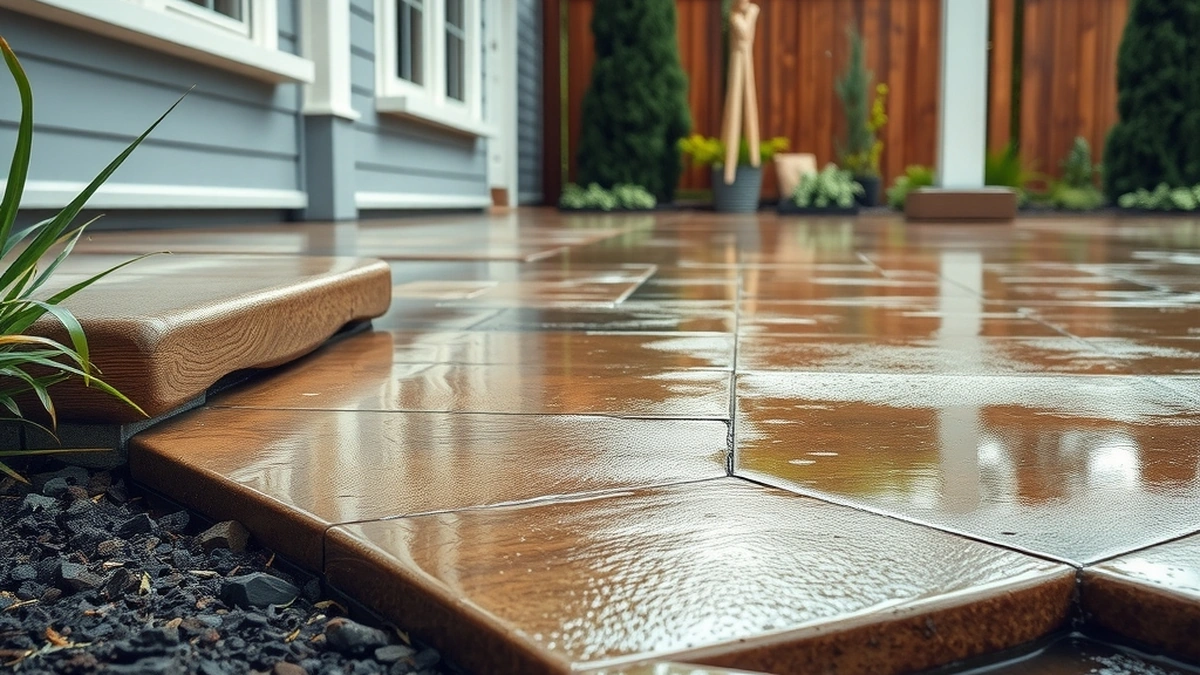
Most concrete pavers problems come from water and the base, not the units: settlement, joint sand loss, weeds, efflorescence, and edge spread. Fixes run from $1 to $3 per square foot for joint sand and sealing to $4 to $8 per square foot when the base has to be rebuilt.
- Most common problem
- Settlement and joint sand loss
- Reset and re-sand
- $2 - $5 per sq ft
- Base repair
- $4 - $8 per sq ft
- Sealing
- $1 - $3 per sq ft
- Full replacement
- $8 - $15 per sq ft
Some links on this page are affiliate links.If you buy through them we may earn a commission at no extra cost to you. We do not accept payment for rankings. Read the full disclosure.
Concrete pavers problems look like surface faults and are usually base faults. Settlement, joint sand loss, weeds, efflorescence, edge spread, and staining all trace back to water moving where it should not, or to a base that was never compacted properly. The units themselves are the most durable part of the system and the least likely cause.
The Six Problems That Actually Happen
Concrete pavers are molded units of cement, aggregate, and pigment, laid on bedding sand over compacted aggregate. The units resist weather and traffic well. What fails is the support beneath them, the sand between them, or the restraint at the edge.
| Problem | Usual cause | Typical fix |
|---|---|---|
| Sunken or rocking units | Loose base, washed fines | Lift, rebuild base, reset |
| Open joints and weeds | Sand loss | Refill joints, compact |
| White bloom | Efflorescence | Dry brush, wait, then seal |
| Chipped corners | Point loads, poor cuts | Replace units |
| Faded color | Surface pigment weathering | Clean, seal |
| Edge spread | Restraint failure | Re-pin or replace restraint |
Each one has a different price and a different urgency. Settlement left alone gets worse. Efflorescence usually gets better on its own.
Settlement and Rocking
Settlement is the movement of a paver or a group of pavers downward, leaving a low spot or a unit that rocks when stepped on. It is the most common complaint and the most misdiagnosed.
Three causes cover most cases:
- Under-compacted base. Aggregate placed in thick lifts traps loose material at depth. It consolidates under the first wet season.
- Water in the subgrade. A downspout, a slope toward the patio, or a failed joint sends water into the base, where it washes fines downward and leaves voids.
- Traffic the surface was not built for. A 60 mm paver on a driveway, or a base sized for foot traffic under a vehicle, deflects and settles.
A single rocking unit is often a bedding issue and can be reset in an hour. A dish-shaped depression across several square feet means the base is involved, and the fix runs $4 to $8 per square foot. The settling repair guide covers diagnosis and method.
Joint Sand Loss and Weeds
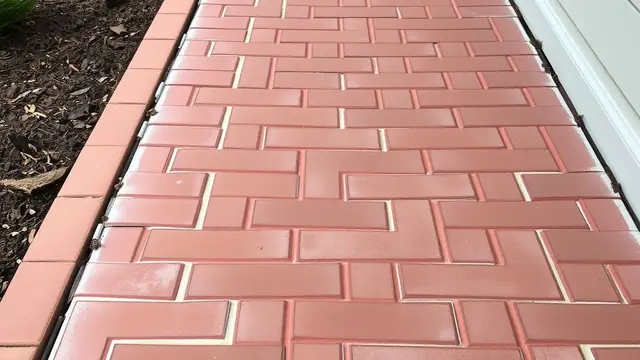
Joint sand is what locks the field. When it washes out, pavers lose lateral support, joints open, and seed finds a place to grow.
Sand leaves for predictable reasons: rain running across the surface, a hose or sprinkler aimed at the patio, sweeping too aggressively, and never topping up after installation. New patios lose sand for the first season as the joints settle, which is why a top-up is normally needed after the first year.
Refilling joints is inexpensive at $1 to $3 per square foot, or $300 to $900 on 300 square feet. Polymeric sand costs more and lasts longer in wet climates. Weeding by hand is a symptom treatment; filling the joint is the fix.
Efflorescence
Efflorescence is the white mineral bloom that appears on concrete and clay pavers. Soluble salts move to the surface with moisture and crystallize as the water evaporates.
It is cosmetic. It does not damage the unit, and on a new patio it usually fades within a season or two as the available salts are used up. A dry brush removes the visible bloom. Acidic cleaners can remove it faster but etch the surface if misused, and sealing while efflorescence is active traps the salt under the film and makes the problem worse.
Persistent efflorescence points to a moisture source: irrigation hitting the patio, poor drainage beneath it, or a base that stays wet. Fix the water and the bloom stops returning. The efflorescence guide covers cleaning products and cost.
Cracks, Chips, and Point Loads
Concrete pavers are strong in compression and brittle at the corners. Chips come from three places: a dropped object, a vehicle turning on the surface, or a bad cut during installation.
Cracks through a unit usually mean a point load over a void. The paver bridged a gap in the bedding, took the load, and snapped. Replacing the unit is straightforward; replacing it without correcting the void under it guarantees a repeat.
Matching the replacement is the practical difficulty. Concrete pavers vary by production run, and a unit bought today may be a slightly different shade from one installed five years ago. Keep spares from the original order if you have them, and if you do not, consider rotating a unit from under a step or a planter into the visible field.
Color Fade and Staining
Some color change is normal in the first year as surface pigment weathers and the units cure. After that, fade is slow and largely uniform.
Staining is different. Rust from patio furniture, oil from a grill, tannin from leaves, and fertilizer all leave marks. A penetrating sealer at $1 to $3 per square foot slows absorption and buys time to clean a spill. It does not make the surface waterproof.
Clean before sealing, never after. Sealing over dirt or over efflorescence locks the problem in.
Edge Spread and Restraint Failure
Pavers creep outward. Every load applied to the field pushes units toward the perimeter, and only the edge restraint resists it.
When restraint is missing, poorly pinned, or has rusted through, the outer row moves first and the joints behind it open in a wave. The surface looks like it is unzipping from the edge inward.
The fix is to expose the restraint, remove the failed section, and pin new restraint into compacted base rather than soil. If the field has already spread, the affected rows have to be re-laid tight before new restraint goes down.
Cost of Each Fix
| Fix | Rate | On 300 sq ft |
|---|---|---|
| Joint sand refill | $1 - $3 per sq ft | $300 - $900 |
| Sealing | $1 - $3 per sq ft | $300 - $900 |
| Reset and re-sand | $2 - $5 per sq ft | $600 - $1,500 |
| Base repair | $4 - $8 per sq ft | $1,200 - $2,400 |
| Full replacement | $8 - $15 per sq ft | $2,400 - $4,500 |
The pattern in that table is the argument for fixing causes rather than symptoms. Base repair at $1,200 to $2,400 on 300 square feet is half the price of replacement, but only if the rest of the base is sound.
Diagnosing Before You Repair
- Walk the surface after rain and mark every low spot that still holds water the next morning.
- Lift one suspect paver and look at the bedding. Loose sand means a reset; wet or missing aggregate means base work.
- Check the slope with a 4-foot level, aiming for about 1 inch of fall per 4 feet away from the house.
- Look at the edge. Any gap between the outer row and the restraint is an edge problem.
- Check the downspouts and irrigation. Water aimed at the patio explains most recurring settlement.
- Photograph the damage with a tape measure in frame so quotes cover the same area.
For prevention after a repair, see concrete pavers maintenance. For costs at each repair scope, see paver repair cost, and for what a correct base looks like before anything is laid, paver base preparation.
Frequently asked questions
Why are my concrete pavers sinking?
Usually because the base was not compacted in lifts, or water is reaching the subgrade and washing fines away. Both let units settle into voids that never close.
What causes white powder on concrete pavers?
Efflorescence: soluble salts migrating to the surface as moisture evaporates. It is cosmetic, it clears with time and a dry brush, and sealing while it is active can trap it.
Why do weeds grow between pavers?
Joint sand has washed or blown out, leaving a gap that catches seed and holds moisture. Refilling joints and keeping them full removes the growing medium.
Can cracked concrete pavers be repaired?
Individual cracked units can be lifted and replaced, but the cause matters. If the crack came from a point load, one unit will do. If it came from base movement, more will follow.
Are concrete pavers supposed to fade?
Some color change in the first year is normal as surface pigment weathers. Ongoing fade over decades is slow. Sealing at $1 to $3 per square foot slows it but does not stop it.
Why are my pavers spreading at the edge?
The edge restraint has failed or was never pinned into compacted base. Pavers creep outward under traffic, opening joints across the field behind them.
Sources
Some links are affiliate links.If you buy through them we may earn a commission at no extra cost to you. We do not accept payment for rankings. Read the full disclosure.