Paver Repair Cost: What Each Fix Runs
Paver repair costs $2 to $5 per square foot for resetting and joint sand, plus $4 to $8 where the base failed. Line-item estimates and replacement math.
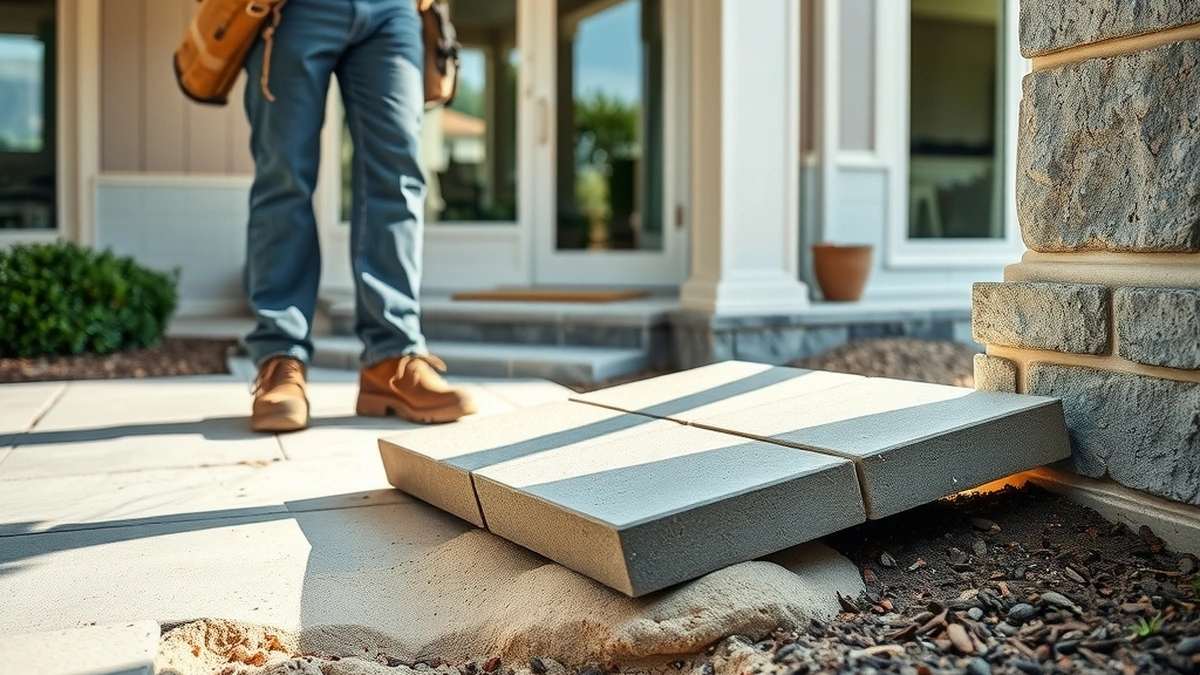
Paver repair cost runs about $2 to $5 per square foot to reset units and refresh joints, plus $4 to $8 per square foot wherever the base has failed. A 40-square-foot spot repair usually lands between $240 and $520, against $8 to $15 per square foot installed.
- Reset and re-sand
- $2 - $5 per sq ft
- Base repair
- $4 - $8 per sq ft
- Sealing after repair
- $1 - $3 per sq ft
- Full replacement, concrete
- $8 - $15 per sq ft
Some links on this page are affiliate links.If you buy through them we may earn a commission at no extra cost to you. We do not accept payment for rankings. Read the full disclosure.
Paver repair cost runs about $2 to $5 per square foot to reset loose units and refill joints, then jumps to $4 to $8 per square foot wherever the base has failed. A 40-square-foot spot repair typically lands between $240 and $520. Full replacement of the same concrete paver surface would run $8 to $15 per square foot, so the decision usually turns on how much of the base is bad.
What Counts as a Repair
Paver repair is the work of restoring a surface that is still structurally usable: lifting and resetting units, replacing broken ones, refilling joints with sand, and rebuilding base material only in the area that has failed.
Resetting ten pavers is a morning of labor. Rebuilding the base under those same ten pavers means cutting out the surface, excavating six inches of aggregate, hauling new material, and compacting it in lifts.
| Repair scope | Billed per | Estimate |
|---|---|---|
| Reset loose pavers, no base work | square foot | $2 - $5 |
| Joint sand refresh | square foot | $1 - $3 |
| Spot base repair | square foot | $4 - $8 |
| Base repair across a whole patio | square foot | $4 - $8 |
| Sealing after repair | square foot | $1 - $3 |
| Full replacement, concrete pavers | square foot | $8 - $15 |
Those figures are planning estimates for US residential work, not quotes.
The Arithmetic on a Small Repair
Take a 40-square-foot section of a concrete paver patio that has settled by the back step. The pavers are intact, but the base under them has washed out.
- Base repair: 40 sq ft × $4 = $160, or 40 sq ft × $8 = $320.
- Reset and re-sand: 40 sq ft × $2 = $80, or 40 sq ft × $5 = $200.
- Total: $240 at the low end, $520 at the high end.
Compare that with replacing the same 40 square feet at $8 to $15 per square foot: $320 to $600, before any base correction. The gap is real but narrower than most homeowners expect, because the base work is common to both. What repair saves is the paver material and its disposal.
Why the Base Decides the Bill
The pavers are the wear course. The base carries the load and moves the water, and almost every expensive repair traces back to it. A 300-square-foot patio sitting on a properly compacted six-inch base is a candidate for spot work. The same patio on four inches of loose gravel is a candidate for a rebuild.
For scale, base repair across 300 square feet runs 300 × $4 = $1,200 to 300 × $8 = $2,400. Concrete paver replacement on the same area runs 300 × $8 = $2,400 to 300 × $15 = $4,500. When the base number approaches the replacement number, replacing is the more honest purchase because it delivers a new surface as well as a new base.
Repair or Replace: The One-Third Rule
Paver Lab uses a simple threshold: if the damage covers roughly one-third of the surface or less, and the base is sound outside that zone, repair is worth pricing. Beyond one-third, the patching cost climbs toward replacement and you still inherit the original base.
| Surface | Repair at 40 sq ft | Replace at 300 sq ft |
|---|---|---|
| Concrete pavers | $240 - $520 | $2,400 - $4,500 |
| Brick pavers | $190 - $450 | $3,000 - $6,000 |
| Travertine pavers | $300 - $650 | $4,500 - $9,000 |
The brick and travertine repair columns use the same $2 to $5 resetting rate plus $4 to $8 base work, with a small allowance for the care natural stone and old brick require. Their replacement columns use 300 × $10 to $20 and 300 × $15 to $30.
Paver Type Changes the Material Side
Concrete pavers cost $8 to $15 per square foot installed, brick pavers $10 to $20, travertine $15 to $30, and permeable pavers $12 to $25. Repair labor is similar across all four. The difference is what a matching unit costs and how hard it is to find one.
Concrete is molded to consistent dimensions, so a replacement from the same mold drops in cleanly. Clay brick varies by plant and firing, and a ten-year-old brick may no longer be in production. Travertine is a natural stone, so color and thickness vary between lots and even within a pallet. On older surfaces, the usual fix is to move pavers from a hidden area into the visible one.
Permeable pavers add a constraint: the joints and the open-graded base are part of the drainage system. A repair that fills those joints with ordinary sand or compacts the base closed defeats the surface. Expect the top of the $12 to $25 range when the repair has to preserve infiltration.
Joint Sand and Sealing Are Maintenance
Joint sand is the least expensive thing on the list and the most often deferred. Polymeric or washed sand swept into the joints at $1 to $3 per square foot keeps units from shifting and slows water entry. On 300 square feet that is $300 to $900, which is why many homeowners treat it as a seasonal task rather than a repair.
Sealing sits in the same bracket at $1 to $3 per square foot. It slows staining and reduces sand loss, and it is worth doing after a repair once the surface has dried. It does not correct a low spot, lift a settled unit, or fix a slope.
Both are covered in more detail in the paver sealing cost guide and the paver patio maintenance schedule.
How to Scope a Repair Before You Call
- Measure the damaged area. A 10-foot by 10-foot section is 100 square feet; write the number down.
- Walk the surface after rain and mark every low spot that holds water for more than a few hours.
- Check the edges. Pavers creeping away from the restraint mean the perimeter needs work, not just the field.
- Test a suspect paver by lifting it. Loose sand under a unit is a reset; soft, wet, or missing aggregate is base work.
- Separate the quote into surface work and base work so you can compare it against the numbers above.
- Ask what happens to the removed pavers. Reusable units should be stacked, not hauled away.
A quote that bundles everything into one line hides exactly the figure that decides whether repair makes sense. The paver patio repair guide covers the same decision from the condition side, and paver base preparation explains what a correct base looks like before anything is laid on it.
Reading the Final Number
Expect the invoice to land above the per-square-foot estimate on small jobs. Mobilization, disposal, and a two-person crew minimum usually add $150 to $350, which is the cost of getting equipment to a site for half a day.
The useful comparison is not repair versus replacement in the abstract. It is the repair quote against a replacement quote for the same square footage, both in writing and both naming the base depth. When the base is sound, repair wins on cost. When it is not, the money spent patching is a down payment on the job you will do later.
Frequently asked questions
How much does paver repair cost per square foot?
Resetting units and refilling joints typically runs $2 to $5 per square foot. Where the base has failed, add $4 to $8 per square foot for excavation, new aggregate, and compaction.
Is it cheaper to repair or replace a paver patio?
Repair is cheaper when damage covers roughly one-third or less of the surface and the base is sound elsewhere. Past that point, patching costs approach replacement without fixing the rest of the base.
Why is base repair more expensive than resetting pavers?
Base work means removing the surface, excavating failed aggregate, bringing in new material in lifts, and compacting each lift. That is machine and labor time the pavers themselves do not require.
How much does it cost to fix one sunken paver?
A single unit is usually a minimum-charge job, often $150 to $350 once a crew mobilizes, because the work itself takes under an hour. Doing it yourself costs a bag of sand.
Does sealing count as a repair?
No. Sealing at $1 to $3 per square foot protects the surface and slows joint sand loss, but it will not lift a settled paver or correct a slope that drains toward the house.
Can I repair pavers myself?
Loose units, washed-out joints, and one or two cracked pavers are reasonable DIY work with a pry bar, sand, and a plate compactor. Base failure and grade problems are not.
Sources
Some links are affiliate links.If you buy through them we may earn a commission at no extra cost to you. We do not accept payment for rankings. Read the full disclosure.