Brick Paver Cost: New, Reclaimed, Installed
Brick pavers cost $10 to $20 per square foot installed. Compare new and reclaimed brick, unit prices, pattern waste, and totals for 200 to 600 sq ft.
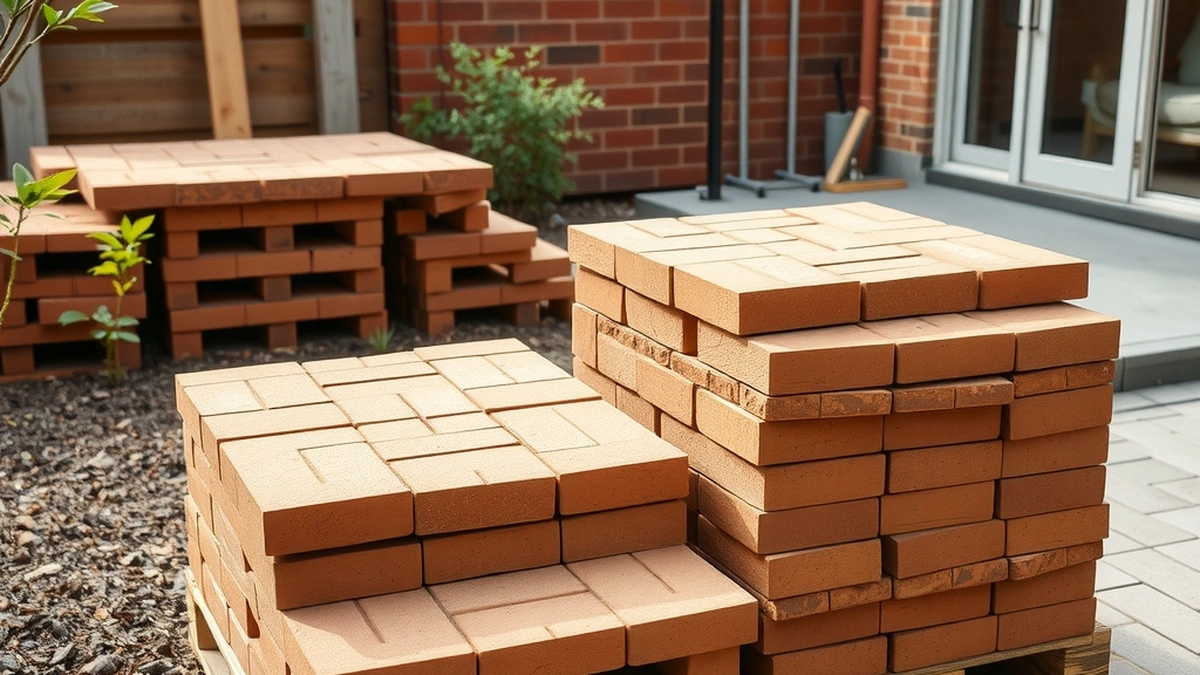
Brick pavers cost $10 to $20 per square foot installed, about $2 to $5 more than concrete pavers. A 300-square-foot patio runs $3,000 to $6,000, with the units at roughly $4 to $9 per square foot and base, cutting, and labor making up the difference.
- Installed rate
- $10 - $20 per sq ft
- Unit cost
- $4 - $9 per sq ft
- 300 sq ft project
- $3,000 - $6,000
- Order with waste
- 330 - 345 sq ft
Some links on this page are affiliate links.If you buy through them we may earn a commission at no extra cost to you. We do not accept payment for rankings. Read the full disclosure.
Brick pavers cost $10 to $20 per square foot installed, roughly $2 to $5 more per square foot than concrete pavers. On a 300-square-foot patio that is $3,000 to $6,000. The premium is not labor alone: clay brick is heavier, it chips more during cutting, and a herringbone field generates more waste than a simple running bond.
What the Installed Rate Covers
Brick pavers are fired clay units, typically 2-1/4 inches thick for pedestrian use and 2-3/4 to 3 inches for driveways. They are laid on a compacted aggregate base with bedding sand and sand-filled joints, the same system used for concrete pavers.
The installed rate bundles excavation, four to six inches of base, bedding, units, edge restraint, cutting, joint sand, and labor. The Brick Industry Association and most contractors quote the whole assembly because the brick alone tells you very little about the final price.
Two prices are worth separating:
- Installed: $10 to $20 per square foot.
- Material: about $4 to $9 per square foot for the units, delivered.
Material Versus Installed, With the Math
Take a 300-square-foot patio at the middle of the range.
- Installed at $15: 300 × $15 = $4,500.
- Units at $6.50: 300 × $6.50 = $1,950.
- Remainder for base, sand, cutting, and labor: $4,500 − $1,950 = $2,550.
At the ends of the range the same patio is 300 × $10 = $3,000 installed and 300 × $20 = $6,000. The material share moves between roughly $1,200 and $2,700, which means a quote can look expensive because of the brick or because of the site. Ask for both lines before deciding which.
Cost by Project Size
| Square feet | At $10 per sq ft | At $15 per sq ft | At $20 per sq ft |
|---|---|---|---|
| 200 | $2,000 | $3,000 | $4,000 |
| 400 | $4,000 | $6,000 | $8,000 |
| 600 | $6,000 | $9,000 | $12,000 |
Small jobs price above the rate. A 200-square-foot walkway or stoop carries mobilization and minimum crew time over fewer units, so it often quotes 25 to 40 percent above what a 600-square-foot patio receives. That is an estimate, but the pattern is consistent across trades.
New Brick, Reclaimed Brick, and Thin Brick
| Type | Typical price basis | Installed rate | Notes |
|---|---|---|---|
| New clay brick paver | Per square foot | $10 - $20 | Consistent size, predictable color |
| Reclaimed brick | Per brick, then cleaned | $12 - $25 | Character, variable size, breakage |
| Thin brick veneer | Per square foot | $12 - $22 | Overlay on a slab, not a structural paver |
| Concrete brick paver | Per square foot | $8 - $15 | Cheaper, molded, less color depth |
Reclaimed brick is the option buyers ask about most and understand least. Old brick is often sold by the brick, not the square foot, and the count per square foot depends on the size and the joint width. Cleaning mortar off salvaged units is labor, breakage is common, and the units vary enough that laying them takes longer. The material can be cheaper per brick and still cost more per finished square foot.
Thin brick is a different product. It is a veneer bonded to a concrete slab, so it inherits the slab’s cracks and cannot be lifted and reset. It looks like brick and behaves like tile.
Pattern, Cuts, and Waste
The pattern changes the material order more than most homeowners expect.
- Running bond: straight cuts at the edges, about 10 percent waste.
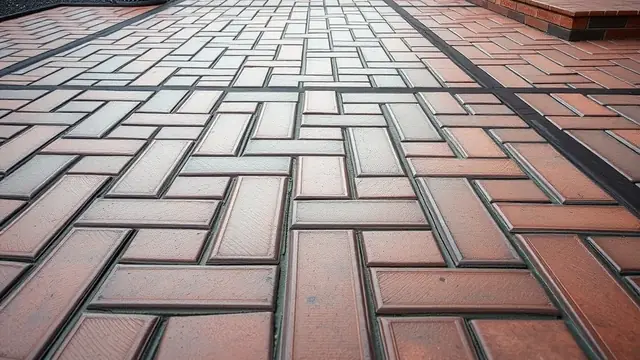
- Herringbone: 45-degree cuts at every border, about 15 percent waste.
- Basketweave: moderate cutting, 10 to 15 percent.
- Circular or curved fields: 15 percent or more.
For a 300-square-foot patio, 10 percent waste means ordering 300 × 1.10 = 330 square feet, and 15 percent means 300 × 1.15 = 345 square feet. At $4 to $9 per square foot that is $1,320 to $3,105 for the units rather than $1,200 to $2,700 for the bare area.
Brick also chips. A wet saw with a sharp blade reduces it, but some loss is normal, and the spare units are worth keeping. Clay brick color varies by firing lot, so a paver replaced in five years will not match the original field unless you kept extras from the same lot.
Brick Against the Other Pavers
| Material | Installed rate | Strength | Weak point |
|---|---|---|---|
| Brick pavers | $10 - $20 per sq ft | Color depth, classic look | Efflorescence, corner chips |
| Concrete pavers | $8 - $15 per sq ft | Lowest cost, consistent size | Color fade over decades |
| Travertine pavers | $15 - $30 per sq ft | Cool underfoot, stone look | Acid etching |
| Permeable pavers | $12 - $25 per sq ft | Runoff control | Surface clogging |
Against concrete, a 300-square-foot brick patio costs $600 to $1,500 more: 300 × $10 = $3,000 against 300 × $8 = $2,400 at the low end, and 300 × $20 = $6,000 against 300 × $15 = $4,500 at the high end. That premium buys color that goes through the unit rather than sitting on the surface, which is why old brick patios still look like brick after decades.
Add-Ons That Change the Total
Sealing runs $1 to $3 per square foot, or $300 to $900 on 300 square feet. It slows staining and reduces joint sand loss, and it is usually applied a season after installation.
Base repair runs $4 to $8 per square foot, or $1,200 to $2,400 on the same area. On an old patio being rebuilt, this is the line that decides the budget, because a soft subgrade has to be corrected before any brick goes back down.
Efflorescence — the white mineral bloom that appears on clay brick — is a maintenance issue rather than a cost of installation, but it affects what you will spend later. The efflorescence guide covers removal and prevention.
Budgeting a Brick Patio
- Measure the area in square feet, including steps and borders.
- Choose the pattern before ordering, because waste depends on it.
- Add 10 percent waste for running bond, 15 percent for herringbone.
- Ask for the brick price per square foot at the thickness you need, not per pallet.
- Confirm the base depth and compaction method in writing.
- Price sealing and base repair as separate lines.
If the brick is reclaimed, add a step: ask how many units cover a square foot at the joint width you want, then add 20 percent for breakage and culls.
For the surface comparison, see clay brick versus concrete pavers. For installation sequence after the material lands, see clay brick installation, and for the overall patio budget, paver patio cost.
Frequently asked questions
How much do brick pavers cost per square foot?
Ten to twenty dollars per square foot installed for new clay brick. The units alone run about $4 to $9 per square foot, and the rest covers base, bedding, cutting, and labor.
Are reclaimed brick pavers cheaper than new ones?
Sometimes, but not reliably. Reclaimed brick is often sold per brick and needs cleaning and sorting, and breakage raises the count you must buy. Price it by the square foot delivered before comparing.
Why do brick pavers cost more than concrete pavers?
Clay brick is fired rather than molded, it is heavier per square foot, and it chips at the corners during cutting. Installation is slower and generates more waste in a pattern.
How much does a 400 square foot brick paver patio cost?
Four thousand to eight thousand dollars at $10 to $20 per square foot. Add $400 to $1,200 for sealing and $1,600 to $3,200 if the base has to be rebuilt.
Do brick pavers need a concrete base?
No. A patio uses four to six inches of compacted aggregate and an inch of bedding sand. A driveway uses a deeper base and a thicker, vehicle-rated brick.
How much waste should I add to a brick order?
Ten percent for a running bond and fifteen percent for herringbone or basketweave. A 300-square-foot patio means ordering 330 to 345 square feet.
Sources
Some links are affiliate links.If you buy through them we may earn a commission at no extra cost to you. We do not accept payment for rankings. Read the full disclosure.