Paver Patio Cost: Budget by Size, Scope, and Material
What a paver patio really costs by size, with a line-item budget for a 320 sq ft project, add-on pricing, and where budgets overrun.
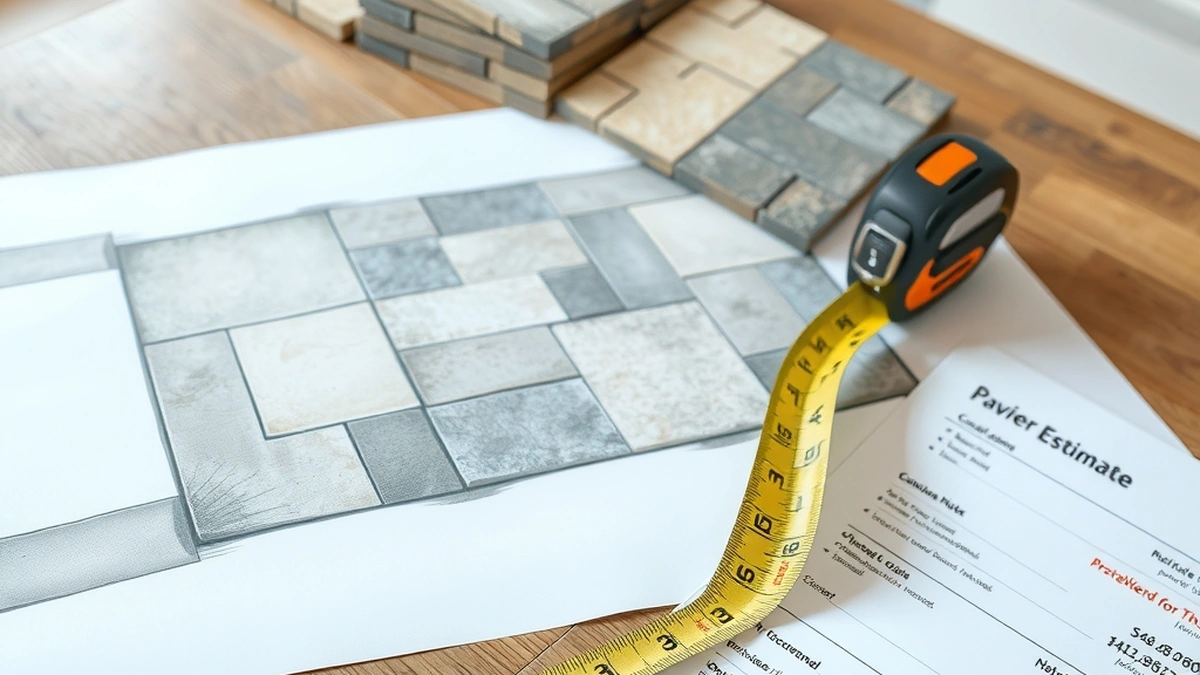
Most paver patios land between $3,000 and $9,000, built on an installed rate of $8 to $30 per square foot. Size sets the material and labor, while removal, steps, walls, and drainage decide how far above that band you go.
- Typical project total
- $3,000–$9,000
- Installed rate
- $8–$30 per sq ft
- 320 sq ft at $12
- $3,840
- Sealing add-on
- $1–$3 per sq ft
Some links on this page are affiliate links.If you buy through them we may earn a commission at no extra cost to you. We do not accept payment for rankings. Read the full disclosure.
Most paver patios cost between $3,000 and $9,000, built on an installed rate of $8 to $30 per square foot. The number that matters is your total project budget rather than the rate, because size sets the material and labor while scope — removal, steps, walls, drainage, lighting — sets everything above it.
Cost by Patio Size
Size is the first multiplier, and it is the one you control most directly. The table uses the full installed range from concrete pavers at the low end to travertine at the high end.
| Patio size | Square feet | Installed total |
|---|---|---|
| 10 × 10 | 100 | $800–$3,000 |
| 12 × 16 | 192 | $1,536–$5,760 |
| 16 × 20 | 320 | $2,560–$9,600 |
| 20 × 30 | 600 | $4,800–$18,000 |
The arithmetic is just area times rate. A 16-by-20 patio is 320 square feet; at $8 per square foot that is $2,560 and at $30 it is $9,600. A 600-square-foot patio doubles that. Notice how wide the band is at every size: the low end is concrete pavers with an easy site, the high end is travertine with detail work.
What Sets the Number
A paver patio cost is the total of paver units, compacted base aggregate, bedding sand, edge restraint, joint sand, labor, equipment, and disposal, plus any site work the yard demands. Material choice moves the rate; site conditions move the total.
Concrete pavers anchor the low end at $8 to $15 per square foot. Brick pavers sit at $10 to $20, permeable pavers at $12 to $25, and travertine at $15 to $30. Those ranges already include base and labor, which is why a $4,000 patio and an $11,000 patio can be the same square footage.
Scope Items Priced Outside the Rate
These items are quoted separately on almost every real job, and they are where budgets surprise people:
- Demolition and disposal. Breaking out an old slab or hauling away asphalt. An allowance of $800 to $1,500 for a patio-sized area is a reasonable planning estimate.
- Base repair. $4 to $8 per square foot when the subgrade is soft or old material has to be rebuilt.
- Steps and grade changes. Priced per step, typically by riser count and width.
- Retaining walls and seat walls. Priced per linear foot and by height, since anything over about 2 feet may need engineering.
- Drainage work. French drains, channel drains, and regrading are quoted by the linear foot and by where the water has to go.
- Lighting and utilities. Low-voltage runs, conduit, and outlet placement.
- Sealing. $1 to $3 per square foot, often done a season after installation.
- Permits. Some jurisdictions require one for hardscape above a certain size or for anything retaining soil.
A Full Budget for 320 Square Feet
Take a 16-by-20 patio in concrete pavers at $12 per square foot on an accessible, fairly flat site, replacing an old concrete slab.
- Pavers, base, bedding, edge, joint sand, and labor: 320 × $12 = $3,840.
- Demolition and haul-off of the old slab: allowance of $1,100.
- Two steps down to the lawn: allowance of $1,800.
- Drainage correction and a channel drain at the low corner: allowance of $900.
- Sealing: 320 × $2 = $640 at the middle of the $1 to $3 range.
- Ten percent contingency on the $8,280 subtotal: $828.
Total planning budget: about $9,100. The pavers themselves are less than half of it. That ratio is normal once demolition and detail work enter the picture, and it is why comparing a bare rate to a finished project total is misleading.
Where Budgets Overrun
The first overrun is disposal. Old concrete is heavy, dumpsters are priced by weight in many markets, and the fee is often estimated rather than quoted.
The second is the subgrade. Fill dirt, buried debris, and tree roots are invisible until excavation, and each one triggers base work at $4 to $8 per square foot.
The third is detail creep — a border course, a curved edge, a fire pit, a seat wall added mid-project. Each is small on its own and adds up fast.
The fourth is access. A patio reachable only through a side gate turns machine work into wheelbarrow work and stretches the labor line.
The fifth is the change order. Any addition made after work starts is priced at the contractor’s discretion, not at the bid rate.
Getting Bids You Can Compare
- Write down the size, shape, and any walls or steps so every bidder prices the same thing.
- Ask each contractor to quote the base separately, in inches and lifts.
- Require demolition, disposal, and drainage as their own lines.
- Hold sealing out of the base bid so you can see its true cost.
- Confirm the paver brand, model, and thickness in writing.
- Add a contingency line yourself before you compare totals.
Then read the per-square-foot breakdown to audit each rate, and check concrete pavers cost if you are leaning toward the most common material. Paver sealing cost covers the add-on most homeowners schedule a year later.
Choosing Between Bids
The cheapest bid is cheap for a reason, and the reason is usually one of the six lines above. The most expensive bid is not automatically the best either — it may include work you do not need.
Pick the contractor whose written scope matches what you asked for, whose base specification is explicit, and whose references you can visit. Then budget 10 percent above the contract, because a patio is built in the ground and the ground is never quite what the drawing showed. If you are still deciding on a surface, paver patio cost versus concrete lays out the trade-off directly.
Frequently asked questions
What does a paver patio cost for an average backyard?
A 320-square-foot patio in concrete pavers at the middle of the range, about $12 per square foot, comes to roughly $3,840. Budget projects in brick or travertine at the same size run $5,000 to $9,600 depending on the unit.
Is it cheaper to build a smaller patio with better pavers?
Often yes. A 200-square-foot travertine patio at $15 to $30 per square foot costs $3,000 to $6,000, which is comparable to a 400-square-foot concrete paver patio. The experience of the smaller space is usually better than a large space with cheap units.
What is not included in a per-square-foot paver price?
Demolition and disposal of an old surface, steps, retaining walls, drainage corrections, lighting, pergola footings, permits, and sealing are normally separate. Those items can add 20 to 50 percent to a base patio price.
How much should I hold back as contingency?
Ten percent of the contract is a reasonable allowance for a straightforward patio. Sites with unknown fill, tree roots, or an old slab under the lawn justify 15 percent, because those conditions are only discovered during excavation.
Does a paver patio increase home value?
It adds usable outdoor living space, which buyers pay for. Appraisal value depends on your market and the quality of the install, so treat the patio as an improvement you will use rather than a guaranteed return.
Why is my quote higher than the online estimate?
Online figures assume easy access, a clean site, and a standard 4-to-6-inch base. A narrow gate, a slope, an old slab, or a clay subgrade all add labor and material that a generic estimate cannot see.
Sources
Some links are affiliate links.If you buy through them we may earn a commission at no extra cost to you. We do not accept payment for rankings. Read the full disclosure.