Clay Brick Vs Concrete Guide
A practical comparison of clay brick and concrete pavers for patios and driveways, including cost, durability, and maintenance.
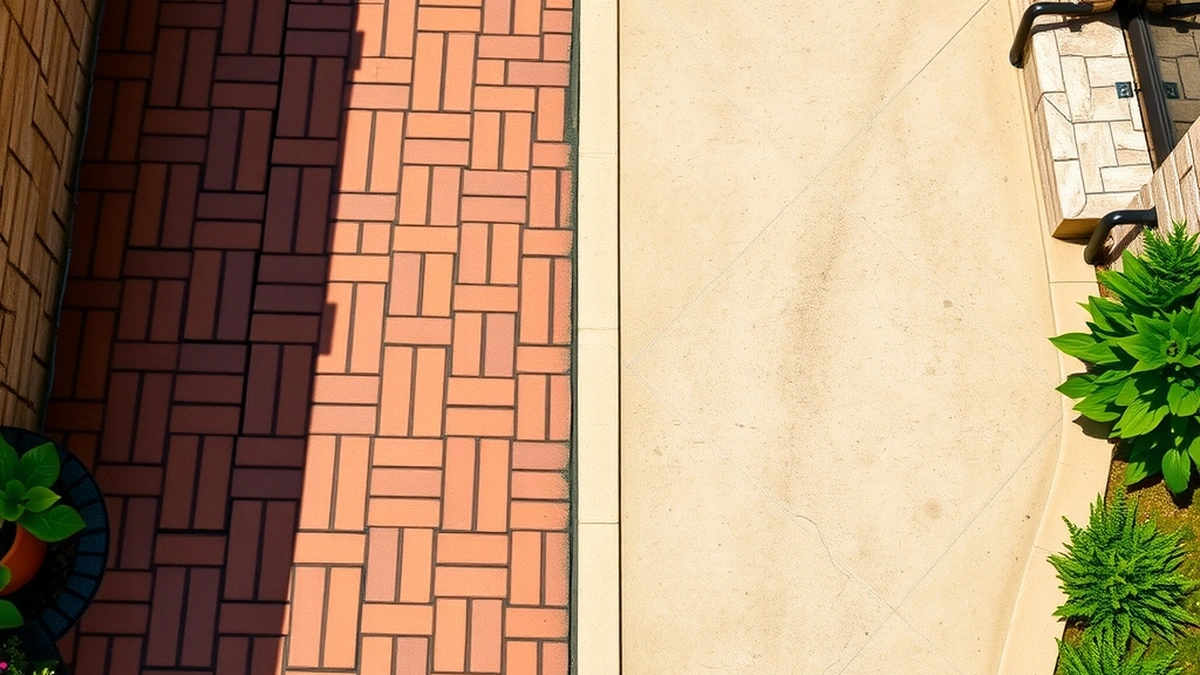
For most homeowners, concrete pavers cost $8–$15 per square foot, while clay brick runs $10–$20 per square foot. Choose concrete for budget and simplicity; choose clay brick for classic aesthetics and longevity.
- Typical range
- Varies by system and site
- First step
- Measure the space and confirm the load
- Professional help
- Recommended for structural or electrical work
Some links on this page are affiliate links.If you buy through them we may earn a commission at no extra cost to you. We do not accept payment for rankings. Read the full disclosure.
Clay Brick vs Concrete Pavers: Which Is Right for Your Patio?
When you’re planning a paver patio or driveway, the first decision isn’t really about color or pattern—it’s about what you’re willing to spend and how much work you’re willing to do. Clay brick and concrete pavers each have real strengths, and choosing between them depends on your priorities. Here’s a straightforward breakdown to help you decide.
How Pavers Actually Work
Both clay brick and concrete paver systems start with the same principle: a solid, well-prepared base, then a modular surface layer. The difference is what sits on top. Concrete pavers are cast from Portland cement and aggregate, then cured and finished. Clay brick is fired from natural clay, then glazed or unglazed. Neither type changes the fundamental rule—your patio needs a compacted base of at least 4 inches of crushed stone, with proper drainage behind it. The base preparation is where both materials spend roughly the same amount of money: $4 to $8 per square foot for repair or replacement work if the existing substrate isn’t adequate [1].
Cost Comparison
Material prices set the foundation of your budget, and here they diverge meaningfully. Concrete pavers typically cost $8 to $15 per square foot, while clay brick pavers run $10 to $20 per square foot. That gap reflects higher clay production and firing costs. For a 150-square-foot patio, that means roughly $1,200 to $2,250 just for materials—before labor, which adds another 30 to 50 percent on top. If you’re budgeting for a full driveway replacement, the difference can reach several thousand dollars. Concrete remains the more affordable choice for large areas, especially when you factor in lower weight, which means smaller equipment and simpler transport logistics.
| Factor | Concrete Pavers | Clay Brick |
|---|---|---|
| Material cost | $8–$15 / sq ft | $10–$20 / sq ft |
| Typical patio size (sq ft) | 100–200 | 100–200 |
| Estimated total (materials only) | $800–$3,000 | $1,000–$4,000 |
Durability and Load-Bearing
Durability matters more than most people think. Clay brick tends to outlast concrete pavers over decades because fired clay resists freeze-thaw cycling better than cement-bound concrete. A typical clay brick paver patch job may come every 10 to 15 years, while concrete pavers might need attention every 5 to 8 years under heavy use. In load-bearing applications like driveways, both materials support standard vehicle weights without issue, but clay brick handles heavier loads with less cracking risk. The added weight of clay brick—roughly 120 pounds per square foot versus about 100 for concrete—also means you need stiffer engineered fill underneath, which can raise base costs slightly.
Maintenance Differences
Maintenance is where concrete pavers pull ahead. Concrete surfaces absorb stains more readily and are easier to clean with pressure washers and basic sealers. Sealing concrete pavers costs $1 to $3 per square foot, depending on the product and whether you hire a contractor or do it yourself [2]. Clay brick, by contrast, has a natural glaze that repels water and some dirt, reducing cleaning frequency. However, clay brick surfaces are more porous when unglazed, so resealing is still necessary—typically every 3 to 5 years. Both materials benefit from annual sweep-and-vac maintenance and occasional power washing. The key difference is that concrete pavers hold up visually longer against weathering, while clay brick develops a richer, darker patina that some homeowners prefer.
Aesthetics and Style
If appearance drives your decision, clay brick wins on visual character. The warm earth tones, hand-made irregularities, and subtle color variation create a patio that ages beautifully and complements many architectural styles. Concrete pavers offer more uniformity—engineered colors and smooth edges mean you get a cleaner, more modern look. For driveways, concrete pavers often feel more contemporary, while clay brick suits traditional or transitional homes. You can also combine both materials in the same project, using concrete for high-traffic areas and clay brick for seating zones, though this adds complexity and cost.
Installation Considerations
Installation logistics favor concrete pavers for most residential projects. They’re lighter, easier to lift, and require less specialized equipment. A crew can lay concrete pavers on a standard slab with a concrete truck and a flatbed trailer. Clay brick requires cranes or larger trucks for delivery, and experienced installers know that firing clay demands precise temperature control during curing. Regardless of material, proper spacing and edge restraint are critical. Concrete pavers typically need a sand joint between units, while clay brick often uses thin-set mortar. Either way, mistakes in base preparation—too shallow, too loose, or poor compaction—show up as cracked pavers within two to three growing seasons. Always budget for base repair work at $4 to $8 per square foot if you discover underlying issues [3].
Making Your Choice
Start with your priorities. If budget is tight and you want a modern-looking patio, concrete pavers give you the most value per square foot. If you want a classic, long-lasting appearance and don’t mind a higher upfront investment, clay brick delivers better longevity. For driveways, concrete is usually the pragmatic default; for patios with decorative intent, clay brick often justifies its price. Whichever you choose, invest in quality base preparation first—surface second. That principle applies to every paver project, regardless of material. For more guidance on sizing and planning, see our guide on how much a paver patio costs per square foot.
References
[1] U.S. Environmental Protection Agency, base preparation standards for hardscape installations.
[2] U.S. Occupational Safety and Health Administration, paver sealing safety guidelines and product recommendations.
[3] U.S. Department of Housing and Urban Development, structural base requirements for paved areas.
Next, compare how much does paver patio cost, paver patio installation, paver patio repair before you commit.
Frequently asked questions
How much does a concrete paver patio cost?
Concrete pavers typically cost $8 to $15 per square foot installed, making them one of the more affordable paver options.
How much does clay brick patio installation cost?
Clay brick patios run $10 to $20 per square foot, reflecting higher material and labor costs than concrete.
Are clay brick pavers more durable than concrete?
Yes, clay brick generally lasts longer—often 40+ years versus 30+ for concrete—and resists freeze-thaw damage better.
Do I need to seal my pavers?
Sealing helps extend paver life but costs $1 to $3 per square foot depending on product and application method.
What's the best base preparation for pavers?
A compacted crushed stone base of at least 4 inches deep is essential before laying any paver surface.
Can I install pavers myself?
DIY installation is possible but requires careful leveling, base preparation, and proper spacing to avoid costly future repairs.
Sources
Some links are affiliate links.If you buy through them we may earn a commission at no extra cost to you. We do not accept payment for rankings. Read the full disclosure.