Clay Brick Problems: What Goes Wrong and Why
The clay brick problems that actually matter, from efflorescence and spalling to settling and lost joint sand, with repair costs and a diagnosis order.
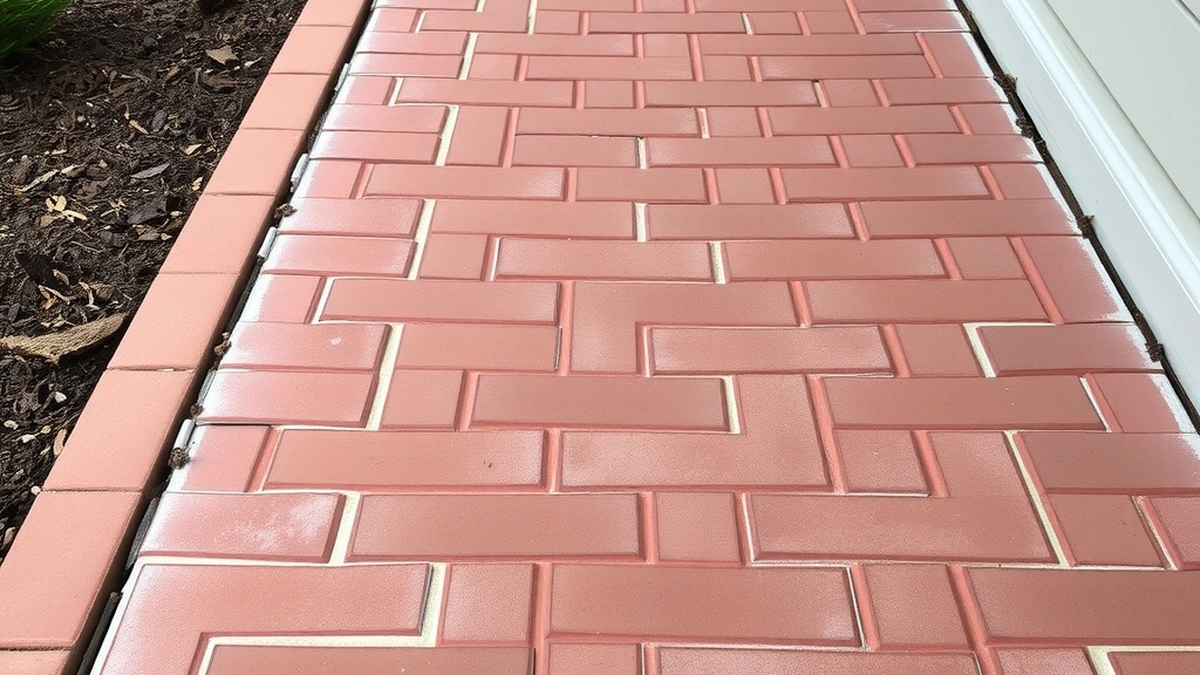
Clay brick problems are mostly water problems: efflorescence, spalling, lost joint sand, and pavers that rock or heave. Efflorescence is cosmetic, but rocking units mean the base has failed and need repair at $4 to $8 per square foot.
- Installed brick pavers
- $10–$20 per sq ft
- Base repair
- $4–$8 per sq ft
- Sealing
- $1–$3 per sq ft
- Most common complaint
- White efflorescence
- Costliest failure
- Settled base under pavers
Some links on this page are affiliate links.If you buy through them we may earn a commission at no extra cost to you. We do not accept payment for rankings. Read the full disclosure.
Clay brick problems come down to a short list: white efflorescence, surface spalling, color loss, failed joints, and pavers that rock, heave, or crack. Nearly all of them trace back to water — how much the brick absorbs, how fast it dries, and whether the base below drains. Brick is durable, but not maintenance-free, and the failures that matter look cosmetic long before they become structural.
What Counts as a Clay Brick Problem
A clay brick paver is a fired clay unit, normally 2 to 2-1/4 inches thick for patios and walkways, bedded in sand over a compacted aggregate base and held at the perimeter by edge restraint.
Sorting problems into two piles saves money. Cosmetic problems change how the surface looks and cost little. Structural problems — rocking units, cracked faces, a lip where one brick stands proud of its neighbor — mean the base or restraint has moved, and no amount of cleaning will fix them.
Price the repair before the paver. A clay brick surface runs $10 to $20 per square foot installed, so a 200-square-foot patio is a $2,000 to $4,000 asset. Rebuilding 60 square feet of failed base at $4 to $8 per square foot adds $240 to $480 before any brick is reset.
Efflorescence: The White Staining Problem
Efflorescence is the white, powdery bloom that appears on brick after wet weather. It is not damage: soluble salts in the clay, mortar, or ground migrate to the surface in water and crystallize as it evaporates.
Three things drive it: a wet season, a brick with open pores, and a surface that dries slowly because it sits in shade or against a wall. The bloom fades in dry weather, and a stiff brush removes what is left. Acid washing new brick is the wrong move — it etches the surface and opens the pores that caused the problem.
Persistent efflorescence usually means water is getting into the assembly from somewhere it should not, such as a downspout discharging onto the patio or a slope that runs toward the house. Fix the water path and the bloom stops. Our efflorescence cost guide covers when a professional cleaning is worth paying for.
Spalling and Freeze-Thaw Damage
Spalling is the loss of a thin layer from the brick face, leaving a rough, lighter-colored patch. It follows the freeze-thaw cycle: water enters the clay body, freezes, expands, and pushes the surface outward until it separates.
The risk rises with saturated brick, poor drainage, and repeated freeze-thaw. Moulded brick with a higher absorption rate is more exposed than dense extruded brick, and a patio that holds water at the edges will spall there first. De-icing salt accelerates the process by drawing moisture into the face.
There is no repair for a spalled face; the unit gets replaced. The productive work is upstream: keep the slope running away from the building, keep joint sand full, and avoid film-forming sealers that trap moisture inside the brick.
Color Fade and Joint Failure
Brick color comes from the clay body and the firing, so a true through-body color does not fade. What fades is a surface treatment — a slurry coating, a flashed finish, or a painted face — and the change shows up as blotchy patches where traffic is heaviest.
Joint failure is the more consequential problem. Sand joints wash out from rain, from a downspout, or from a hose left running. Once the sand drops below the chamfer, the brick loses its lateral lock, water moves freely into the base, and weeds find a home. Topping up joint sand annually is the cheapest maintenance on the list.
Heaving, Settling, and Base Failures
Heaving and settling are the same story told in opposite directions. Settling means the subgrade compressed or washed out and the pavers dropped. Heaving means water froze under the surface and lifted the field, or a tree root pushed it up.
Symptoms are consistent: a paver that rocks when you step on it, a dip that holds a puddle, a crack along a line of units, or a gap at the edge restraint. All of them point to the layer under the brick, not the brick itself.
Repair means lifting the field, re-compacting or replacing the base, re-screening the bedding layer, and resetting the units. At $4 to $8 per square foot, a 150-square-foot repair is $600 to $1,200 — which is why settling repair should be quoted before anyone starts swapping individual pavers.
Weeds, Moss, and Lost Joint Sand
Weeds are an indicator, not a cause. They germinate in joints that have lost sand, behind a lifted edge restraint, or in a low spot that stays damp. Pulling them without refilling the joint guarantees they return.
Moss and algae grow on shaded north-facing brick and any surface that stays wet. A dilute bleach solution or an oxygen-based cleaner kills the growth; the long-term fix is trimming the shade and correcting drainage.
Polymeric sand resists washout better than plain sand and is worth the extra cost on a sloped patio or near a pool. Our paver patio repair guide covers refilling joints properly.
Clay Brick Against the Other Options
| Material | Installed rate | Fails in a way that shows up as | Repair difficulty |
|---|---|---|---|
| Clay brick | $10–$20 per sq ft | Efflorescence, spalling, chipped corners | Unit replacement, color match is hard |
| Concrete pavers | $8–$15 per sq ft | Color fade, chipping, efflorescence | Unit replacement, color match is easier |
| Travertine | $15–$30 per sq ft | Etching, staining, hollow spots | Filler or unit replacement |
| Permeable pavers | $12–$25 per sq ft | Surface clogging, settling | Vacuum cleaning, joint aggregate refill |
Brick’s weakness is water absorption in a brittle body. Concrete pavers resist spalling better but fade more. Travertine is the most chemically fragile. None of them tolerate a bad base, which is why the clay brick versus concrete comparison should start with drainage rather than appearance.
Diagnosing a Brick Problem in Order
- Watch where water goes after rain. Note every puddle, every dark joint, and where the runoff leaves the patio. Most problems are visible in the first ten minutes of a storm.
- Test for hollow spots. Tap across the field with a screwdriver handle. A dull, hollow sound means the paver has lost bedding support.
- Check joint depth. Joint sand should sit roughly 1/8 inch below the chamfer. Deeper means the joint has washed out.
- Separate cosmetic from structural. Bloom and moss get cleaned and monitored. Rocking, cracking, and heaving get opened up.
- Repair the base, not the symptom. Lift the affected field, correct the subgrade and aggregate, and reset. Then refill joints and reseal only if the surface needs it.
- Fix the water source. Redirect downspouts, restore the slope away from the building, and confirm the edge restraint is intact.
Get the water right and clay brick outlasts most of what gets laid next to it. Get it wrong and the same brick spalls, heaves, and blooms within a few seasons — the material is not the variable.
Frequently asked questions
Is efflorescence on brick pavers a sign of damage?
No. Efflorescence is a white salt deposit left behind as water evaporates from the brick. It is cosmetic, it usually clears with dry weather, and it does not weaken the paver or the base beneath it.
Why are my clay brick pavers spalling?
Spalling is the loss of a thin top layer of the brick face, and it usually follows repeated wetting and freezing. Water absorbed into the clay expands as it freezes and pushes the surface off. Dark, dense brick laid without drainage is the usual candidate.
What causes brick pavers to rock or become uneven?
Almost always base movement. A soft subgrade, an under-compacted aggregate layer, or a washed-out joint lets a paver lose support and pivot. Adding sand under the unit hides the problem for a season; repairing the base solves it.
How much does it cost to fix a settled brick patio?
Base repair runs $4 to $8 per square foot. A 60-square-foot settled section is therefore $240 to $480, plus the labor to lift and reset the brick over that area.
Can I pressure wash clay brick?
Only at low pressure with a wide fan tip. High pressure strips the fired surface, blasts joint sand out, and drives water into the brick, which makes efflorescence and spalling more likely rather than less.
Do clay brick pavers need to be sealed?
Not required. Sealing at $1 to $3 per square foot slows staining and joint sand loss, but a film-forming sealer traps moisture and can make spalling worse in freeze-thaw climates. Use a penetrating sealer if you seal at all.
Sources
Some links are affiliate links.If you buy through them we may earn a commission at no extra cost to you. We do not accept payment for rankings. Read the full disclosure.