Pavers in Grass Walkway: Options and Costs
Learn how to install pavers in grass for walkways, including stepping stones, grid systems, costs, and base prep tips.
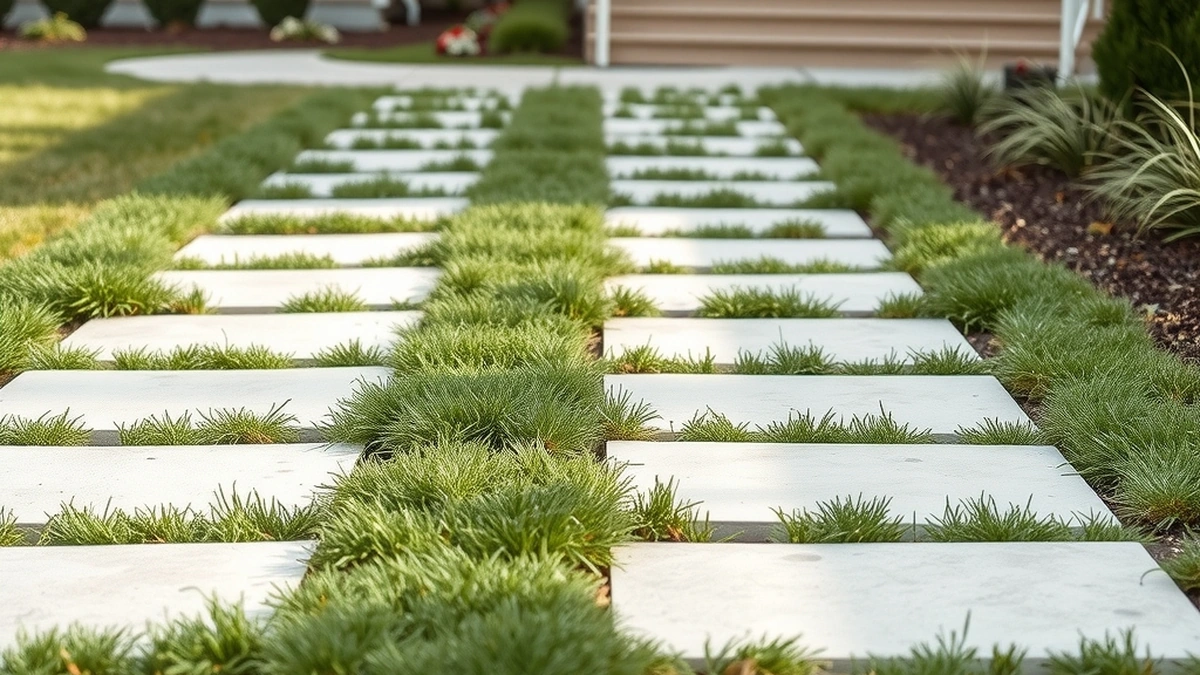
Pavers in grass walkways use spaced pavers or permeable grid systems set into lawn areas, with costs typically ranging from $8 to $30 per square foot installed.
- Best for
- Lawn paths, garden access, low-traffic routes
- Common materials
- Concrete, brick, travertine, permeable grids
- Installed cost
- $8–$30 per square foot
- Base depth
- 4–6 inches compacted aggregate
- Sealing
- $1–$3 per square foot, optional
Some links on this page are affiliate links.If you buy through them we may earn a commission at no extra cost to you. We do not accept payment for rankings. Read the full disclosure.
A pavers in grass walkway is a pedestrian path built by setting pavers into or alongside a lawn rather than paving the entire surface. You can use spaced stepping stones, full-coverage permeable grids, or narrow paver ribbons that let grass grow between the units. This guide covers layout options, base preparation, material costs, and installation steps for grass-integrated paver walkways.
Walkway Layout Options
Stepping stones are the simplest pavers in grass walkway design. Individual pavers are placed at walking intervals, usually 24 to 30 inches apart center to center, with grass growing in the gaps. This option disturbs the least amount of lawn and works well for garden access or side-yard routes.
Paver ribbons run two parallel strips of pavers, each 12 to 18 inches wide, separated by a grass channel. The strips define a clear walking path while preserving most of the lawn surface. This layout suits front-yard walks and high-traffic lawn routes where stepping stones would feel uneven.
Full-coverage permeable pavers use grid systems or interlocking units with open joints that allow water to pass through and grass to grow within the paver cells. These systems handle foot traffic and light wheel loads while reducing runoff compared to solid slabs.
Base Preparation First
Base preparation comes before surface selection. Remove all sod and topsoil from the paver area to a depth of 6 to 8 inches. Compact the subgrade, then install 4 to 6 inches of crushed aggregate base, compacted in 2-inch lifts. Finish with 1 inch of concrete sand or ASTM C-33 bedding sand, screeded smooth.
For stepping stones, excavate only under each paver rather than the full path width. Set each unit on a compacted sand bed so the top sits at or slightly above grade, allowing mowers to pass over without catching edges.
A 100-square-foot walkway needs roughly 20 to 25 cubic feet of aggregate base at 3 to 4 inches depth, plus 8 to 10 cubic feet of bedding sand. Compact each layer with a plate compactor to prevent future settling.
Material Options and Costs
Concrete pavers cost $8 to $15 per square foot installed. They are durable, available in multiple shapes and colors, and work well for stepping stones or ribbons in grass.
Brick pavers cost $10 to $20 per square foot installed. Clay brick offers a traditional look but can become slippery when wet or mossy in shaded lawn areas.
Travertine costs $15 to $30 per square foot installed. Natural stone provides a premium appearance but is less common in grass walkways because of cost and potential heat retention in full sun.
Permeable pavers cost $12 to $25 per square foot installed. These units are designed for drainage and are a strong choice where stormwater runoff is a concern.
Sealing adds $1 to $3 per square foot and is optional. It may help resist stains on brick or concrete but is not required for function.
Example cost arithmetic
For a 50-square-foot concrete paver walkway:
- Materials and installation: 50 sq ft × $8 to $15 = $400 to $750
- Optional sealing: 50 sq ft × $1 to $3 = $50 to $150
- Total estimated range: $450 to $900
For the same area in permeable pavers:
- Materials and installation: 50 sq ft × $12 to $25 = $600 to $1,250
- Optional sealing: 50 sq ft × $1 to $3 = $50 to $150
- Total estimated range: $650 to $1,400
These figures are estimates and vary by region, site access, and existing site conditions.
Drainage and Load Considerations
Grass-integrated walkways must drain water away from the paver surface and into the surrounding lawn. Slope the base and pavers at 1 to 2 percent, or 1/8 to 1/4 inch per foot, toward the grass or a designated drainage area. Avoid creating low spots where water can pool and freeze.
Pedestrian walkways typically carry live loads of 40 to 50 pounds per square foot. A 24-inch by 24-inch paver, or 4 square feet, might support 160 to 200 pounds of distributed foot traffic under residential use. Base thickness and compaction matter more than paver thickness for preventing settlement under normal walking loads.
If the path will ever receive a lawn tractor or wheelbarrow, increase base depth to 6 inches and use thicker pavers or permeable grid systems rated for vehicular loads.
Installation Steps
- Mark the walkway with spray paint or a garden hose.
- Remove sod and excavate to the required depth.
- Compact the soil subgrade.
- Place and compact aggregate base in lifts.
- Screed 1 inch of bedding sand.
- Set pavers at the chosen spacing or pattern.
- Check level with a 4-foot straightedge.
- Sweep sand into joints and compact again.
- Restore grass around the edges and water thoroughly.
For stepping stones, maintain consistent spacing by measuring stride length before setting each unit. For ribbons, use string lines to keep both edges straight.
Maintenance and Repair
Grass paver walkways need occasional joint sand replacement as sand washes out over time. Sweep new sand into joints and compact lightly. Remove weeds that establish in grass gaps or paver joints by hand or with targeted treatment.
If pavers sink or tilt, lift them, rework the base material, recompact, and reset. Base repair averages $4 to $8 per square foot. Address drainage issues promptly to prevent repeated settling.
Mow grass flush with paver tops to avoid tripping hazards and to protect mower blades. Avoid using deicing salts on paver walkways adjacent to grass, as runoff can damage turf.
When to Use a Professional
Simple stepping-stone paths are suitable for DIY installation with basic tools. Full-coverage permeable systems, sloped sites, or walkways near foundations benefit from professional layout and base engineering. A contractor can also confirm that the design meets local drainage expectations and site conditions.
For related planning, see our overview of paver patio design ideas, our walkway planning guide at paver patio walkway, and cost context in how much does paver patio cost.
Frequently asked questions
Can you lay pavers directly on grass?
No. Remove sod and install a compacted base of crushed stone or sand so pavers stay level and do not sink into the soil.
How much does a grass paver walkway cost?
Expect $8–$15 per square foot for concrete pavers, $10–$20 for brick, $15–$30 for travertine, and $12–$25 for permeable pavers, installed.
Do grass pavers need sealing?
Sealing is optional and costs $1–$3 per square foot; it can reduce staining and make cleaning easier on brick or concrete.
Are permeable pavers good for grass walkways?
Yes. Permeable pavers let water drain through joints and cost $12–$25 per square foot installed, making them suitable for lawn areas.
How do you repair sunken pavers in grass?
Lift the affected pavers, add or compact base material, reset the pavers, and sweep sand into the joints; base repair averages $4–$8 per square foot.
Where can I find local help?
Ask a licensed contractor or installer who has worked with the same system and can inspect your site.
Sources
Some links are affiliate links.If you buy through them we may earn a commission at no extra cost to you. We do not accept payment for rankings. Read the full disclosure.