Types of paver patio
Types of paver patio: practical numbers, costs, and trade-offs, written independently.
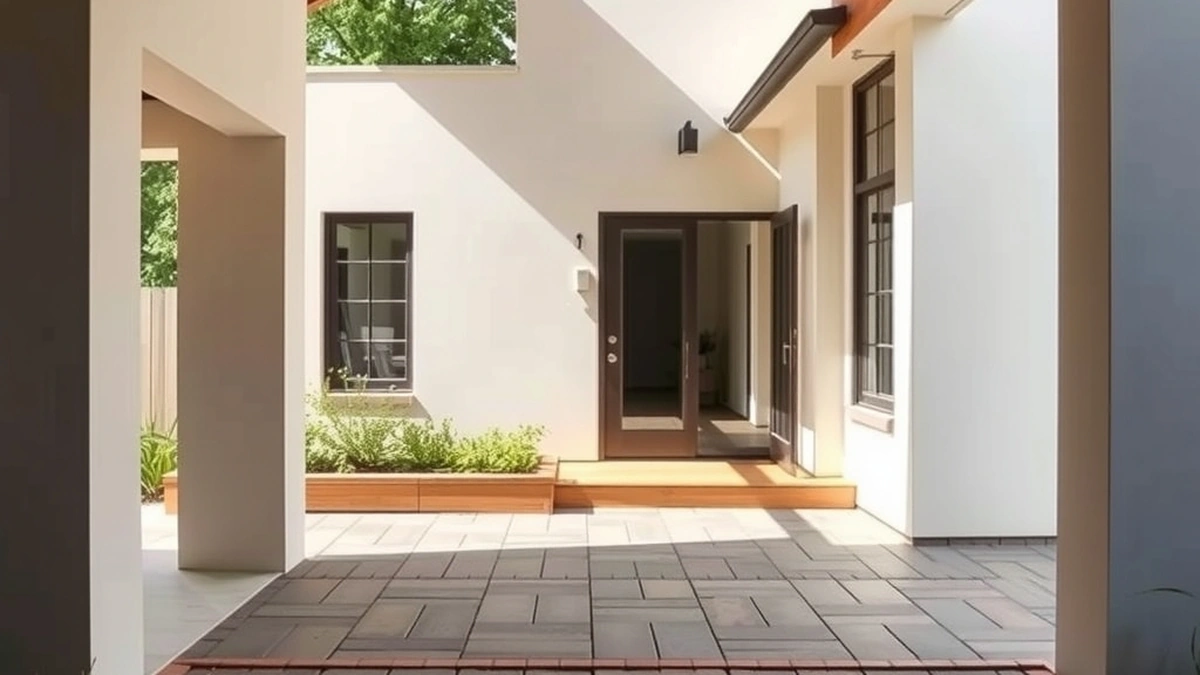
Types of paver patio: practical numbers, costs, and trade-offs, written independently. The guide below shows the numbers and the trade-offs.
- Typical range
- Varies by system and site
- First step
- Measure the space and confirm the load
- Professional help
- Recommended for structural or electrical work
Some links on this page are affiliate links.If you buy through them we may earn a commission at no extra cost to you. We do not accept payment for rankings. Read the full disclosure.
The main types of paver patio are concrete, clay brick, travertine, flagstone, and permeable systems, with porcelain and granite setts filling out the specialist end. They differ less in how they look than in what they cost per square foot, how they handle water, and how easily a single damaged unit can be replaced. Concrete at $8 to $15 per sq ft and travertine at $15 to $30 are the same job with different units on top.
The Types at a Glance
| Type | Installed rate | Best for | Weak point |
|---|---|---|---|
| Concrete pavers | $8–$15 per sq ft | Budget patios, driveways, large areas | Color fade over decades |
| Clay brick pavers | $10–$20 per sq ft | Traditional patios, entries | Efflorescence, chipped corners |
| Permeable pavers | $12–$25 per sq ft | Flood-prone sites, stormwater rules | Clogging without sweeping |
| Travertine pavers | $15–$30 per sq ft | Pool decks, premium patios | Etches from acid, needs sealing |
| Flagstone | Quoted per ton | Informal garden patios | Uneven surface, slow to lay |
| Porcelain pavers | Premium, quote-specific | Modern decks, rooftops | Brittle edges, few installers |
The rates are installed, meaning units, base, bedding, cutting, and labor. They are estimates and they move with region, access, and pattern.
Concrete Pavers
Concrete pavers are molded units of cement, aggregate, and pigment, pressed to a consistent size. That consistency is why they lay fast and why the price is predictable. They are the default choice for a reason: 60 mm units for patios and 80 mm units for driveways, a base you can specify, and a unit you can lift and reset when something underneath fails.
The weakness is appearance over time. Pigment fades slowly under UV, and a twenty-year-old patio will not match a new pallet. That matters only if you plan to patch a visible area. The full rate breakdown is in concrete pavers cost.
Clay Brick Pavers
Clay brick is fired, not molded, and it has a density and color that concrete cannot imitate. It is also the material most likely to bloom white with efflorescence, because soluble salts are in the clay and the mortar. The bloom is cosmetic and cleanable, but it returns until the moisture path is closed.
Brick is brittle at the corners. A dropped hammer or a shifted chair leg chips it, and an old brick that has weathered for a decade is hard to match.
Travertine Pavers
Travertine is a natural stone, sawn and tumbled, with a consistent thickness and a surface full of small voids. It stays cool underfoot, which is why pool decks use it, and it etches on contact with acid, which is why the pool chemicals and the grill drippings need managing.
At $15 to $30 per sq ft it is roughly double concrete, and the maintenance schedule — sealing at $1 to $3 per sq ft every few years — is part of the ownership cost rather than an optional extra.
Flagstone
Flagstone is a shape, not a stone. Sandstone, bluestone, slate, and limestone are all sold as flagstone, and they perform differently. The slabs are irregular, the joints are wider, and the installation is a fitting job that depends on the setter’s skill.
A flagstone patio looks like it belongs in a garden, and it feels that way underfoot — textured, slightly uneven, and never repetitive. It is also the slowest of these options to lay and the hardest to repair invisibly.
Permeable Pavers
Permeable systems use units with wide joints or openings over an open-graded stone reservoir. Water passes through the surface instead of running off it, which solves drainage problems and satisfies stormwater rules in some jurisdictions. The premium at $12 to $25 per sq ft buys excavation and stone, not a different paver.
The catch is maintenance. Without vacuum sweeping twice a year, the joints clog and the system stops infiltrating, which defeats the entire purchase.
Porcelain and Setts
Porcelain pavers are a fired product with very low absorption, sold in large formats and used on rooftops and modern decks. They are dimensionally precise, stain-resistant, and brittle at the edges, and they need an installer who has worked with them. Granite and cobblestone setts are small, dense, and laid in patterns; they are durable and labor-intensive, and they suit driveways and old-style streetscapes rather than a typical backyard.
Both are quote-specific. There is no useful national rate, and any article that prints one is guessing.
How to Choose in Five Steps
- Write down the use: foot traffic, vehicle traffic, pool deck, or drainage-critical site.
- Set the thickness from the use — 60 mm for patios, 80 mm for driveways, 1-1/4 in or thicker for stone.
- Set the base depth and compaction method before comparing any prices, because that is where the quotes diverge.
- Price the material you like at the installed rate and multiply by the square footage including 5 to 10 percent waste.
- Add sealing at $1 to $3 per sq ft if the material needs it, and decide now whether you will actually do it.
The last step is where most budgets go wrong. A travertine patio at $9,000 without a sealing plan becomes a $12,000 patio with one, and a concrete patio at $4,800 with sealing at $960 is still the cheaper surface by a wide margin.
For the material comparisons, concrete pavers vs permeable and travertine vs flagstone take two pairs apart in detail. The cost baseline is in patio pavers cost per square foot, and the build sequence is in paver patio installation. If the base is the part you are unsure about, paver base preparation is the specification to read first.
Frequently asked questions
What is the most important measurement?
Start with the ceiling or clearance number; it decides which systems can fit.
What does a typical project cost?
Costs vary by system and site access; the guide shows the line items and a planning range.
Can I install this myself?
Some tasks are DIY-friendly, but structural, electrical, and load-bearing work should be done by a licensed professional.
How long does installation take?
A simple setup is a weekend; a full build with electrical or structural work can take several weeks.
What should I check before buying?
Confirm dimensions, load ratings, and the manufacturer's installation requirements for your exact model.
Where can I find local help?
Ask a licensed contractor or installer who has worked with the same system and can inspect your site.
Sources
Some links are affiliate links.If you buy through them we may earn a commission at no extra cost to you. We do not accept payment for rankings. Read the full disclosure.