Concrete pavers vs Permeable
Concrete pavers vs Permeable: practical numbers, costs, and trade-offs, written independently.
Concrete pavers vs Permeable: practical numbers, costs, and trade-offs, written independently. The guide below shows the numbers and the trade-offs.
- Typical range
- Varies by system and site
- First step
- Measure the space and confirm the load
- Professional help
- Recommended for structural or electrical work
Some links on this page are affiliate links.If you buy through them we may earn a commission at no extra cost to you. We do not accept payment for rankings. Read the full disclosure.
Permeable pavers cost more than conventional concrete pavers and do a job conventional pavers cannot: they pass water through the surface into a stone reservoir instead of shedding it to the edge of the patio. Whether that premium is worth paying depends on your soil, your slope, and whether local rules require stormwater control. On a flat, well-drained lot with no regulation, conventional concrete pavers are usually the better buy.
What Each System Actually Is
A conventional concrete paver surface is sand-set: compacted dense-graded aggregate, about an inch of bedding sand, solid units, and sand swept into tight joints. Water runs off it.
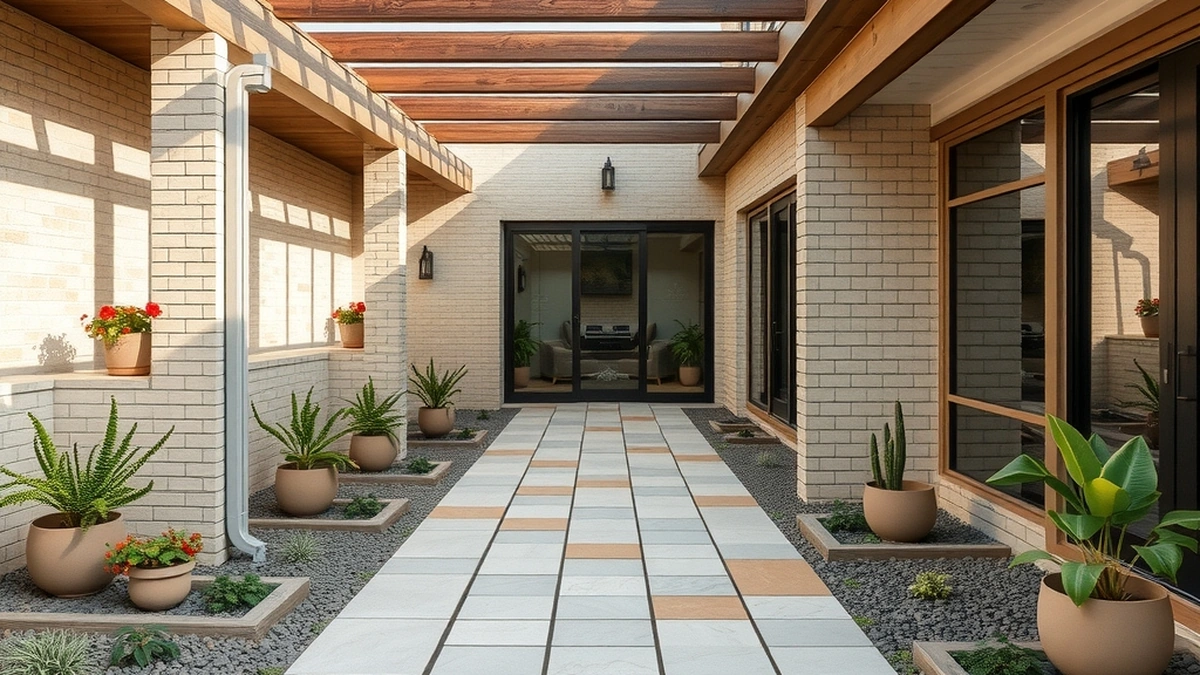
Permeable interlocking concrete pavement is a different assembly. The units have wider joints or openings, they sit on an open-graded bedding layer, and below that is a washed stone reservoir sized to hold a storm event while it infiltrates. Many designs add a geotextile separator, and some add a perforated underdrain. The surface is built to pass water, not to shed it, which makes the base a storage structure rather than just a platform.
Cost, Side by Side
| Concrete pavers | Permeable pavers | |
|---|---|---|
| Installed rate | $8–$15 per sq ft | $12–$25 per sq ft |
| 400 sq ft driveway | $3,200–$6,000 | $4,800–$10,000 |
| Base | 4–6 in dense-graded aggregate | 6–12 in open-graded reservoir |
| Joints | Tight, sand-filled | Wide, aggregate-filled |
| Sealing | $1–$3 per sq ft, optional | Not sealed |
| Routine care | Sweep, top up joints | Vacuum sweep, check infiltration |
The arithmetic on a 400 sq ft driveway: 400 × $8 = $3,200 and 400 × $15 = $6,000 for conventional; 400 × $12 = $4,800 and 400 × $25 = $10,000 for permeable. The gap runs from $1,600 at the low ends to $4,000 at the high ends, and most of it is excavation and stone rather than the units.
Base repair is the wildcard in both systems. At $4 to $8 per sq ft, rebuilding 400 sq ft is $1,600 to $3,200, and a permeable system usually needs the deeper excavation anyway because the reservoir is the base.
Where Permeable Earns the Premium
Permeable pavement is the right answer when water has nowhere to go. If the patio slope runs toward the house, if the yard floods after every storm, or if the lot drains to a basement wall, moving water into a reservoir under the surface solves a problem that conventional pavers only relocate. Municipal stormwater rules are the second reason: some jurisdictions limit impervious coverage, and a permeable surface can count differently on a site plan.
There is a physical benefit in cold climates too. Water leaves the surface instead of standing in the joints, so there is less water available at the surface to refreeze. That is a property of the assembly, not a promise that the driveway will never ice.
One condition matters more than any brochure: the subsoil has to accept water, or the reservoir needs an underdrain with somewhere to discharge. Open-graded stone over tight clay becomes a bathtub, and a bathtub is worse than a surface that sheds.
Where Conventional Concrete Wins
Conventional pavers are cheaper, simpler, and easier to repair. The base is shallower, the units are standard, and any installer in the area has done hundreds of them. When a unit cracks, you lift it, reset it, and re-sand the joint. When the surface has to come up for a utility repair, the same pavers go back down.
Permeable systems punish poor installation more severely. A reservoir that was never washed free of fines, or joints filled with the wrong aggregate, clogs and stops infiltrating. At that point the premium bought nothing.
How They Perform Against Water
This is the real comparison, and it is not close. Conventional pavers are a delivery system for runoff: they send it to the low edge of the patio, into the lawn, or into a drain you paid for. Permeable pavers are a storage and infiltration system, and they keep the water on the site where it fell.
The trade is control for maintenance. A conventional patio needs sweeping and occasional joint sand. A permeable patio needs vacuum sweeping, typically twice a year, and aggregate top-ups in the joints. If nobody ever vacuums it, the surface seals itself with grit and the system quietly stops working.
Maintenance Over Ten Years
Conventional: refill joints every few years, reseal if you choose to at $1 to $3 per sq ft, and reset the odd settled unit. On 400 sq ft, sealing twice in a decade is 400 × $2 × 2 = $1,600 at the midpoint.
Permeable: two vacuum sweeps a year, joint aggregate replacement, and an infiltration check. There is no sealer line. The cost is labor and attention rather than material, and it is the line owners skip.
How to Decide in Five Steps
- Dig a test hole and see what the subsoil does with a bucket of water.
- Check the local stormwater or impervious-cover rules before choosing a surface.
- Measure the slope and identify where water leaves the site today.
- Price both systems at the same square footage, with base depth named in writing.
- If permeable, require the reservoir depth, the aggregate specification, and the underdrain detail on the quote.
Then compare the two totals against the value of the drainage benefit. If the site floods and the rules allow it, permeable is the engineering answer. If the site drains and the budget is finite, conventional concrete pavers at $8 to $15 per sq ft leave money for the base, which is where the performance actually lives.
For the deeper numbers, permeable cost covers the reservoir math and concrete pavers cost covers the conventional side. permeable maintenance explains the vacuum schedule, and permeable problems covers what clogging looks like before it becomes a rebuild. If water is already pooling on an existing surface, start with drainage pooling prevention.
Frequently asked questions
What is the most important measurement?
Start with the ceiling or clearance number; it decides which systems can fit.
What does a typical project cost?
Costs vary by system and site access; the guide shows the line items and a planning range.
Can I install this myself?
Some tasks are DIY-friendly, but structural, electrical, and load-bearing work should be done by a licensed professional.
How long does installation take?
A simple setup is a weekend; a full build with electrical or structural work can take several weeks.
What should I check before buying?
Confirm dimensions, load ratings, and the manufacturer's installation requirements for your exact model.
Where can I find local help?
Ask a licensed contractor or installer who has worked with the same system and can inspect your site.
Sources
Some links are affiliate links.If you buy through them we may earn a commission at no extra cost to you. We do not accept payment for rankings. Read the full disclosure.