Permeable Problems: Clogging, Settling, and Bypass
Permeable paver problems explained: surface clogging, base settling, water bypassing the system, winter damage, and how to diagnose each one before it spreads.
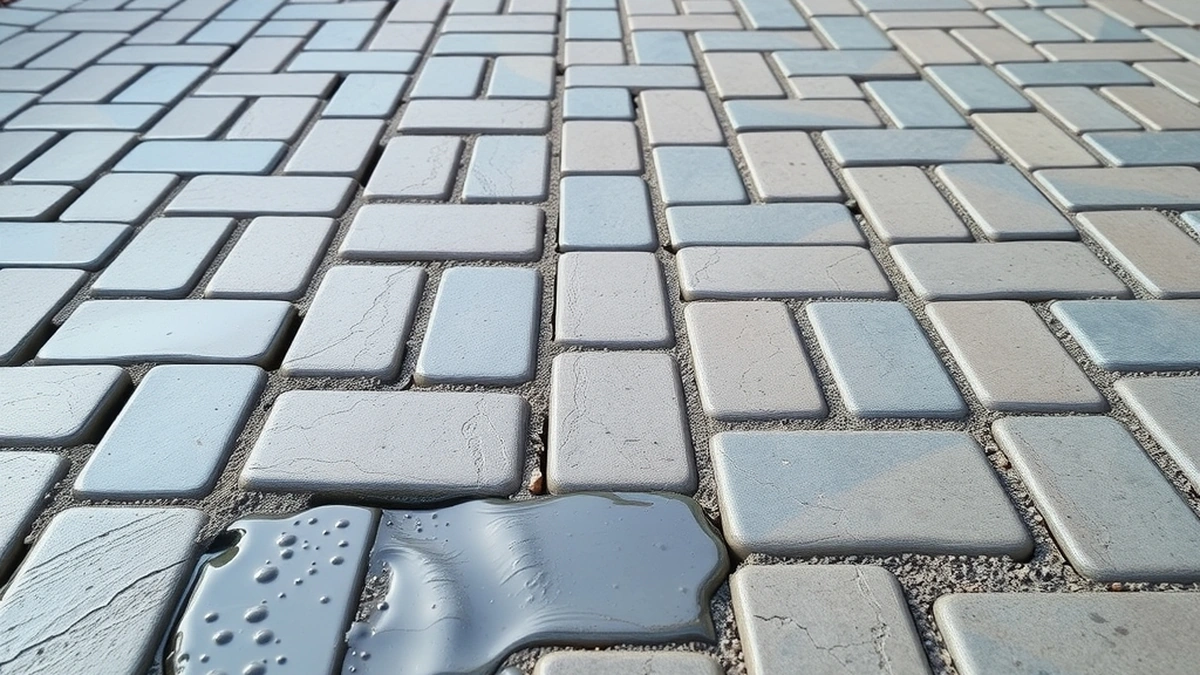
Permeable problems are infiltration problems: fines clog the surface, a shallow base can no longer store water, and the surface ponds. Base repair runs $4 to $8 per square foot; cleaning the surface often restores flow.
- Installed cost
- $12–$25 per sq ft
- Base repair
- $4–$8 per sq ft
- Main cause
- Clogged surface pores
- Second cause
- Undersized or dirty base
- Typical signal
- Ponding that did not exist before
Some links on this page are affiliate links.If you buy through them we may earn a commission at no extra cost to you. We do not accept payment for rankings. Read the full disclosure.
Permeable problems are infiltration problems. A permeable surface fails when water can no longer get through it, and the failure is usually gradual: the joints darken after rain and stay dark longer, then a puddle appears, then the system is a conventional pavement with worse drainage. Settling and bypass failures follow the clogging rather than precede it.
Why Permeable Systems Fail
A permeable paver system is a surface with open joints over an open-graded aggregate reservoir, designed to store stormwater and release it into the subsoil or an underdrain.
That design creates three points of failure: the surface pores, the joint aggregate, and the base volume. Each clogs differently and each requires a different fix. Diagnosing which one has failed is the whole job.
The stakes are higher than on a conventional patio because the base is deeper. Rebuilding it costs $4 to $8 per square foot, so a 300-square-foot driveway is $1,200 to $2,400 before any paver is reset.
Clogging: The Dominant Failure
Clogging is the most common failure and the most fixable. Fines — silt, grit, leaf litter, pollen, tire dust, and sand from winter traction — lodge in the surface pores and the upper inch of joint aggregate.
The signal is a change in drying time. A functioning surface dries within hours of rain. A clogged one stays dark for a day or more, and eventually holds water in the joints while the surrounding ground is dry.
Progression is predictable: shaded areas clog first because they dry slowly, edges clog next because that is where runoff carries debris, and the lowest point of the surface shows ponding first.
Restoration is mechanical, not chemical. Regenerative-air vacuum sweeping pulls fines out of the pores. Power washing with simultaneous vacuum extraction reaches deeper. Neither requires removing pavers unless the clog has migrated into the bedding layer. Our permeable maintenance guide covers the equipment and the interval.
Settling and Rutting Under Load
Settling shows up as a dip in the field, a rocking unit, or a rut where vehicle wheels track. Rubber-tired traffic is the usual trigger on a driveway, but the cause is the base.
Three construction errors produce it: aggregate placed in lifts that were too deep to compact, aggregate that was dense-graded instead of open-graded, and a soft subgrade that was never proof-rolled. Water makes all three worse, because a saturated subgrade loses bearing capacity.
Repair follows the same pattern as any paver base failure: lift the affected field, excavate to stable material, rebuild in compacted lifts, re-screed, and re-lay. Patching from above with aggregate fills the dip and blocks the infiltration the system needs. See settling repair for the sequence and costs.
Water Bypassing the Surface
Bypass failures are the ones that surprise owners, because the surface looks fine and still ponds. Water is getting under the pavers and not into the reservoir.
Common causes:
- Dense-graded bedding used instead of washed aggregate — water passes the joint and stops at the bedding.
- Edge restraint missing or loose — water enters at the perimeter, erodes the base, and the field spreads.
- Underdrain outlet blocked or buried — the reservoir fills and cannot empty.
- Contributing area not accounted for — roof and slope runoff overload a reservoir sized only for the paver surface.
Bypass is diagnosed from the outlet and the edge. If the outlet runs after rain, the system is working. If the edge shows erosion or the base is saturated while the outlet is dry, water is going somewhere it should not.
Winter Performance and Salt
Permeable pavers handle freeze-thaw well when they drain, because water leaves instead of pooling and refreezing. The winter problems are mechanical.
Snowplows catch raised edges and drag units out of alignment. Sand spread for traction washes into the joints and becomes the fines that clog the surface in spring. Rock salt is less damaging to the pavers than to the vegetation and groundwater the system discharges into.
The workable routine is a rubber-edged plow or a snow blower, sand used sparingly and swept up in spring, and a post-winter vacuum pass on any surface that saw heavy sanding.
Weeds, Joint Fill, and Bad Repairs
Weeds establish in joints filled with the wrong material. Owners sometimes top up permeable joints with sand or polymeric sand to stop them, which seals the surface and creates the clogging problem it was meant to solve.
The correct joint fill is washed, narrow-graded aggregate matching the manufacturer’s specification. It looks loose, it stays permeable, and it needs occasional top-up after heavy rain.
Two other repairs do lasting damage: sealing the surface, and pressure washing without vacuum extraction, which drives fines deeper instead of removing them.
How Permeable Fails Differently
| Failure | Permeable system | Conventional pavers |
|---|---|---|
| Clogging | Primary risk, gradual | No infiltration to lose |
| Ponding | From surface or base clog | From slope or base settlement |
| Settling | Base undersized for storage | Base undersized for load |
| Joint maintenance | Washed aggregate, no fines | Sand or polymeric sand |
| Sealing | Never | Optional |
| Repair cost driver | Base volume | Base depth |
The comparison is not about which lasts longer. It is that a permeable system has a performance contract — it must infiltrate — and a conventional one does not. That contract has to be maintained.
Diagnosing a Clogged System in Five Steps
- Time the drying. Photograph the surface two hours after rain and again the next morning. Slow drying is the first signal.
- Pour a bucket of water on the worst area. If it disappears in seconds, the surface is fine and the base is the suspect. If it sits, the surface is clogged.
- Check the outlet. Water arriving at the outlet means storage works. A dry outlet with a wet base means bypass.
- Inspect the edge. Erosion or a loose restraint explains both bypass and settlement.
- Clean before rebuilding. Vacuum sweep first. Many systems that look failed are simply dirty.
Only after those five checks does the $4 to $8 per square foot base repair become the right answer. For how the system should have been built, see permeable installation; for how it compares with a conventional surface, see permeable versus concrete pavers. Costs are covered in permeable paver cost.
Frequently asked questions
Why do my permeable pavers stopped draining?
The surface or the joint aggregate has clogged with fines, leaves, and grit. Water can no longer pass into the base, so it runs off or ponds. Cleaning the surface restores most of the rate; a clogged base is a larger repair.
Can clogged permeable pavers be restored?
Usually. Vacuum sweeping with a regenerative-air machine removes the fines that block the pores, and power washing with simultaneous vacuum extraction is the next step. Severe clogging at depth may require removing and replacing the joint aggregate.
Why are my permeable pavers sinking?
Because the base was undersized, under-compacted, or the subgrade was soft. Water saturating a weak subgrade accelerates settlement. Repair means lifting the field, rebuilding the base, and re-laying.
Does sand in permeable joints cause problems?
Yes. Sand fills the voids the system depends on and becomes a clogging layer. Permeable joints should hold washed, narrow-graded aggregate, never sand or polymeric sand.
Are permeable pavers bad in winter?
They generally perform well because water drains instead of pooling and refreezing. The risks are snowplow damage to the surface, and sand applied for traction washing into the joints and clogging them.
How much does it cost to fix a failed permeable system?
Base repair runs $4 to $8 per square foot, and a clogged surface can often be restored for far less with vacuum sweeping. A full rebuild of a 300-square-foot driveway lands between $1,200 and $2,400 for the base alone.
Sources
Some links are affiliate links.If you buy through them we may earn a commission at no extra cost to you. We do not accept payment for rankings. Read the full disclosure.