Permeable Maintenance: Keeping Infiltration Working
Permeable maintenance keeps a permeable surface infiltrating: vacuum sweeping, the bucket test, joint aggregate top-up, and what never to apply to the surface.
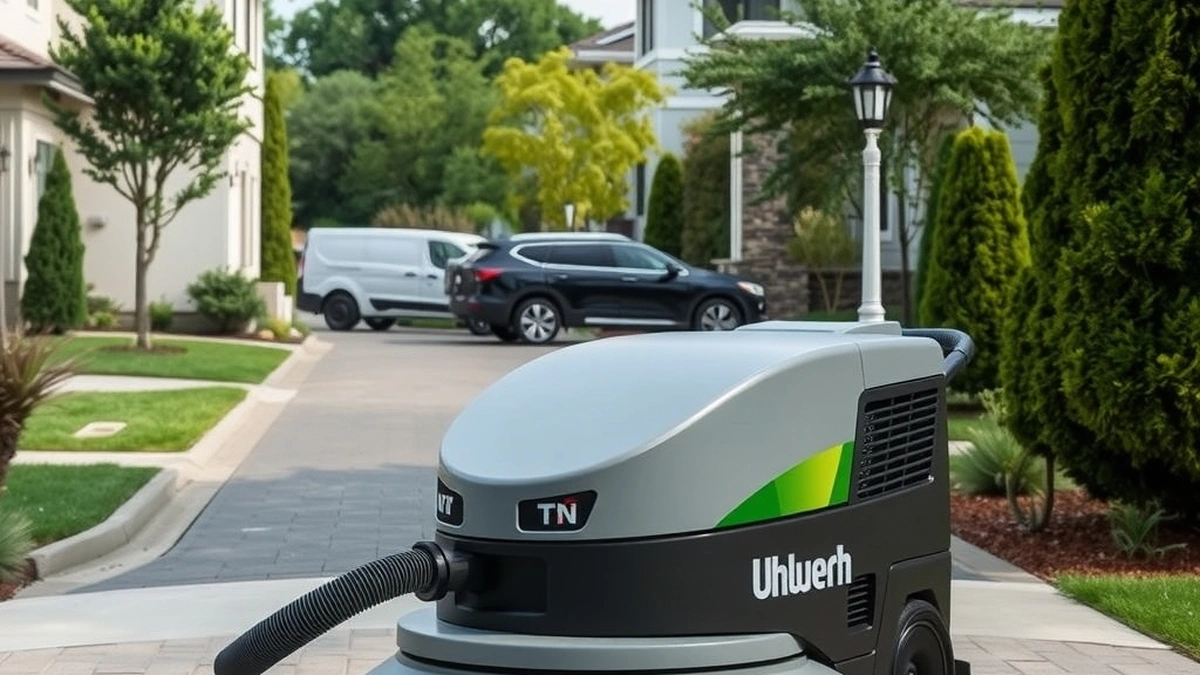
Permeable maintenance is vacuum sweeping two to four times a year, topping up washed joint aggregate, and a bucket test every six months. Never seal, never add sand, and never pressure wash without extraction.
- Vacuum sweep
- 2–4 times per year
- Bucket test
- Every 6 months
- Joint top-up
- As needed after rain
- Installed cost
- $12–$25 per sq ft
- Base repair, if neglected
- $4–$8 per sq ft
Some links on this page are affiliate links.If you buy through them we may earn a commission at no extra cost to you. We do not accept payment for rankings. Read the full disclosure.
Permeable maintenance exists for one reason: the surface has to keep accepting water. Vacuum sweep it two to four times a year, top up the washed joint aggregate when it settles, and test infiltration with a bucket. Skip those three and a $12 to $25 per square foot system becomes a puddling patio that needs $4 to $8 per square foot of base repair.
What Permeable Maintenance Protects
Permeable maintenance is the routine work that keeps the surface pores and joint aggregate open so stormwater can reach the storage base below.
It is not the same program as conventional paver care. A conventional patio is maintained for appearance and joint stability. A permeable surface is maintained for hydraulic performance, and appearance follows from it.
That distinction changes the tools. A broom and a hose are enough for concrete pavers. A permeable surface needs mechanical extraction — a vacuum sweeper — because the debris that matters is below the surface, in the pores.
The Bucket Test and the Drying Test
Two cheap tests tell you whether maintenance is due.
The bucket test. Pour a 5-gallon bucket of water onto the surface at the worst-draining spot and time it. Water that disappears in seconds means the system is working. Water that takes a minute or more, or that stands, means the surface is clogged.
The drying test. Photograph the surface two hours after rain and again the next morning. A healthy surface dries at roughly the same rate as the surrounding pavement. One that stays dark is holding water in the joints.
Run both every six months and after any season of heavy leaf fall. Keep the photos — a slow decline is invisible day to day and obvious across a year.
Vacuum Sweeping Is the Core Task
Regenerative-air vacuum sweeping is the only routine maintenance that removes fines from the surface pores rather than pushing them deeper. The machine lifts debris with a high-volume air stream and captures it.
Frequency depends on loading. A driveway under trees needs four passes a year. A pool deck with no tree cover might need two. Construction nearby, sanded winters, and agricultural dust all raise the count.
Between professional passes, a leaf blower on low and a stiff broom keep larger debris from breaking down into fines. Do not sweep sand or grit into the joints — sweep it off the surface and dispose of it.
What Not to Do
| Practice | Effect on a permeable surface |
|---|---|
| Sealing | Fills pores and joints; infiltration drops to near zero |
| Sand in joints | Migrates into voids and forms a clogging layer |
| Polymeric sand | Bonds the joint fill into an impermeable plug |
| Pressure washing without extraction | Drives fines deeper into the joint aggregate |
| Power blowing debris into joints | Concentrates the material that clogs the system |
| De-icing salt in quantity | Damages vegetation and receiving water, not the paver |
Sealing deserves particular emphasis because it is sold to homeowners as general paver care at $1 to $3 per square foot. On a permeable surface the same treatment is destructive. If a contractor proposes sealing, that contractor does not understand the system.
The Seasonal Calendar
| Season | Task | Reason |
|---|---|---|
| Spring | Vacuum sweep, bucket test | Clear winter sand and grit before the wet season |
| Early summer | Top up joint aggregate | Heavy spring rain settles the fill |
| Late summer | Inspect edges and outlet | Dry weather is the best time to find bypass |
| Autumn | Vacuum sweep after leaf fall | Leaves break down into the fines that clog pores |
| Before winter | Clear outlets, confirm slope | Prevent ice damming at the low edge |
| Winter | Rubber-edge plow, minimal sand | Protect surface and joints |
Restoring a Surface That Has Clogged
Cleaning restores most clogged systems without lifting a paver. Work in stages, cheapest first.
Start with a regenerative-air vacuum pass over the entire surface, twice in opposite directions on the worst areas. Re-run the bucket test. If the rate improves but does not recover, follow with power washing and simultaneous vacuum extraction, working in small sections so the loosened fines are captured before they settle back.
If the joint aggregate itself is contaminated through its full depth, the remedy is to remove the top half inch of joint fill with a vacuum-assisted tool and replace it with fresh washed aggregate. That is still far cheaper than base repair.
Only when the base has failed — not the surface — does the $4 to $8 per square foot excavation apply. Our permeable problem guide explains how to tell the two apart before spending.
Maintenance in Six Steps
- Photograph the surface after rain and keep the images as your baseline.
- Run the bucket test every six months at the same spot, and record the time.
- Vacuum sweep two to four times a year, more under trees or after sanding.
- Top up joint aggregate with washed material whenever it settles below the chamfer.
- Clear the outlet and check the edge before winter and after any heavy storm.
- Avoid sealing, sand, and unextracted pressure washing for the life of the surface.
That is a small program with a large payoff. The alternative is a surface that quietly stops working and a repair bill at base-repair rates. For how the system is built, see permeable installation; for what it costs up front, permeable paver cost; for the conventional maintenance calendar most of these tasks do not belong to, paver patio maintenance.
Frequently asked questions
How often should permeable pavers be cleaned?
Vacuum sweep two to four times a year, and always after autumn leaf fall. Add a pass in spring if the surface was sanded for winter traction. Surfaces under trees or near construction need more frequent cleaning.
How do I test whether my permeable pavers still drain?
Pour a bucket of water onto the surface and time how long it takes to disappear. Seconds means the system is working; minutes or standing water means the surface or joints have clogged and need cleaning.
Can I pressure wash permeable pavers?
Only with simultaneous vacuum extraction. Pressure washing alone drives fines deeper into the joints and makes clogging worse. If you cannot extract while washing, vacuum sweep instead.
Should permeable pavers be sealed?
No. Sealing fills the pores and joints the system depends on and turns a permeable surface into a conventional one with worse drainage. Sealing is for conventional pavers, not permeable ones.
What do I put in permeable paver joints?
Washed, narrow-graded aggregate matching the manufacturer's specification. Never sand, never polymeric sand, and never soil. Those materials clog the voids and stop infiltration.
What happens if permeable pavers are never maintained?
The surface clogs, water ponds, and the base stays saturated. Saturated base loses strength, pavers settle, and repair climbs to $4 to $8 per square foot for base work on top of the cleaning that was deferred.
Sources
Some links are affiliate links.If you buy through them we may earn a commission at no extra cost to you. We do not accept payment for rankings. Read the full disclosure.