Permeable Pavers Cost: The Premium, the Base, and Payback
Permeable pavers cost $12 to $25 per square foot against $8 to $15 for standard pavers. See what the premium buys, base volume math, and when it pays back.
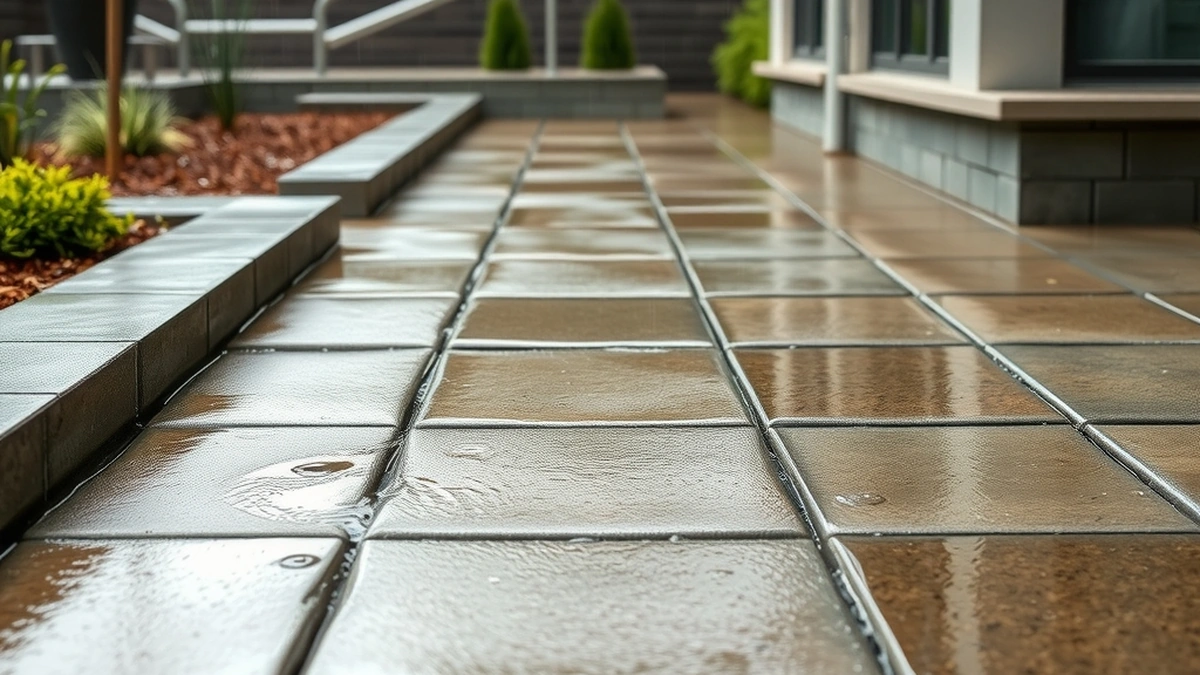
Permeable pavers cost $12 to $25 per square foot installed, versus $8 to $15 for standard concrete pavers. The extra buys deeper excavation, open-graded aggregate, and geotextile rather than a different surface unit.
- Permeable pavers
- $12–$25 per sq ft
- Standard concrete pavers
- $8–$15 per sq ft
- Typical premium
- $4–$10 per sq ft
- 400 sq ft project
- $4,800–$10,000
Some links on this page are affiliate links.If you buy through them we may earn a commission at no extra cost to you. We do not accept payment for rankings. Read the full disclosure.
Permeable pavers cost $12 to $25 per square foot installed, against $8 to $15 for standard concrete pavers. The premium of roughly $4 to $10 per square foot is not in the paver — it is in the excavation depth, the open-graded storage base, and the geotextile that keeps that base working.
What the Premium Buys
Permeable pavers are units with enlarged joints, spacers, or openings that let water pass through the surface into an open-graded aggregate base that stores and infiltrates it. The unit is the visible part; the base is the system.
| Component | Standard pavers | Permeable pavers |
|---|---|---|
| Excavation depth | 6–8 in typical | 12–18 in typical |
| Base aggregate | Dense-graded, compacts tight | Open-graded, drains freely |
| Separation fabric | Usually none | Geotextile required |
| Joint fill | Sand or polymeric sand | Small open-graded chip stone |
| Surface infiltration | Minimal | By design |
The deeper excavation is the biggest single cost. Hauling away twice the spoil and importing twice the aggregate doubles the base line, which is the largest component of any paver price.
Cost by Size
| Square feet | At $12 | At $18.50 | At $25 |
|---|---|---|---|
| 200 | $2,400 | $3,700 | $5,000 |
| 400 | $4,800 | $7,400 | $10,000 |
| 600 | $7,200 | $11,100 | $15,000 |
The rate band is wide because permeable systems are specified rather than chosen from a catalog. A residential patio with a shallow storage layer sits near $12; a driveway or a site with an underdrain and an engineered storage volume sits near $25.
The Base Volume in Tons
Take a 400-square-foot patio with a 12-inch open-graded base: 400 × 1 ft = 400 cubic feet, and 400 ÷ 27 = 14.8 cubic yards. At roughly 2,700 pounds per cubic yard that is about 40,000 pounds — twenty tons of aggregate under the surface.
A standard 400-square-foot patio with a 6-inch base uses 7.4 cubic yards, about half. That difference in material, trucking, and compaction time is the premium, and it is why a permeable quote can look inflated until you see the section drawing.
Where It Pays Back
The payback argument has three parts, and only one of them is financial in the short term.
The first is drainage. If a patio or driveway currently sends water into a basement, a garage, or a neighbor’s yard, permeable pavers solve the problem at the surface instead of adding a drain line. Compare the permeable premium against the cost of a trench drain, regrading, and possibly a sump.
The second is regulation. Some municipalities offer a stormwater utility credit for managed runoff, and some require infiltration for new impervious area. Confirm the local rule and the documentation before counting on it, because credits vary widely and are often modest.
The third is erosion and ice. Water that infiltrates does not sheet across a slope or refreeze at the apron, which matters in cold climates where a driveway drains to the street.
Maintenance Is a Cost Line
Permeable pavers need sweeping and periodic vacuuming to keep the voids open. Budget for at least an annual pass with a vacuum sweeper, and a second in fall where leaf drop is heavy. Neglect is the most common reason a permeable system underperforms, and it is not covered by any stormwater credit.
Joint stone also needs topping up occasionally, and any repair has to use the same open-graded material rather than ordinary sand. Using sand to fill permeable joints defeats the system.
When Permeable Is the Wrong Choice
- Heavy clay with no outlet. Water has to go somewhere. Without an underdrain or a daylight discharge, storage fills and the surface ponds.
- High water table. A storage layer that sits below the seasonal water table never drains.
- Steep slopes. Storage volume is hard to hold on a grade, and the base can migrate.
- No maintenance budget. A clogged permeable patio is a standard patio with wider joints and less stability.
- Tight budget with no drainage problem. If the site drains fine and no credit applies, the premium buys resilience rather than a fix.
Getting a Comparable Quote
- Ask for the section drawing: excavation depth, base type, storage depth, and fabric.
- Confirm whether an underdrain or outlet is included and where it discharges.
- Ask for the joint fill specification — open-graded chip, not sand.
- Confirm compaction method for an open-graded base, which is different from standard aggregate.
- Get maintenance pricing for vacuum sweeping as a separate line.
- Check whether the design meets a local stormwater requirement, and get that in writing.
Then compare against standard versus permeable pavers on performance, and use concrete pavers cost as the baseline for the premium. For the drainage side, pooling prevention explains what a conventional fix costs when infiltration is not an option.
The Honest Summary
Permeable pavers are a drainage system that happens to be a nice patio. If the site needs infiltration, a credit applies, or water currently runs where it should not, the $4 to $10 per square foot premium is buying a solution you would otherwise pay for with pipe and grading. If none of those are true, standard pavers at $8 to $15 per square foot do the same job for less, and standard pavers at least tolerate a joint-sand refill without losing their function.
Frequently asked questions
Why do permeable pavers cost more than regular pavers?
The surface units are similar in price. The cost is in the system: a deeper excavation, an open-graded storage base instead of standard aggregate, geotextile separation fabric, and more careful compaction.
How much more does a permeable patio cost?
Roughly $4 to $10 per square foot more than standard concrete pavers. On a 400-square-foot patio that is $1,600 to $4,000 extra, before any local stormwater credit.
Do permeable pavers need special maintenance?
Yes. Voids clog with fines and organic debris, so the surface needs periodic sweeping and vacuuming. Without it, infiltration drops and the system behaves like a standard patio with weaker joints.
Can permeable pavers be installed over clay soil?
Only with a designed outlet or storage layer, because clay infiltrates slowly. Many installations use an underdrain to a storm system or a daylight outlet rather than relying on native soil.
Do permeable pavers reduce stormwater fees?
In some jurisdictions they qualify for a stormwater utility credit or a reduction in impervious-area charges. The credit varies by municipality, so confirm the local rules and the documentation required before you budget on it.
Are permeable pavers strong enough for a driveway?
Yes, when specified as 80 mm units on an appropriately designed base. They cost $20 to $25 per square foot on a driveway because the storage base is deeper and the excavation larger.
Sources
Some links are affiliate links.If you buy through them we may earn a commission at no extra cost to you. We do not accept payment for rankings. Read the full disclosure.