Understanding Permeable Cost
A commercial guide to permeable paver costs, from base preparation to surface installation.
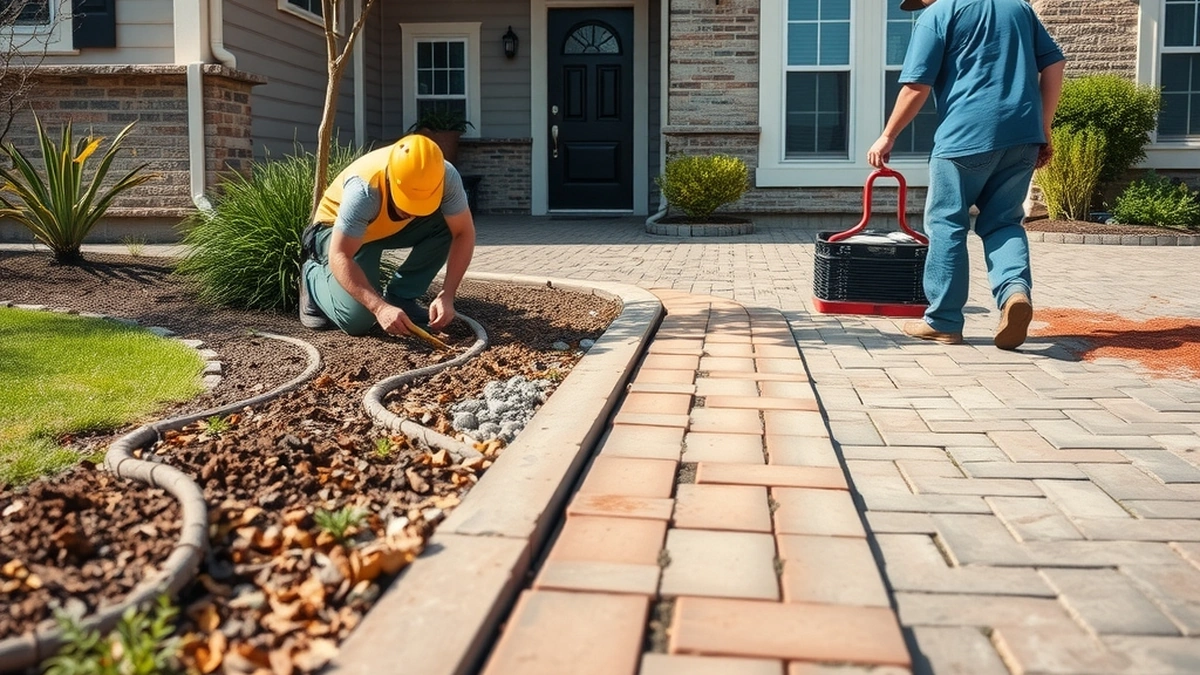
Permeable pavers typically cost between $12 and $25 per square foot, which includes base preparation, surface laying, and sealing.
- Typical range
- Varies by system and site
- First step
- Measure the space and confirm the load
- Professional help
- Recommended for structural or electrical work
Some links on this page are affiliate links.If you buy through them we may earn a commission at no extra cost to you. We do not accept payment for rankings. Read the full disclosure.
Permeable pavers cost $12 to $25 per square foot installed, which is $4 to $10 per square foot more than conventional concrete pavers. On a 400 sq ft driveway that is $4,800 to $10,000 against $3,200 to $6,000. Most of the difference is not the units — it is the deeper excavation and the washed stone reservoir underneath them.
What the System Includes
A permeable paver installation is a drainage structure with a wearing surface on top. The units have wide joints or openings, the joints are filled with open-graded aggregate rather than sand, and below the bedding layer sits a reservoir of washed stone. The reservoir is sized to hold a storm event while it infiltrates, and some systems add a geotextile separator and a perforated underdrain.
That is why the price band is higher and why it is less negotiable. You are buying stone volume and excavation, not a different color of paver.
Cost Per Square Foot
| Component | Conventional | Permeable |
|---|---|---|
| Installed rate | $8–$15 per sq ft | $12–$25 per sq ft |
| Base depth | 4–6 in dense-graded | 6–12 in open-graded reservoir |
| Excavation | Shallow | Deep, plus haul-off |
| Joint fill | Sand | Open-graded aggregate |
| Sealer | $1–$3 per sq ft, optional | None |
| 400 sq ft total | $3,200–$6,000 | $4,800–$10,000 |
The arithmetic: 400 × $12 = $4,800 at the low end, 400 × $25 = $10,000 at the high end. The gap to conventional is $1,600 to $4,000, and it is almost entirely below grade.
The Reservoir Drives the Price
Reservoir depth is set by the storm volume the system has to hold and by how fast the subsoil accepts water. A designer balances three numbers: the rain event the system must store, the void space in the stone, and the infiltration rate of the soil below. A fast-draining sandy subgrade needs a shallower reservoir than a tight clay subgrade that relies on an underdrain.
A 6-inch reservoir over 400 sq ft is 200 cubic feet, or 7.4 cubic yards of washed stone. An 12-inch reservoir is double that: 400 cubic feet, or 14.8 cubic yards.
At roughly $45 to $70 per cubic yard for washed, open-graded stone delivered — an estimate that varies by region — the difference between those two depths is $333 to $518 on 400 sq ft. Add the extra excavation, the haul-off of the spoil, and the geotextile, and the reservoir accounts for most of the premium.
Where the subsoil is tight clay, the design may need an underdrain and a discharge point. That is another line item, and it is the one that decides whether the system works at all.
Base Repair Is Priced the Same, and It Still Applies
Permeable systems are not immune to base failure. If the reservoir silts up or the subgrade settles, the repair rate is the same $4 to $8 per sq ft, and on 400 sq ft that is $1,600 to $3,200. The difference is that a permeable repair often means removing and replacing the reservoir aggregate rather than just recompacting it, which pushes toward the top of that range.
This is the argument for spending on the specification the first time. A permeable system installed with the wrong aggregate, or with fines left in the stone, is a $10,000 surface that stops draining in three years.
Maintenance Cost Over Time
There is no sealer line, which saves $1 to $3 per sq ft per application. There is a vacuum sweeping line instead. Two visits a year is the usual recommendation, and a commercial vacuum sweeper visit commonly runs $150 to $300 for a residential driveway — an estimate. Over ten years that is $3,000 to $6,000.
Set that against sealing a conventional driveway twice in a decade: 400 × $2 × 2 = $1,600 at the midpoint. On maintenance alone, permeable costs more. The value has to come from the drainage function, not from the maintenance budget.
Permeable Versus Conventional, Total
| Ten-year view, 400 sq ft | Conventional | Permeable |
|---|---|---|
| Installation | $3,200–$6,000 | $4,800–$10,000 |
| Sealing | $1,600 at midpoint, twice | $0 |
| Sweeping and joint care | Minimal | $3,000–$6,000 |
| Drainage works | Often a separate drain | Built in |
| Ten-year total | $4,800–$7,600 | $7,800–$16,000 |
The permeable column is more expensive on every line except sealing. That is not a reason to avoid it. If the site floods, if the patio drains toward the house, or if local rules limit impervious coverage, the conventional column needs a drain and a grading fix that can approach the difference.
Where the Premium Is Worth It
The extra $1,600 to $4,000 buys a drainage function, not a prettier surface. It is worth it when the alternative is a conventional patio plus a separate drain, a regrade, or a repaired basement wall — costs that are quoted per job and can easily reach the same figure. It is also worth it when local stormwater rules count the surface differently in the site plan, because the permit itself may depend on it.
It is not worth it on a site where the water already leaves, the soil accepts it, and nobody will sweep the joints. In that case the premium buys maintenance obligations and a surface that fails quietly once the joints clog.
- What is the reservoir depth in inches, and what storm volume is it sized for?
- What aggregate specification is being used, and will the washed stone be protected from fines during construction?
- Is there an underdrain, and where does it discharge?
- What is the joint aggregate, and how will it be replenished after settling?
- What does the maintenance schedule look like, and who performs the first sweep?
The answers should be specific. A contractor who cannot name the reservoir depth is pricing a look, not a system.
For the comparison in more detail, concrete pavers vs permeable sets the two assemblies side by side, and permeable pavers cost narrows in on the unit pricing. permeable maintenance covers the sweeping schedule, and permeable problems explains what clogging looks like before the surface fails.
Frequently asked questions
What is the most important measurement?
Start with the ceiling or clearance number; it decides which systems can fit.
What does a typical project cost?
Costs vary by system and site access; the guide shows the line items and a planning range.
Can I install this myself?
Some tasks are DIY-friendly, but structural, electrical, and load-bearing work should be done by a licensed professional.
How long does installation take?
A simple setup is a weekend; a full build with electrical or structural work can take several weeks.
What should I check before buying?
Confirm dimensions, load ratings, and the manufacturer's installation requirements for your exact model.
Where can I find local help?
Ask a licensed contractor or installer who has worked with the same system and can inspect your site.
Sources
Some links are affiliate links.If you buy through them we may earn a commission at no extra cost to you. We do not accept payment for rankings. Read the full disclosure.