Travertine vs Flagstone
Travertine vs Flagstone: practical numbers, costs, and trade-offs, written independently.
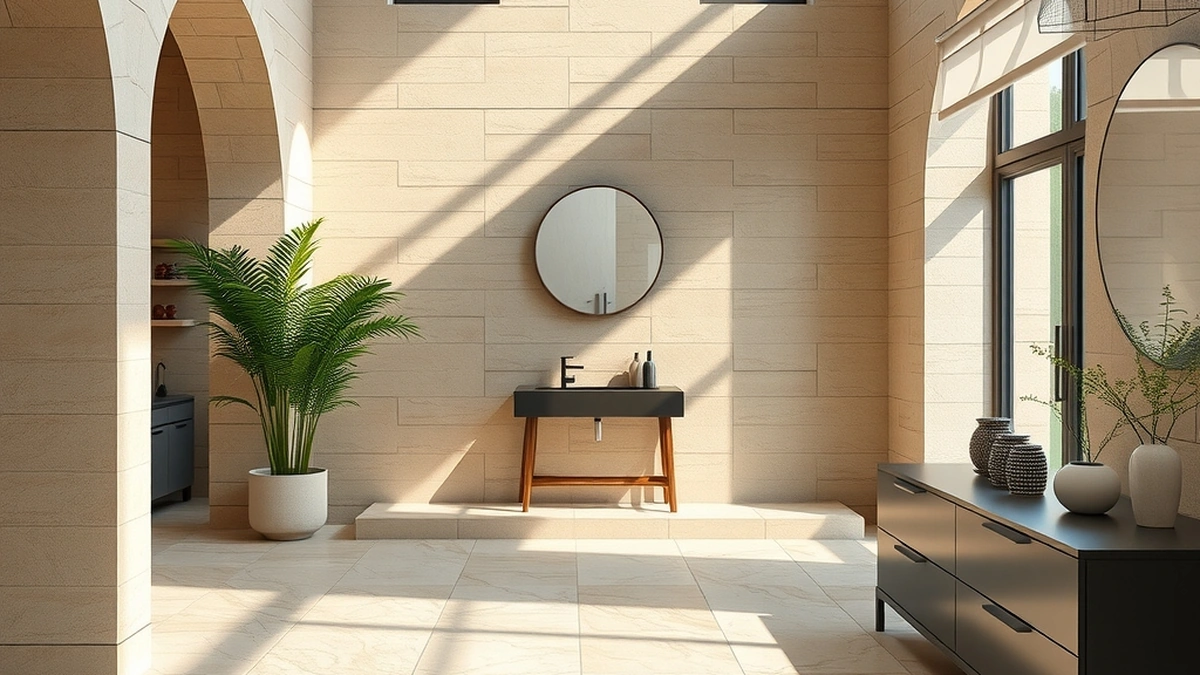
Travertine vs Flagstone: practical numbers, costs, and trade-offs, written independently. The guide below shows the numbers and the trade-offs.
- Typical range
- Varies by system and site
- First step
- Measure the space and confirm the load
- Professional help
- Recommended for structural or electrical work
Some links on this page are affiliate links.If you buy through them we may earn a commission at no extra cost to you. We do not accept payment for rankings. Read the full disclosure.
Travertine and flagstone are both natural stone surfaces, and they fail in opposite ways. Travertine is uniform, machined to a consistent thickness, and priced per square foot at $15 to $30 installed. Flagstone is irregular, sold by weight or by coverage, and dependent on the skill of the person laying it. Choose travertine for a clean, predictable deck; choose flagstone for a surface that looks like it came out of the ground.
The Difference in One Paragraph
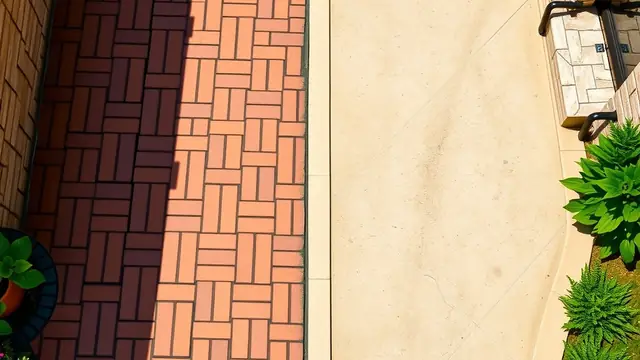
Travertine is a sedimentary stone with natural voids; it is quarried, sawn, and often tumbled or honed into rectangular pavers of a known thickness. Flagstone is a broad category — sandstone, bluestone, slate, limestone — split into irregular slabs whose thickness and size vary from piece to piece. One is a manufactured dimension; the other is a geological one.
That single difference drives cost, installation time, maintenance, and how the finished surface feels underfoot.
How the Cost Is Quoted
Travertine is quoted per square foot installed, which makes budgeting simple. At $15 to $30 per sq ft, a 300 sq ft patio is 300 × $15 = $4,500 to 300 × $30 = $9,000.
Flagstone is usually quoted per ton, and the coverage per ton depends on thickness and stone type. A supplier might say one ton covers 80 sq ft at 1-1/2 inches thick — an illustrative figure, not a universal one; get the number for the actual stone you are buying. If that were the case, 300 sq ft would need 300 ÷ 80 = 3.75 tons, and at $450 per ton that is $1,688 in material before base, labor, and cutting.
That is why flagstone quotes vary so widely. Two contractors can quote the same patio and mean different thicknesses, different stone, and different coverage assumptions.
Travertine Versus Flagstone at a Glance
| Travertine | Flagstone | |
|---|---|---|
| Installed rate | $15–$30 per sq ft | Quoted per ton or per sq ft; varies widely |
| Thickness | Consistent, typically 1-1/4 in | Variable, often 1 to 2 in |
| Cutting | Saw, predictable | Saw or chisel, slow |
| Surface | Uniform, tumbled or honed | Irregular, cleft or sawn |
| Weight | About 13–15 lb per sq ft at 1-1/4 in | Heavier per square foot at 2 in |
| Slip resistance | Good when tumbled, poor when polished | Good, especially cleft faces |
| Repair | Replace one paver | Replace one slab, harder to match |
| Best use | Pool decks, formal patios | Garden patios, informal paths |
Surface and Comfort
Travertine is cool underfoot and comfortable barefoot when tumbled, which is why it shows up on pool decks. Honed and polished travertine is slippery when wet and belongs nowhere near a pool, regardless of how it looks in a showroom.
Flagstone is generally grippier because the surface is cleft or textured. It is also less uniform: a table leg will find the high spot, and a chair will rock unless the slabs were set carefully. That irregularity is the appeal and the annoyance at the same time.
Installation and Cutting
Travertine lays like a thick tile. The units are square, thickness is consistent, and a running bond or French pattern goes down quickly. Cutting is saw work, and the waste factor is modest on a rectangular layout.
Flagstone is a fitting job. Each slab is set, tapped, and sometimes trimmed to fit its neighbor, and the joints are wider and less regular. A sand-set flagstone patio with tight joints takes considerably longer per square foot than travertine, and the labor is where the money goes. The result can be beautiful and it depends almost entirely on the setter.
Freeze-Thaw and Climate
Both stones handle cold climates, with caveats. Travertine is porous; if water sits in the voids and freezes, the surface can spall. Sealing helps, and a well-drained base helps more. Flagstone varies by type: dense bluestone performs well, some sandstones are more absorbent, and a laminated stone can delaminate after a few winters.
Ask what stone specifically is being sold as flagstone. “Flagstone” is a description of shape, not a performance specification, and a quote that will not name the stone is a quote with an unknown in it.
Maintenance Compared
Travertine needs sealing at $1 to $3 per sq ft every few years, pH-neutral cleaning, and no acid. Its pits collect dirt if unfilled, and its surface etches if anything acidic lands on it.
Flagstone needs less sealing in most cases, more weeding between joints if the joints are wide and sand-filled, and occasional re-setting of a slab that rocks. Both need joint sand or polymeric joint fill maintained.
Over ten years on 300 sq ft, travertine sealing runs $900 to $2,700 at three applications. Flagstone maintenance is more labor and less material, and it is harder to put a rate on because it depends on how much the owner tolerates.
How to Choose in Four Steps
- Decide whether you want a uniform surface or an irregular one; that choice eliminates one material immediately.
- Get the travertine quote per square foot and the flagstone quote per ton with coverage stated in writing.
- Ask for the stone type and thickness for either option, not just the trade name.
- Check the slip rating for the intended use, and walk on a wet sample if the patio is a pool deck.
For the full cost picture on the stone side, travertine cost covers the installed rate and travertine maintenance covers the care schedule. flagstone cost handles the ton-based arithmetic, and travertine vs concrete pavers is the comparison if you are still deciding whether natural stone is worth the premium at all.
Frequently asked questions
What is the most important measurement?
Start with the ceiling or clearance number; it decides which systems can fit.
What does a typical project cost?
Costs vary by system and site access; the guide shows the line items and a planning range.
Can I install this myself?
Some tasks are DIY-friendly, but structural, electrical, and load-bearing work should be done by a licensed professional.
How long does installation take?
A simple setup is a weekend; a full build with electrical or structural work can take several weeks.
What should I check before buying?
Confirm dimensions, load ratings, and the manufacturer's installation requirements for your exact model.
Where can I find local help?
Ask a licensed contractor or installer who has worked with the same system and can inspect your site.
Sources
Some links are affiliate links.If you buy through them we may earn a commission at no extra cost to you. We do not accept payment for rankings. Read the full disclosure.