Travertine Cost: Per Square Foot and Per Patio
Travertine costs $15 to $30 per square foot installed. See project totals, the material and labor split, thickness pricing, and the add-ons that raise a quote.
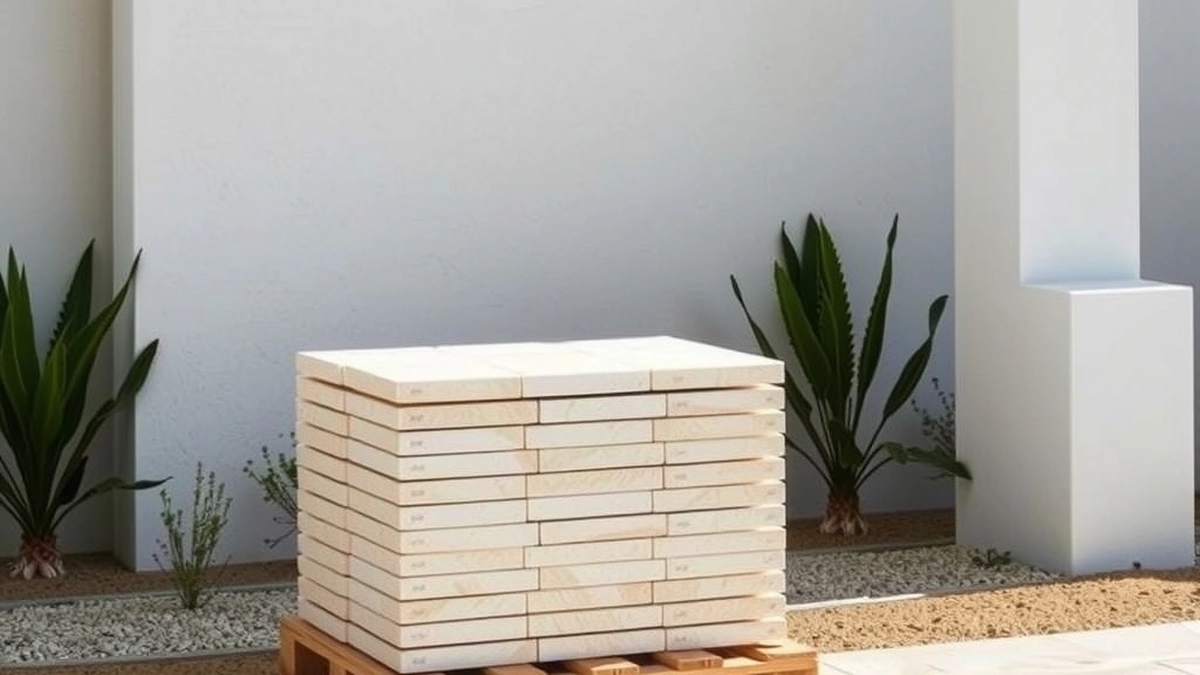
Travertine costs $15 to $30 per square foot installed, about double concrete pavers. A 300-square-foot patio runs $4,500 to $9,000, and base, bedding, cutting, and labor make up about half of that.
- Installed rate
- $15–$30 per sq ft
- 300 sq ft patio
- $4,500–$9,000
- Sealing
- $1–$3 per sq ft
- Base repair
- $4–$8 per sq ft
- Versus concrete
- $8–$15 per sq ft
Some links on this page are affiliate links.If you buy through them we may earn a commission at no extra cost to you. We do not accept payment for rankings. Read the full disclosure.
Travertine costs $15 to $30 per square foot installed, which puts it roughly double the price of concrete pavers and in the same bracket as good flagstone. On a 300-square-foot patio that is $4,500 to $9,000. The stone itself is only about half of that number — base preparation, bedding, cutting, and labor carry the rest.
What the Installed Rate Covers
Travertine is a natural stone formed by mineral deposits around springs; it is quarried in blocks, sawn into slabs or pavers, and usually tumbled or honed. Because it is a finished stone unit, it arrives on site priced by the square foot or by the pallet, already sized.
The installed rate bundles five separate jobs:
- Excavation and removal of existing surface, where there is one
- Four to six inches of compacted aggregate base
- Bedding — sand for a sand-set patio, mortar for a dry-set or thin-set deck
- Cutting, especially around edges, steps, and coping
- Placement, leveling, joint filling, and cleanup
Change any one of those and the rate moves. That is why two quotes for the same square footage can differ by a third.
Cost by Project Size
| Square feet | At $15 | At $22.50 | At $30 |
|---|---|---|---|
| 150 | $2,250 | $3,375 | $4,500 |
| 300 | $4,500 | $6,750 | $9,000 |
| 500 | $7,500 | $11,250 | $15,000 |
| 800 | $12,000 | $18,000 | $24,000 |
Small patios rarely reach the low end, because mobilization, minimum crew time, and delivery get spread across fewer square feet. A 150-square-foot job can quote 25 to 40 percent above the rate a 500-square-foot job receives for the same stone — an estimate, but a consistent pattern across trades.
Where the Money Goes
Split a 300-square-foot job at $22.50 per square foot: the total is $6,750.
- Material, estimated at $8 to $14 per square foot: $2,400 to $4,200. Filled and tumbled 1-1/4 inch pavers sit at the low end; thicker, honed, or French-pattern stone at the high end.
- Base and bedding: roughly $1,000 to $1,800 for aggregate, sand or mortar, and the labor to place it.
- Cutting, layout, and placement: whatever remains — at the midpoint, about $2,000, or roughly $6 to $7 per square foot.
- Waste: add 10 percent to the material figure. Travertine chips and breaks at the edges, and patterned layouts generate more offcuts than a running bond.
Those splits are planning estimates, not quotes. What they show is the ratio: stone is not the dominant line. A cheap stone on a bad base fails just as fast as an expensive one.
Thickness, Finish, and Filled Versus Unfilled
Three specification choices move the price more than anything else.
Thickness. One and a quarter inches is the standard paver thickness for pedestrian use. Two-inch stone is specified for driveways and any surface a vehicle crosses, and it costs more per square foot.
Finish. Tumbled edges look older and cost more than straight-sawn. Honed and polished surfaces are slippery when wet and are a poor choice for a pool deck regardless of price.
Filled versus unfilled. Unfilled travertine keeps its natural pits and holes, drains better, and is cheaper per square foot. Filled travertine has the voids grouted smooth; it is more comfortable underfoot and easier to clean, and the filler can work loose over time.
The Add-Ons That Change the Total
| Add-on | Rate | On 300 sq ft |
|---|---|---|
| Penetrating sealer | $1–$3 per sq ft | $300–$900 |
| Base repair or rebuild | $4–$8 per sq ft | $1,200–$2,400 |
| Demolition and haul-away | Quoted per job | Often $1–$3 per sq ft |
| Coping or step edge | Priced per linear foot | Varies widely |
| Drainage correction | Quoted per job | Depends on outlet distance |
Sealing is the add-on most homeowners defer and most should not, at least on unfilled stone. Base repair is the one that blows budgets, because a soft subgrade is invisible until the surface is opened. Our sealing cost guide and settling repair guide cover both numbers in detail.
Travertine Against the Alternatives
| Material | Installed rate | Best use | Weak point |
|---|---|---|---|
| Travertine | $15–$30 per sq ft | Pool decks, premium patios | Etches from acid, needs sealing |
| Concrete pavers | $8–$15 per sq ft | Budget patios, driveways | Color fade over decades |
| Clay brick | $10–$20 per sq ft | Traditional patios, entries | Efflorescence, corner chips |
| Permeable pavers | $12–$25 per sq ft | Driveways with runoff limits | Surface clogging |
Travertine’s premium buys two things concrete cannot match: a surface that stays noticeably cooler in sun, and a stone appearance that does not repeat. It does not buy chemical resistance. Anything acidic — citrus, vinegar, pool acid, some fertilizers — etches the calcium carbonate surface, and that is permanent. Our travertine problem guide covers the causes in depth.
Reading a Travertine Quote in Five Steps
- Confirm the thickness in writing. 1-1/4 inch for foot traffic, 2 inch for vehicles. A quote that does not name it is not a quote.
- Ask whether the stone is filled or unfilled, and whether the filler is factory-applied or done on site.
- Require the base spec. Depth, aggregate type, and compaction method. This is where cheap quotes hide.
- Price sealing as a separate line so you can see what it adds and decide independently.
- Ask what happens if a paver breaks in ten years. Spares from the same lot matter with natural stone, because the next shipment will not match.
For the installation sequence behind these numbers, see travertine installation. For how the cost stacks up against the most common alternative, see travertine versus concrete pavers, and for per-square-foot benchmarking across the whole market, paver patio cost per square foot.
Frequently asked questions
How much does travertine cost per square foot installed?
Fifteen to thirty dollars per square foot including base preparation, bedding, cutting, and labor. Pool decks with coping, curved edges, and difficult access land at the top of that range or above it.
Is travertine worth double the cost of concrete pavers?
It is worth it where the surface stays cool underfoot and where appearance matters, such as a pool deck. Concrete pavers at $8 to $15 per square foot are the better value on a large utilitarian patio.
What does a 300-square-foot travertine patio cost?
Between $4,500 and $9,000 at $15 to $30 per square foot. Add $300 to $900 for sealing, and $4 to $8 per square foot if the base needs rebuilding before the stone goes down.
Why does travertine cost more than concrete pavers?
The stone is quarried, sawn, and often tumbled or filled, so the unit cost is higher, and it is heavier and slower to lay. Cutting natural stone also takes more saw time and produces more waste than cutting concrete units.
Does travertine need sealing, and what does it cost?
Sealing is recommended rather than mandatory, particularly with unfilled stone. A penetrating sealer costs $1 to $3 per square foot, so a 300-square-foot patio is $300 to $900, and it needs reapplying every one to two years.
Is travertine cheaper than flagstone?
They overlap. Travertine runs $15 to $30 per square foot installed; flagstone varies widely by stone type and thickness. Both cost more than concrete pavers and less than most cut granite.
Sources
Some links are affiliate links.If you buy through them we may earn a commission at no extra cost to you. We do not accept payment for rankings. Read the full disclosure.