Travertine vs Concrete Pavers: Which Surface to Buy
Travertine versus concrete pavers compared on installed cost, heat, maintenance, durability, and repair, with per-square-foot numbers and a decision checklist.
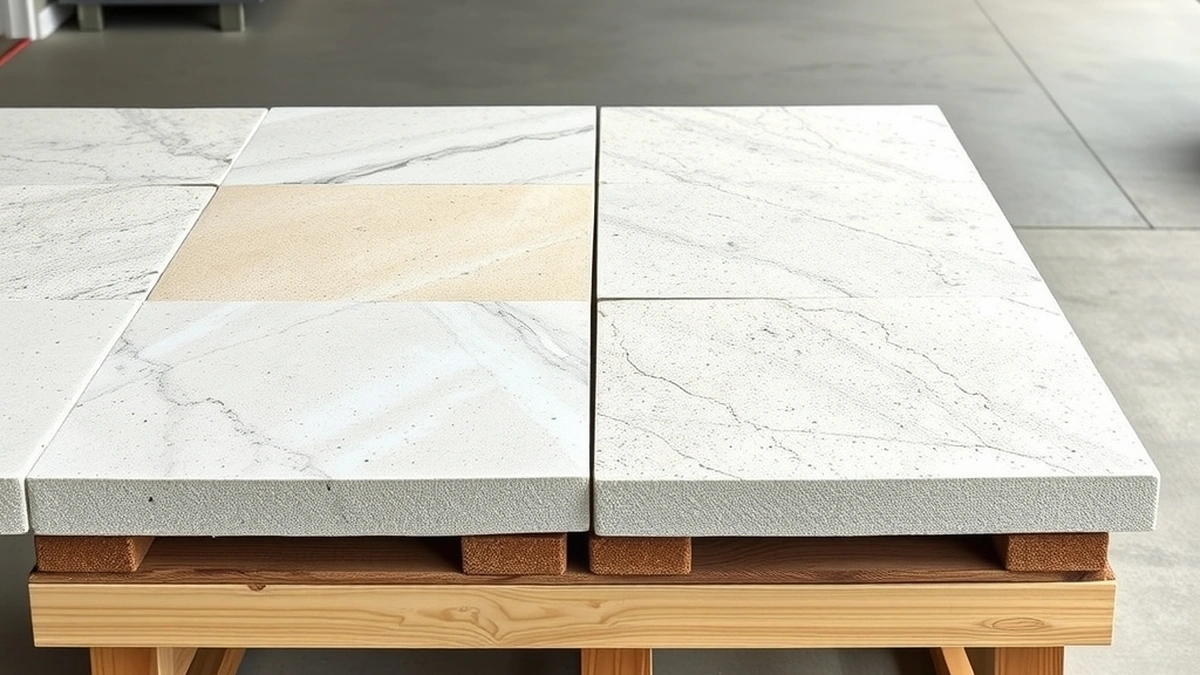
Travertine costs $15 to $30 per square foot installed and concrete pavers $8 to $15. Concrete wins on price and repair; travertine wins on heat underfoot and pool decks. A shaded patio on a budget takes concrete.
- Travertine installed
- $15–$30 per sq ft
- Concrete installed
- $8–$15 per sq ft
- 300 sq ft travertine
- $4,500–$9,000
- 300 sq ft concrete
- $2,400–$4,500
- Sealing, both
- $1–$3 per sq ft
Some links on this page are affiliate links.If you buy through them we may earn a commission at no extra cost to you. We do not accept payment for rankings. Read the full disclosure.
Travertine costs $15 to $30 per square foot installed and concrete pavers cost $8 to $15, so the same 300-square-foot patio is $4,500 to $9,000 in travertine or $2,400 to $4,500 in concrete. Concrete is the better value on a large, shaded patio. Travertine earns its premium on pool decks, in full sun, and anywhere the surface is looked at as much as walked on.
Cost, Side by Side
| Square feet | Concrete at $8 | Concrete at $15 | Travertine at $15 | Travertine at $30 |
|---|---|---|---|---|
| 150 | $1,200 | $2,250 | $2,250 | $4,500 |
| 300 | $2,400 | $4,500 | $4,500 | $9,000 |
| 500 | $4,000 | $7,500 | $7,500 | $15,000 |
| 800 | $6,400 | $12,000 | $12,000 | $24,000 |
Notice that the top of the concrete range equals the bottom of the travertine range. A premium concrete paver in a complex pattern with difficult access can cost what a basic travertine installation costs. Price the specific job, not the category. Our concrete paver cost guide and travertine cost breakdown show where each range comes from.
How Each Surface Is Made
Concrete pavers are manufactured units: cement, aggregate, sand, and pigment, molded under vibration and high pressure, then cured. Every unit is nominally identical, which is what makes them fast to lay and easy to replace.
Travertine is quarried stone, sawn into pavers and finished by tumbling, honing, or leaving the face raw. No two units are identical, which is the point and also the problem: a replacement paver from a later lot will not match.
That difference in origin explains most of the downstream differences. A factory product can guarantee color consistency and dimensional tolerance. A quarried product cannot, and it compensates with appearance.
Heat, Grip, and Pool Decks
This is where travertine separates itself. Light-colored natural stone absorbs less solar heat than a dark pigmented concrete paver, so it stays comfortable barefoot on a July afternoon. Pool decks, spa surrounds, and shaded lounging areas are its natural market.
Grip is a wash when both are dry and both are textured. Wet travertine that has been honed or polished is genuinely slippery; tumbled or unfilled travertine is not. Wet concrete pavers with a textured face perform well.
If the surface is a pool deck in full sun, travertine is the right call and the price difference is buying comfort. If it is a back patio under trees, the heat argument disappears and the price difference buys nothing.
Maintenance Burden
| Task | Travertine | Concrete pavers |
|---|---|---|
| Routine cleaning | pH-neutral cleaner only | Any mild detergent |
| Sealing interval | 1–2 years | 3–5 years |
| Stain risk | Acid, oil, organic | Oil, rust, organic |
| Weed and joint care | Same | Same |
| Winter salt | Avoid sodium chloride | Tolerates salt better |
Travertine’s maintenance is not harder so much as less forgiving. One acidic cleaner can etch a patch that never comes back. Concrete pavers tolerate a wider range of cleaning products and a wider range of neglect.
Both need joint sand refilled and both need the base kept dry. Neither is maintenance-free, and both cost $1 to $3 per square foot to seal.
Durability and Repair
Concrete pavers fade over decades as pigment and surface treatment weather, and they chip at the corners. Replacement is straightforward: lift the unit, set a new one from the same color line, refill the joint.
Travertine does not fade, because the color is the stone. It etches, and it can spall in freeze-thaw climates if water is trapped. Replacement is harder because the stone varies, which is why buying 10 percent spares at installation is standard practice.
Both fail the same way when the base fails — rocking, settling, opened joints. Repair at $4 to $8 per square foot applies to either material, and neither survives a bad base.
Where Each One Wins
Concrete pavers win on: price per square foot, color consistency, replacement matching, driveway rating at 80 mm, and tolerance of cleaning chemicals.
Travertine wins on: surface temperature, appearance, uniqueness of the field, pool-deck suitability, and the fact that its color cannot wear off.
Put plainly, concrete pavers are the rational choice for a large utility surface, and travertine is the rational choice for a small showcase surface where people walk barefoot. Most disappointed buyers chose one while expecting the other.
If you are also weighing permeable systems, concrete pavers versus permeable pavers covers the drainage question, and paver patio versus concrete slab covers the poured-concrete alternative.
Deciding in Five Questions
- Will people walk on it barefoot in summer sun? If yes, weight travertine heavily.
- How many square feet? The premium multiplies. At 800 square feet, travertine costs $5,600 to $12,000 more than concrete: 800 × ($15 − $8) = $5,600, and 800 × ($30 − $15) = $12,000.
- Will a vehicle cross it? Then 80 mm concrete pavers, or 2-inch travertine over a heavier base.
- Is acid likely to reach the surface? Pool chemicals, fruit trees, and grills all argue for concrete.
- Do you want a uniform field or a variegated one? Concrete delivers uniformity; travertine delivers variation.
Answer those five and the material chooses itself. If travertine is the answer, read travertine installation before you get quotes, and travertine problems before you sign one. If you are still comparing across the whole market, is a paver patio worth it puts the spend in context.
Frequently asked questions
Is travertine better than concrete pavers?
It is cooler underfoot, more distinctive, and better suited to pool decks. It is also twice the price and vulnerable to acid. Concrete pavers are the better value for large patios, driveways, and any surface where uniformity is fine.
How much more does travertine cost than concrete?
Roughly double. Travertine runs $15 to $30 per square foot installed against $8 to $15 for concrete pavers, so a 300-square-foot patio is $4,500 to $9,000 versus $2,400 to $4,500.
Which is cooler in the sun, travertine or concrete?
Travertine. It is a lighter-toned natural stone with lower heat retention, which is why pool decks and shaded lounging areas specify it. Dark concrete pavers can become uncomfortable barefoot in direct summer sun.
Do both materials need sealing?
Neither is mandatory, but both benefit. Sealing costs $1 to $3 per square foot. Travertine needs resealing every one to two years; concrete pavers can go three to five years between applications.
Which lasts longer, travertine or concrete pavers?
Both can last decades on a properly built base. Travertine does not fade, but it etches and can spall in freeze-thaw. Concrete pavers fade slowly and chip, but replacement units match more easily.
Can I put travertine on a driveway?
Only 2-inch stone over a heavy-duty base. Standard 1-1/4 inch travertine is a pedestrian paver and will crack under vehicle loads. Concrete pavers at 80 mm are the simpler choice for driveways.
Sources
Some links are affiliate links.If you buy through them we may earn a commission at no extra cost to you. We do not accept payment for rankings. Read the full disclosure.