Travertine Problems: Etching, Staining, and Movement
The travertine problems worth knowing before you buy: acid etching, staining, efflorescence, filler loss, hollow spots, and freeze damage, with repair costs.
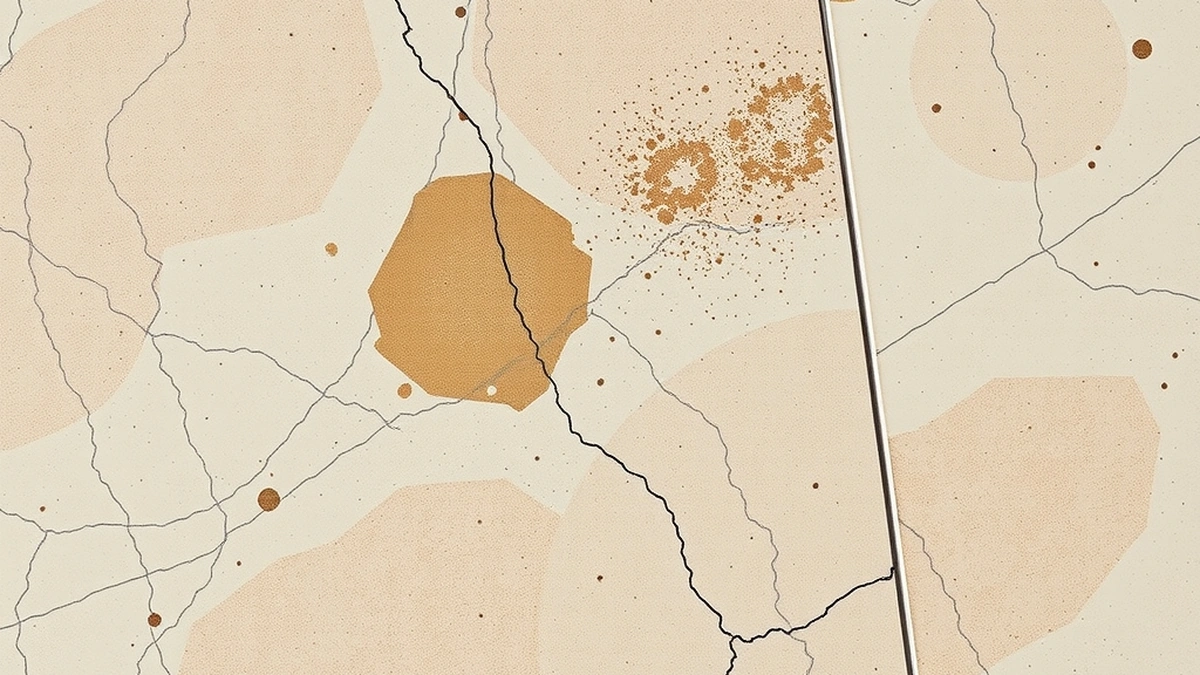
Travertine problems are acid etching, staining, efflorescence, filler loss, and hollow pavers over a settled base. Etching is permanent but preventable; base repair runs $4 to $8 per square foot.
- Installed cost
- $15–$30 per sq ft
- Base repair
- $4–$8 per sq ft
- Sealing
- $1–$3 per sq ft
- Worst offender
- Muriatic and citrus acid
- Common failure
- Hollow pavers over settled base
Some links on this page are affiliate links.If you buy through them we may earn a commission at no extra cost to you. We do not accept payment for rankings. Read the full disclosure.
Travertine problems are chemical and structural, in that order of frequency. Acid etches the calcium carbonate surface permanently, organic debris stains it, and water moving through a poorly drained base leaves efflorescence and hollow pavers behind. None of these are reasons to avoid the stone — they are reasons to seal it, keep acid away from it, and build the base properly.
The Problems That Actually Occur
Travertine is a sedimentary stone of calcium carbonate, formed by mineral deposition around springs and quarried in layers. That composition gives it its color and its weakness: it reacts with acid.
Four failure modes cover almost every complaint: etching, staining, efflorescence, and movement. A fifth — filler loss — applies only to filled stone. Everything else is a variation on those.
It helps to know the replacement math before deciding how much prevention is worth. The surface costs $15 to $30 per square foot installed, so a 300-square-foot pool deck is $4,500 to $9,000, and a single mismatched replacement paver is visible from across the yard.
Etching From Acid
Etching is the loss of surface material where acid has reacted with the stone, leaving a dull, slightly pitted patch that reads as a smudge in raking light.
Common sources are mundane: a dropped lemon, a spilled glass of wine, vinegar-based cleaner, pool acid splashed during balancing, fertilizer granules, and bird droppings. The reaction is fast — minutes, not days.
Etching cannot be undone by cleaning. A restoration contractor can hone the area back to a consistent finish, but on tumbled or unfilled stone the texture is hard to match, and the repair often shows as a smoother island in a rough field.
The practical defense is a penetrating sealer plus pH-neutral cleaners. Sealing at $1 to $3 per square foot does not make the stone acid-proof, but it buys reaction time and makes spills easier to lift. Our travertine maintenance guide covers what to keep off the surface.
Staining and Efflorescence
Staining comes from two directions. Organic staining — leaves, pollen, mulch tannins, algae — leaves brown and green shadows that sit in the pits of unfilled stone. Mineral staining shows up as the white bloom of efflorescence, where water carries salts to the surface and evaporates.
Efflorescence on travertine is a moisture signal. It appears where water lingers: under a downspout, at the low corner of a patio, along a wall that sheds onto the deck. Cleaning removes the bloom; correcting the drainage stops it returning.
Avoid acid-based efflorescence removers on travertine. They attack the stone as readily as the salt. A stiff brush, a pH-neutral or mildly alkaline cleaner, and better drainage are the correct sequence. The efflorescence cost guide covers when a professional cleaning is justified.
Hollow Spots, Movement, and Base Failure
A hollow-sounding paver is a paver that has lost support. Under sand-set travertine, either the bedding sand washed out through a joint or the aggregate base settled. Under dry-set travertine, the mortar bond has failed.
Symptoms appear in a predictable order: a faint hollow note when tapped, then visible rocking, then a joint that opens wider than its neighbors, then a cracked or chipped corner, and finally a stone that breaks underfoot.
Repair means lifting the affected units, correcting the base, re-screeding the bedding, and resetting. At $4 to $8 per square foot, a 100-square-foot affected area is $400 to $800. Patching with sand from above is a temporary fix that fails within a season. Our settling repair guide covers the sequence.
Freeze-Thaw and De-Icing Salt
Travertine performs well in cold climates when it drains, and badly when it does not. Water in the stone’s pores expands on freezing, and repeated cycles push the surface apart.
Rock salt makes it worse. Sodium chloride draws moisture into the stone and accelerates surface loss, and it leaves a residue that dulls the finish. Sand or a calcium-magnesium acetate product labeled safe for natural stone is the better winter choice.
The other winter risk is snow piled against a wall or on the deck itself. Meltwater refreezes in the joints, and joint sand loss follows. Keep the slope clear and the outlets open.
Filled Versus Unfilled: Pits and Filler Loss
Unfilled travertine keeps the natural voids that give the stone its character. It drains well and is cheaper, and debris collects in the pits.
Filled travertine has those voids grouted at the factory or on site. The filler is a cementitious or epoxy material, and over years of traffic and freeze-thaw it can shrink, crack, and lift out in small patches. Once filler is missing, the void is back, and water sits in it.
Filler repair is a small job per patch but tedious across a large deck. It is also the reason many pool decks specify unfilled stone in the first place.
Travertine Against the Other Stones
| Surface | Installed rate | Etches from acid | Best setting | Weak point |
|---|---|---|---|---|
| Travertine | $15–$30 per sq ft | Yes | Pool decks, shaded patios | Etching, filler loss |
| Flagstone | Varies by stone type | Depends on stone | Informal patios, paths | Uneven surface, thick joints |
| Concrete pavers | $8–$15 per sq ft | No | Driveways, budget patios | Fade, efflorescence |
| Clay brick | $10–$20 per sq ft | No | Traditional patios | Spalling, corner chips |
Travertine’s chemical sensitivity is unique among these four. Its heat performance is also unique: it stays cooler underfoot than concrete or brick, which is why pool decks specify it. That trade-off is the whole decision. The travertine versus flagstone comparison takes it further.
Fixing a Travertine Problem in Order
- Identify the cause before buying anything. A white patch, a dull patch, and a hollow paver have three different fixes.
- Tap the field. Map every hollow unit with chalk. That map is the repair scope.
- Correct water first. Slope, outlets, downspouts, and joint sand. Most staining and efflorescence stops here.
- Repair the base under hollow pavers. Lift, re-compact, re-bed, reset — do not top-dress.
- Clean with pH-neutral products only. One acid cleaner can undo years of careful maintenance.
- Seal after the stone is dry, with a penetrating product, and log the date.
Everything on that list costs less than replacing a patio at $15 to $30 per square foot. If you are still deciding on the material, travertine installation explains what a correct build looks like, and travertine cost explains what you are protecting.
Frequently asked questions
What causes travertine to etch?
Acid. Travertine is calcium carbonate, so anything acidic dissolves the surface: citrus juice, vinegar, wine, pool acid, fertilizer, and some tile cleaners. The result is a dull, slightly rough patch that never buffs out completely.
Can etched travertine be repaired?
It can be improved, not erased. A stone restoration contractor can hone or polish the affected area, but matching the surrounding finish is difficult on tumbled pavers. Prevention through sealing and pH-neutral cleaners is far cheaper.
Why does my travertine have white patches?
Usually efflorescence, a salt bloom from moisture moving through the stone and the base. It appears on shaded areas and where water sits. Improving drainage and cleaning with an efflorescence remover addresses it; acid washing makes it worse.
Why are my travertine pavers hollow underneath?
The bedding layer has washed out or the base has settled, leaving a void under the stone. Tap the pavers with a screwdriver handle; a hollow sound means they need to be lifted, re-bedded, and the base corrected.
Does travertine crack in winter?
It can. Water absorbed into the stone expands when it freezes, and repeated cycles cause surface spalling and edge loss. Sealing, correct slope, and avoiding rock salt all reduce the risk.
How much does it cost to fix travertine problems?
Base repair for hollow or settled pavers runs $4 to $8 per square foot. Resealing costs $1 to $3 per square foot. Replacing individual stones costs more because matching a natural stone lot is difficult.
Sources
Some links are affiliate links.If you buy through them we may earn a commission at no extra cost to you. We do not accept payment for rankings. Read the full disclosure.