How Long Does Paver Patio Last? 20 to 30 Years
A paver patio lasts 20 to 30 years and often longer. Here is what fails first, how each material compares, and the maintenance that adds years.
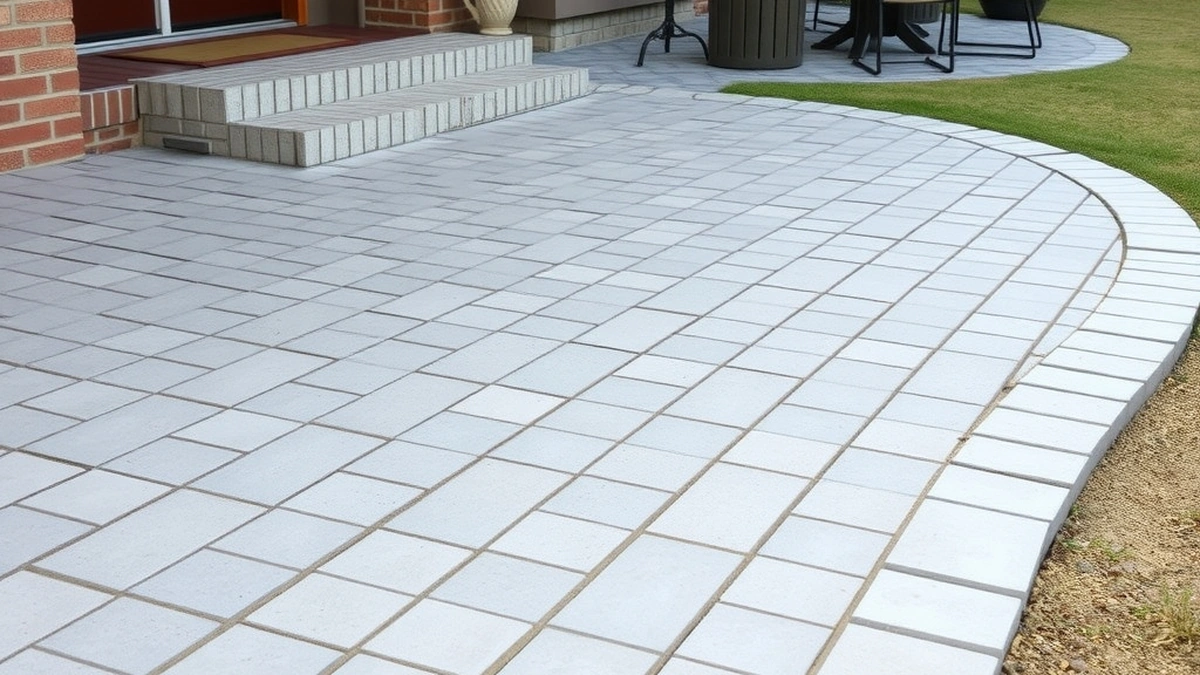
A paver patio typically lasts 20 to 30 years, and often longer when the base is compacted to depth and water drains away from the house. The pavers usually outlast the joint sand, the edge restraint, and the base beneath them.
- Typical lifespan
- 20–30 years
- First thing to fail
- Joint sand and edge
- Sealing interval
- 2–3 years
- Base repair
- $4–$8 per sq ft
Some links on this page are affiliate links.If you buy through them we may earn a commission at no extra cost to you. We do not accept payment for rankings. Read the full disclosure.
A well-built paver patio lasts 20 to 30 years, and many go longer. What fails first is almost never the paver itself — it is the joint sand, the edge restraint, or a pocket of base that was never compacted. Understand those three and you can predict how long a specific patio will hold up far more accurately than any generic lifespan number.
What Longevity Actually Means
A paver patio’s lifespan is the number of years the surface stays level, stable, and drainable before units, base, or edge restraints need rework. It is not the age at which the pavers crumble, because concrete and clay units are extremely durable. It is the age at which the assembly stops behaving like a patio.
That distinction matters when you are buying or selling a house. A 25-year-old patio with original pavers and re-sanded joints is in good shape. A 6-year-old patio with rocking units and a separated border is not, even though the stone looks new.
Lifespan by Material
| Material | Realistic service life | What tends to age |
|---|---|---|
| Concrete pavers | 25–30 years | Color fade, joint sand, edge chipping |
| Clay brick pavers | 30 years or more | Efflorescence, chipping at corners |
| Travertine pavers | 20–30 years | Surface etching, staining, sealer wear |
| Permeable pavers | 20–30 years | Clogged joints, base infiltration capacity |
Concrete pavers are the workhorse: dimensionally consistent, widely available, and priced at $8 to $15 per square foot installed. Clay brick holds color and hardness for decades but is more expensive, at $10 to $20 per square foot, and can throw white efflorescence while it dries out. Travertine at $15 to $30 per square foot is a natural stone with a softer surface that etches from acid and needs sealing to stay consistent. Permeable pavers at $12 to $25 per square foot last as long as their void structure stays open, which depends on sweeping and vacuuming rather than on the units.
The Base Decides the Number
Almost every short-lived paver patio has the same story underneath: 3 or 4 inches of aggregate where 6 were needed, spread in one thick lift and tamped by hand. Base material only reaches density when it goes down in thin lifts — about 2 inches — and each lift is compacted before the next.
Compacted base also has to be uniform. A soft spot where a tree stump was ground out, or where the excavator over-dug and backfilled loose, will settle differently from the rest of the field. That is why pavers sink in one corner and stay perfect everywhere else.
When that happens, the fix is base repair at $4 to $8 per square foot: lift the units, rework or replace the aggregate, recompact, and relay. On a 300-square-foot patio that is $1,200 to $2,400, which is why the base is the one place never to accept a shortcut in the bid.
Drainage and Freeze-Thaw
Water is the other half of lifespan. A patio should fall about 1/8 inch per foot away from the house — roughly an inch over 8 feet — and discharge onto a lawn, splash block, or drain. A downspout that dumps onto the patio, or a lawn that slopes toward it, puts water under the base no matter how well the field was built.
In cold climates, saturated base material freezes, expands, and heaves. The patio comes back uneven in spring. Permeable systems reduce this by letting water through the surface, but they need an open-graded base that stores and infiltrates it, which is a different build from a standard patio.
What Shortens the Life
- A base shallower than 4 inches, or one compacted in a single thick lift.
- No edge restraint, or restraint spiked into soil instead of base.
- Roof runoff discharged directly onto the pavers.
- Rock salt piled on the surface through winter.
- Vehicle traffic on pavers rated for foot traffic only.
- Tree roots lifting a section from below.
- Sealing a damp patio, which traps moisture and produces a milky film or spalling.
Maintenance That Buys Years
- Sweep the surface monthly and after storms to keep grit out of the joints.
- Check joint sand each spring and top up any joint more than a quarter inch low.
- Rake leaves off in fall so tannins and moisture do not sit on the surface.
- Divert downspouts to a splash block or extension at least 4 feet from the patio.
- Have the surface cleaned and sealed every two to three years at $1 to $3 per square foot.
- Lift and reset any rocking unit as soon as you notice it, before the base under it erodes.
Six tasks, maybe an hour a season, and they are the difference between a patio that needs paver patio repair at year eight and one that reaches year 30 with its original units.
Repair or Replace
| Symptom | Likely cause | Usual fix |
|---|---|---|
| A few rocking pavers | Localized base loss | Lift, recompact, reset |
| One sunken corner | Soft spot or buried debris | Base repair, $4–$8 per sq ft |
| Open joints along the border | Failed edge restraint | Re-set restraint and re-sand |
| Widespread heave after winter | Saturated base, poor slope | Regrade and rebuild base |
| Surface haze or white bloom | Efflorescence or sealer failure | Clean, dry out, reseal correctly |
Repair almost always beats replacement because the units are reusable. The exception is a patio built with no base at all, where patching one section just moves the problem along.
Getting 30 Years Instead of 12
The lifespan you get is decided in three places: the depth of the excavation, the number of compaction passes, and where the water goes. Material choice sets the look and the price — $8 to $30 per square foot installed depending on unit — but it does not set the clock.
If you are building, follow a real installation sequence and do not let the base get rushed. If you are buying a house with an existing patio, walk the perimeter looking for open joints and step on the corners to check for rocking. And if you are weighing DIY against a crew, read what you can and cannot do yourself before committing a weekend to excavation.
Frequently asked questions
Do paver patios really last 30 years?
Many do when the base was excavated to depth and compacted in lifts. The pavers themselves are effectively permanent; the 20-to-30-year figure reflects when joint sand, edge restraint, or localized base settlement typically need rework.
What makes a paver patio fail early?
A shallow or poorly compacted base, missing edge restraint, and water running onto the patio from a downspout or uphill grade. Any of those can produce movement within two or three winters regardless of paver quality.
Does sealing extend the life of a paver patio?
Sealing slows joint sand loss, reduces staining, and helps against freeze-thaw spalling, at $1 to $3 per square foot. It protects the surface rather than the base, so it will not rescue a patio that was built on soft ground.
How often should I re-sand the joints?
Check annually and top up every one to three years. Sand loss is fastest on slopes, at the edges, and where water runs off a roof, so those areas usually need attention first.
Can a settled paver patio be fixed without replacing it?
Usually yes. The units come up, the aggregate underneath is recompacted or replaced, and the same pavers go back down. Base repair runs $4 to $8 per square foot, far less than a new patio.
Do pavers crack in cold climates?
Individual units can chip at the edges and occasionally crack, but the segmented surface tolerates freeze-thaw better than a slab because movement is distributed across joints. Spalling is more common when the pavers were saturated and sealed wet.
Sources
Some links are affiliate links.If you buy through them we may earn a commission at no extra cost to you. We do not accept payment for rankings. Read the full disclosure.