Concrete Pavers vs Concrete Pavers: Two Quotes
Two concrete paver quotes can price the same units and build different patios. Compare thickness, base depth, restraint, joints, and warranty line by line.
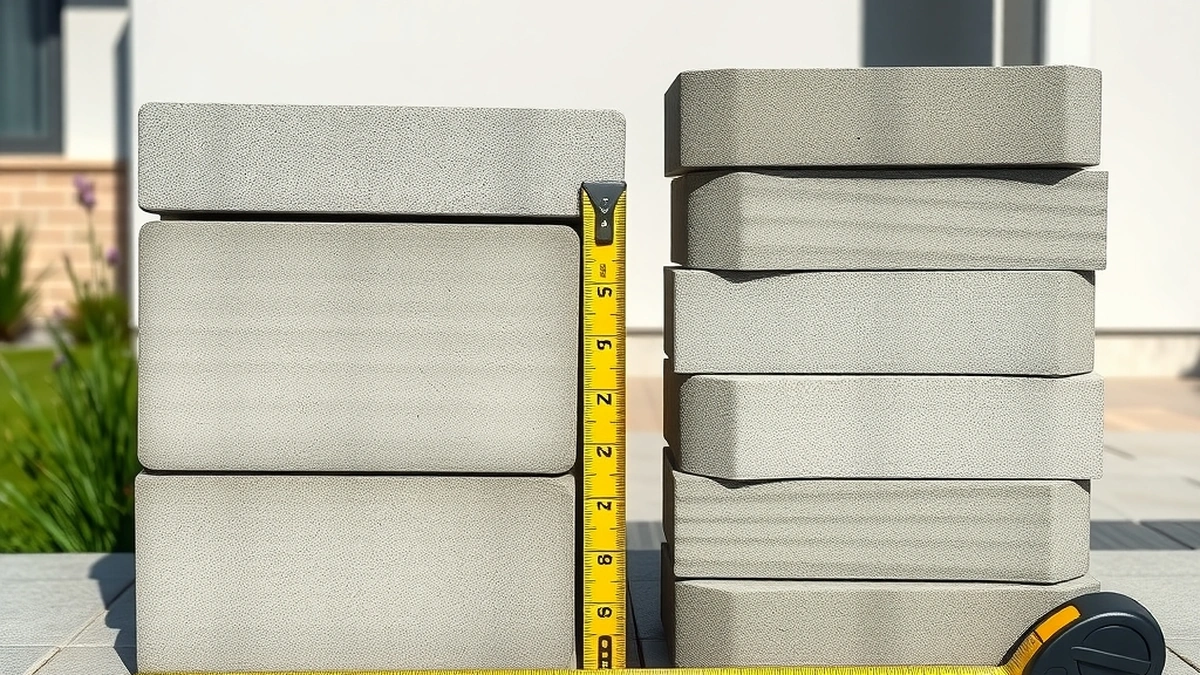
Concrete pavers versus concrete pavers usually means two quotes for the same units that specify different builds. The units may match while base depth, compaction, edge restraint, joint sand, and sealing differ, and those lines decide whether the patio lasts.
- Typical thickness
- 60 mm or 80 mm
- Base depth
- 4 - 6 in, or 6 - 8 in for vehicles
- Installed range
- $8 - $15 per sq ft
- Base repair if wrong
- $4 - $8 per sq ft
- Sealing
- $1 - $3 per sq ft
Some links on this page are affiliate links.If you buy through them we may earn a commission at no extra cost to you. We do not accept payment for rankings. Read the full disclosure.
Concrete pavers versus concrete pavers sounds like a comparison with no difference, and at the unit level it is. The comparison that matters is between two quotes that name the same paver and describe different patios: one on four inches of base with no restraint, one on six inches compacted in lifts with a pinned edge. Both totals read “concrete pavers.” Only one of them is the same product.
What Is Actually Being Compared
A concrete paver is a molded unit of cement, aggregate, and pigment, 60 mm thick for foot traffic and 80 mm for vehicles. That unit is a commodity. Several plants make similar versions, and the differences between them are small compared with the differences between installations.
So the useful reading of “concrete pavers vs concrete pavers” is a specification comparison. Two bids, same square footage, same unit style, different assembly. The winner is decided by six lines that most homeowners never read.
The Six Lines That Differ
| Line | Quote A | Quote B |
|---|---|---|
| Paver thickness | 60 mm | 80 mm |
| Base depth | 4 in | 6 in, two lifts |
| Compaction | Plate, single pass | Plate, per lift, tested |
| Edge restraint | Plastic, spikes in soil | Aluminum, spikes in base |
| Joint sand | Standard sand | Polymeric sand |
| Sealing | Not included | $1 - $3 per sq ft, separate |
Each line moves either the price or the lifespan. None of them appears in a one-line quote.
Thickness is a load rating, not a preference. A 60 mm paver on a driveway will rut or crack, and no base depth compensates for a unit that was never rated for a vehicle. Eighty millimeters costs more per square foot and is the correct choice anywhere a car will park.
Base depth is the line with the largest downstream cost. Base repair runs $4 to $8 per square foot. On 300 square feet that is $1,200 to $2,400, which can exceed the entire paver line of 300 × $8 = $2,400 to 300 × $15 = $4,500. Saving $600 on a shallower base is a poor trade against that exposure.
Restraint is cheap to install and expensive to omit. Pavers creep outward under every load, and only the edge holds them. Restraint spiked into soil instead of compacted base loosens within a season.
The Cost Arithmetic Behind Two Bids
Take a 300-square-foot patio. Quote A comes in at $9 per square foot, quote B at $14.
- Quote A: 300 × $9 = $2,700.
- Quote B: 300 × $14 = $4,200.
- Difference: $4,200 − $2,700 = $1,500, or $5 per square foot.
Now look at what the difference buys. If quote B includes an 80 mm unit, a 6-inch base, pinned aluminum restraint, polymeric joint sand, and disposal, and quote A includes none of those, the gap is not margin. It is scope. If quote B includes the same shallow base and the same restraint, the $1,500 is margin wearing a specification costume.
The way to tell is to ask both contractors to price the same written scope. That single step converts an apples-to-oranges comparison into a real one.
Why the Unit Price Is a Weak Signal
Two suppliers can quote the same paver at different prices for reasons that have nothing to do with quality: freight distance, pallet quantity, whether the price is per square foot or per pallet, and whether tax is included.
Normalizing the unit price means converting everything to delivered dollars per square foot at the same thickness. A pallet price that covers 100 square feet at 60 mm covers less at 80 mm, so the per-square-foot figure is the only comparable number.
Once the units are normalized, the remaining differences are all in the assembly. That is where the real comparison lives, and it is covered in detail in the paver base preparation guide.
Reading the Assembly, Not the Brochure
A paver brochure describes color and finish. A quote describes work. Five questions separate the two:
- What is the excavated depth, and what finished height does it produce?
- What aggregate is specified, and how deep is each compacted lift?
- Where does the edge restraint anchor — base or soil?
- Is joint sand standard or polymeric, and who tops it up after the first season?
- Is sealing included, optional, or excluded, and at what rate?
Answers that name numbers are usable. Answers that say “standard prep” are not. A contractor who builds a good base will usually describe it without being pushed, because it is the part of the job they are proud of.
When the Cheaper Quote Wins
The cheaper quote is the better buy in three situations.
- The site is simple: flat, well-drained, easy access, no demolition, no steps.
- The scope is genuinely identical on the six lines above.
- The low bidder is local and can show recent work of the same size.
The expensive quote wins when it includes thickness or base depth the other omits, when access is difficult, or when the surface will carry vehicles. Paying $14 per square foot for a properly built 80 mm driveway is cheaper than paying $9 for a 60 mm patio assembly that fails in two years and then paying $4 to $8 per square foot to rebuild it.
A Practical Sequence
- Write the specification yourself before requesting bids: area, thickness, base depth, restraint, joints, sealing.
- Send the same document to three contractors.
- Ask each to quote line by line against it, not as a lump sum.
- Compare the base and restraint lines first, then the total.
- Ask what the first-season joint top-up costs and whether it is included.
- Check the disposal line. Hauling an old surface is real money and often hidden.
For the installed range this comparison sits inside, see concrete pavers cost. For the failure patterns a thin base produces, see concrete pavers problems, and for what a repair costs once it happens, paver repair cost.
Frequently asked questions
Why do two paver quotes for the same patio differ so much?
Because the paver is one line among several. Base depth, compaction method, edge restraint, joint sand, cutting, disposal, and sealing can differ while the unit price stays the same.
Is a higher paver quote always the better one?
No. A higher price with the same shallow base and no restraint buys nothing. Compare the specification line by line before comparing the totals.
What should a paver quote include?
Excavation, base depth and aggregate type, compaction method, bedding sand, units and thickness, edge restraint, joint sand, cutting, cleanup, and disposal.
How can I tell if a quote uses 60 mm or 80 mm pavers?
It should say so in writing. If the thickness is not named, ask. Sixty millimeters is pedestrian use; eighty is required where a vehicle will cross.
Does sealing belong in the installation quote?
Usually as a separate line, because it is applied after the pavers have dried and weathered. Bundling it hides the price and often means it is skipped.
What is the cheapest way to compare paver bids?
Ask each contractor to quote the same written specification, including base depth and restraint, then compare totals. Normalized bids show the real difference.
Sources
Some links are affiliate links.If you buy through them we may earn a commission at no extra cost to you. We do not accept payment for rankings. Read the full disclosure.