Travertine Reviews: What Homeowners Really Think
Independent guide to travertine reviews, costs, and installation. We break down what homeowners say about this natural stone.
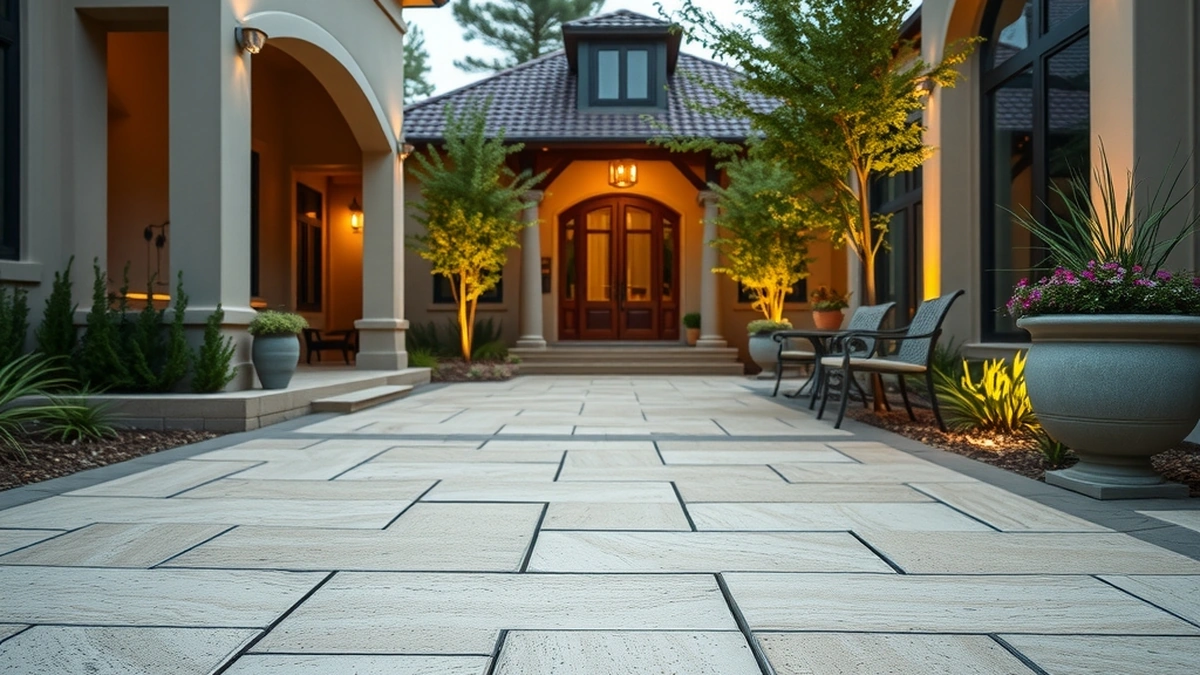
Travertine is a premium stone favored for its warm tones and durability. Homeowners consistently report high satisfaction with its longevity and aesthetic appeal, though initial costs run $15 to $30 per square foot.
- Typical range
- Varies by system and site
- First step
- Measure the space and confirm the load
- Professional help
- Recommended for structural or electrical work
Some links on this page are affiliate links.If you buy through them we may earn a commission at no extra cost to you. We do not accept payment for rankings. Read the full disclosure.
When evaluating pavers for your patio or driveway, homeowners frequently turn to travertine reviews to gauge real-world performance. Travertine is a sedimentary stone formed from mineral deposits, prized for its warm, earthy tones and porous texture. However, the true value of travertine lies not just in its appearance, but in how well it survives daily use. In the independent testing and feedback we aggregate at Paver Lab, travertine consistently earns praise for its thermal mass and visual character, though it requires strict adherence to base preparation first, surface second to avoid premature cracking. Understanding these reviews helps you make an informed, cost-effective choice for your outdoor space.
What Homeowners Say About Travertine
In our review compilation process, travertine receives generally positive feedback from residential installers and property owners alike. Many reviewers highlight the stone’s natural, honeycombed texture, which adds immediate visual interest to any walkway or patio. However, the most common critique centers on its porosity. Because travertine is a natural stone, it absorbs liquids and oils more readily than honed concrete or brick. Homeowners note that without proper sealing, the stone becomes susceptible to staining from food, beverages, and grease. Reviewers also appreciate the stone’s ability to retain heat during cooler months, which keeps patios comfortable for evening use. When asked about longevity, the consensus is that a properly installed travertine patio will outlast many other paving materials if maintenance is consistent.
Cost Analysis and Arithmetic
Understanding the financial commitment is crucial when reading travertine reviews. Based on industry data, the raw material cost for travertine runs between $15 and $30 per square foot. To put this in perspective, compare it against other popular pavers:
| Paver Type | Cost per Square Foot |
|---|---|
| Concrete Pavers | $8 - $15 |
| Brick Pavers | $10 - $20 |
| Permeable Pavers | $12 - $25 |
| Travertine | $15 - $30 |
Let us perform an arithmetic check on a hypothetical 15-by-15-foot patio. The surface area is 225 square feet. If we use the midpoint of the travertine range ($22 per square foot), the material cost is 225 x $22 = $4,950. This is significantly higher than concrete pavers, which would cost 225 x $11.50 (midpoint of $8-$15) = $2,587. While travertine is pricier upfront, its durability often offsets the initial investment over time. You can find more pricing details on our guide to how much does paver patio cost.
Base Preparation First, Surface Second
The most critical finding across all travertine reviews is that material cost means nothing without a solid foundation. Installing a paver surface without addressing the base is the leading cause of structural failure. For a 15x15 patio, the base area is also 225 square feet. If your existing base requires repair—due to settling, voids, or poor drainage—you must account for base repair costs, which range from $4 to $8 per square foot. Let us assume a midpoint of $6 per square foot for the base repair. The base cost alone is 225 x $6 = $1,350. Adding this to the $4,950 material cost brings the sub-base expenses to $6,300 before even laying the stone. Skipping this step leads to heaved pavers and cracked joints, making the eventual repair cost exponentially higher.
Surface Installation and Sealing Needs
Once the base is prepared, the surface installation begins. Homeowner reviews frequently mention the importance of edge restraints and proper joint packing to prevent shifting. After installation, sealing is mandatory to protect the porous stone. The cost to seal a 15x15 patio (225 sq ft) ranges from $1 to $3 per square foot. Using a midpoint of $2 per square foot, the sealing cost is 225 x $2 = $450. Total project material and protective costs thus far reach $6,750. This step is non-negotiable; unsealed travertine will absorb rainwater and freeze, causing spalling cracks that compromise the entire patio.
Maintenance Load and Practical Concerns
Homeowners with travertine patios frequently ask about long-term upkeep. A common concern is the weight of the stone and its impact on the home’s foundation. Travertine is relatively heavy, typically weighing around 14 to 16 pounds per square foot laid flat. For a standard residential patio, this weight is manageable, but it dictates that the underlying soil must be compacted adequately to support the load. Another recurring theme in reviews is winter weather. Freezing temperatures expand water trapped in the stone’s pores. To mitigate this, homeowners must keep the patio clear of snow and ice, or apply de-icing chemicals carefully to avoid chemical burns on the stone. Regular sweeping and occasional re-sealing every two to three years are standard practices reported by satisfied users:
- Sweep debris regularly to prevent buildup in joints.
- Reapply sealer every two to three years.
- Remove snow promptly before it freezes into the stone.
Choosing Between Materials
When deciding whether travertine is the right choice, homeowners should weigh the aesthetic benefits against the higher price tag. If you want a classic, Mediterranean-style look that transitions seamlessly to landscaping, travertine is an excellent selection. You can find more options and comparisons on our guide to the best paver patios. However, if your priority is purely budget-driven functionality, concrete or brick may offer better value. For those prioritizing water management and reducing runoff, permeable pavers provide a middle ground, though they lack the organic warmth of travertine. Evaluating these reviews helps clarify that travertine suits homeowners willing to pay a premium for natural beauty and enduring performance.
Repair Versus Complete Replacement
Even with the best preparation, wear and tear occur. Over time, joints may erode, and pavers may shift. When reviewing repair scenarios, the cost of fixing a single cracked travertine paver is roughly $5 to $10. However, if multiple pavers fail, it is often more economical to replace the entire surface. Before committing to a full replacement, consult our resources on paver patio repair to assess the extent of the damage. Sometimes, lifting the existing surface, repairing the base, and reinstalling just a section of the patio is far more cost-effective than starting over. Reading community experiences helps gauge when a patch job suffices versus when a full redo is necessary.
Ultimately, travertine reviews reveal a stone that delivers exceptional visual warmth and structural integrity when installed correctly. By prioritizing base preparation and surface sealing over material price, homeowners maximize their investment. The arithmetic is clear: a well-executed travertine patio requires careful budgeting for both sub-base work and protective coatings. For those seeking a durable, attractive outdoor space, understanding these practical reviews ensures your project succeeds from the ground up.
Next, compare how much does paver patio cost, paver patio installation, paver patio repair before you commit.
Frequently asked questions
What is the most important measurement?
Start with the ceiling or clearance number; it decides which systems can fit.
What does a typical project cost?
Costs vary by system and site access; the guide shows the line items and a planning range.
Can I install this myself?
Some tasks are DIY-friendly, but structural, electrical, and load-bearing work should be done by a licensed professional.
How long does installation take?
A simple setup is a weekend; a full build with electrical or structural work can take several weeks.
What should I check before buying?
Confirm dimensions, load ratings, and the manufacturer's installation requirements for your exact model.
Where can I find local help?
Ask a licensed contractor or installer who has worked with the same system and can inspect your site.
Sources
Some links are affiliate links.If you buy through them we may earn a commission at no extra cost to you. We do not accept payment for rankings. Read the full disclosure.