Concrete Pavers Reviews: What Owners Report
Concrete pavers reviews praise repairability and price, and complain about weeds, settlement, and fading. What separates a good install from a bad one.
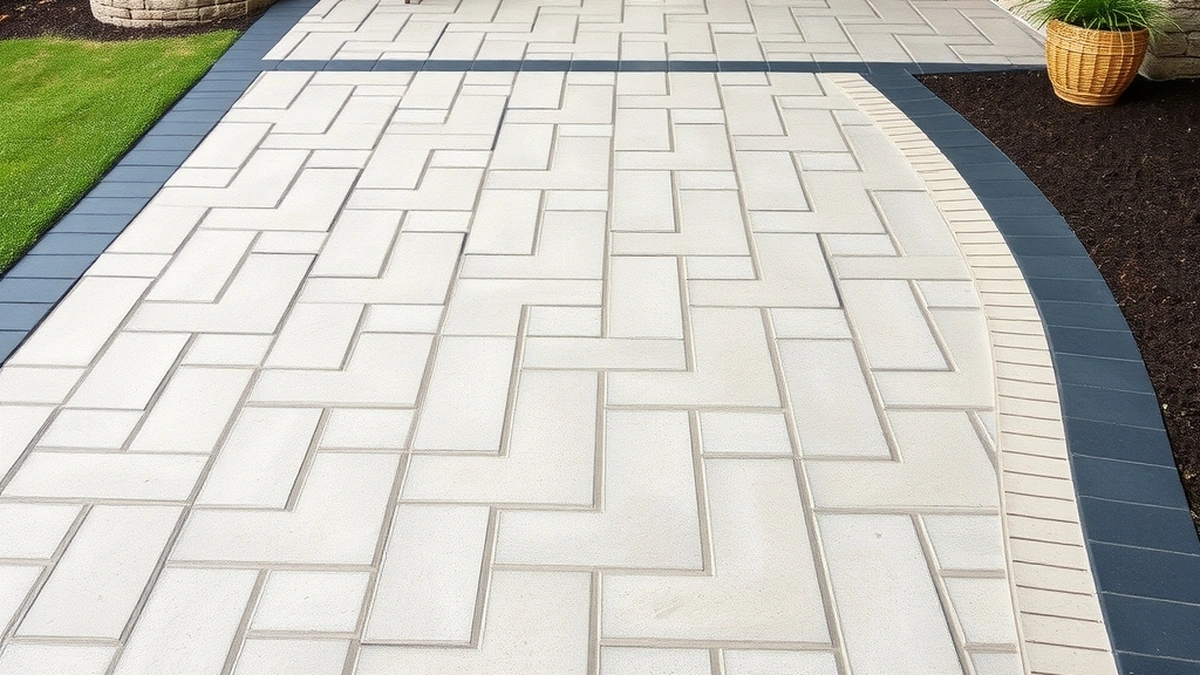
Concrete pavers reviews tend to praise the look, the repairability, and the price against brick or travertine, and complain about weeds, settling, efflorescence, and color fade. Almost every complaint traces to base preparation and joint sand rather than to the units themselves.
- Installed cost
- $8 - $15 per sq ft
- Most praised
- Repairability and price
- Most criticized
- Settling and weeds
- Typical warranty
- Limited lifetime, structural
- Sealing
- $1 - $3 per sq ft
Some links on this page are affiliate links.If you buy through them we may earn a commission at no extra cost to you. We do not accept payment for rankings. Read the full disclosure.
Concrete pavers reviews are unusually consistent for a building product: owners like the surface and complain about the joints. Praise centers on appearance, repairability, and price against brick or travertine. Complaints center on weeds, settlement, efflorescence, and fading — and nearly all of those are installation or maintenance outcomes, not defects in the paver.
What Owners Praise
Four themes repeat across contractor testimonials, retailer reviews, and homeowner forums.
Repairability. A cracked unit can be lifted and replaced. This is the single advantage owners mention most, usually after living with a slab that cracked and could not be fixed.
Price against alternatives. At $8 to $15 per square foot installed, concrete pavers undercut brick at $10 to $20 and travertine at $15 to $30. For a 300-square-foot patio that is $2,400 to $4,500 against $3,000 to $6,000 for brick.
Appearance options. Color blends, tumbled faces, and contrasting borders let a concrete surface imitate stone at a fraction of the price. Owners who chose a border course tend to mention it.
Low routine care. Sweeping, an annual joint top-up, and a reseal every few years. No resurfacing, no re-staining, no patching compound.
What Owners Complain About
| Complaint | Frequency in reviews | Underlying cause |
|---|---|---|
| Weeds in joints | Common | Joint sand loss |
| Uneven or sunken areas | Common | Base compaction or water |
| White powder on surface | Moderate | Efflorescence |
| Color looks lighter over time | Moderate | Surface pigment weathering |
| Chipped corners | Occasional | Point loads, bad cuts |
| Higher cost than a slab | Occasional | Genuine price difference |
Read that table as a list of maintenance items, not product faults. Weeds need sand. Sunken areas need base work. Efflorescence needs time and dry brushing. Fading is normal and slow. Chips come from use. The only line that reflects a real product comparison is the last one, and it is true: a plain concrete slab costs less.
Why the Same Paver Gets Opposite Reviews
Two patios can use identical units from the same plant and produce opposite reviews five years later. The difference is what happened before the first paver was laid.
| Build quality | What the owner sees at year five |
|---|---|
| 6 in compacted base, 2 in lifts | Surface still flat, joints tight, no rocking |
| 4 in base, dumped and single-pass compacted | Dish-shaped low spots, open joints |
| Edge restraint pinned into base | Perimeter straight, joints even |
| No restraint or pinned into soil | Outer rows creeping, joints opening inward |
| Joints topped up annually | Weeds limited, units locked |
| Joints never refilled | Sand gone, weeds, movement |
A one-star review that says “these pavers sank” is almost always describing a base that failed. That does not make the review wrong from the owner’s point of view, but it does mean the lesson is about the installer, not the material. The paver base preparation guide explains what the correct version looks like.
Brands and Product Lines: What to Compare
Brand names carry less information than three specifications:
- Thickness. 60 mm for patios and walkways, 80 mm for driveways. A 60 mm unit on a driveway is a design error regardless of brand.
- Face mix. The colored layer on top of the base concrete. A thicker face mix holds color longer and resists chipping better.
- Dimensional tolerance. Consistent units lay faster, produce tighter joints, and look better at the borders.
Ask for those three in writing. If a supplier cannot name them, the conversation is about marketing rather than product. Warranty length is a weak proxy: most limited lifetime warranties cover manufacturing defects such as a unit cracking without load, and exclude settlement, color variation, and anything the installer did.
Reading a Review Set Without Being Misled
- Separate reviews of the product from reviews of the installer. A contractor rating is not a paver rating.
- Look for the time frame. Complaints at six months usually describe installation; complaints at ten years describe wear.
- Count repeated themes rather than single loud reviews. One cracked paver is an anecdote; fifty sinking patios is a pattern.
- Check whether the reviewer describes the base or the joint sand. Specific reviews are more useful than star counts.
- Ignore reviews that only discuss delivery damage. That is a freight issue, not a product one.
- Ask a local installer which lines they actually lay, and why. Supply chains differ by region.
What the Warranty Does Not Cover
Most concrete paver warranties are limited lifetime and transfer poorly, if at all. They typically cover structural cracking of the unit under normal use and exclude:
- Settlement or movement of the base
- Color variation between production runs
- Efflorescence
- Chipping from snow plows, dropped objects, or vehicle traffic on a pedestrian-rated unit
- Installation labor
That list matters because the failures owners complain about are mostly on it. The warranty protects against the least likely failure mode. The base protects against the most likely ones, which is why the installation conversation deserves more attention than the warranty card.
The Honest Verdict
Concrete pavers are the default choice for a reason. They cost $8 to $15 per square foot, they can be repaired a unit at a time, and they look better than a plain slab for a price that is close to it.
The reviews that go wrong are predictable. They describe a patio built on a shallow base, without restraint, with joints that were never refilled. None of that is a reason to choose a different material. It is a reason to ask better questions before signing, and to budget $1 to $3 per square foot for sealing and joint care afterward.
For the cost breakdown behind those figures, see concrete pavers cost. For the failure modes to watch, see concrete pavers problems, and for the head-to-head against a slab, paver versus concrete.
Frequently asked questions
Are concrete pavers worth the money?
For patios and driveways, yes. At $8 to $15 per square foot they cost more than a slab up front and less than brick or travertine, and individual units can be replaced.
What do negative concrete paver reviews complain about?
Settlement, weeds in the joints, white efflorescence, color fade, and chipped corners. Most of those are installation or maintenance issues rather than defects in the paver.
Do concrete pavers fade over time?
They lighten slightly as surface pigment weathers, mostly in the first year. Deep fade over decades is slow. Sealing slows it but does not stop it.
Are expensive paver brands better?
Not automatically. Thickness, face mix, and dimensional consistency matter more than the badge, and a premium paver on a poor base fails like any other.
What does a paver warranty cover?
Usually structural defects such as cracking from manufacturing, for a limited lifetime to the original purchaser. It rarely covers settlement, color variation, or installation faults.
How can I tell a good paver installation from a bad one?
Ask for the base depth and compaction method, check edge restraint, and look at the joints. A good install names those details without prompting.
Sources
Some links are affiliate links.If you buy through them we may earn a commission at no extra cost to you. We do not accept payment for rankings. Read the full disclosure.