Paver Walkway Cost: Per Foot, Per Width, Per Job
Paver walkway costs from $8 to $30 per square foot, or about $32 to $120 per linear foot at 4 feet wide. Includes minimums, curves, steps, and DIY math.
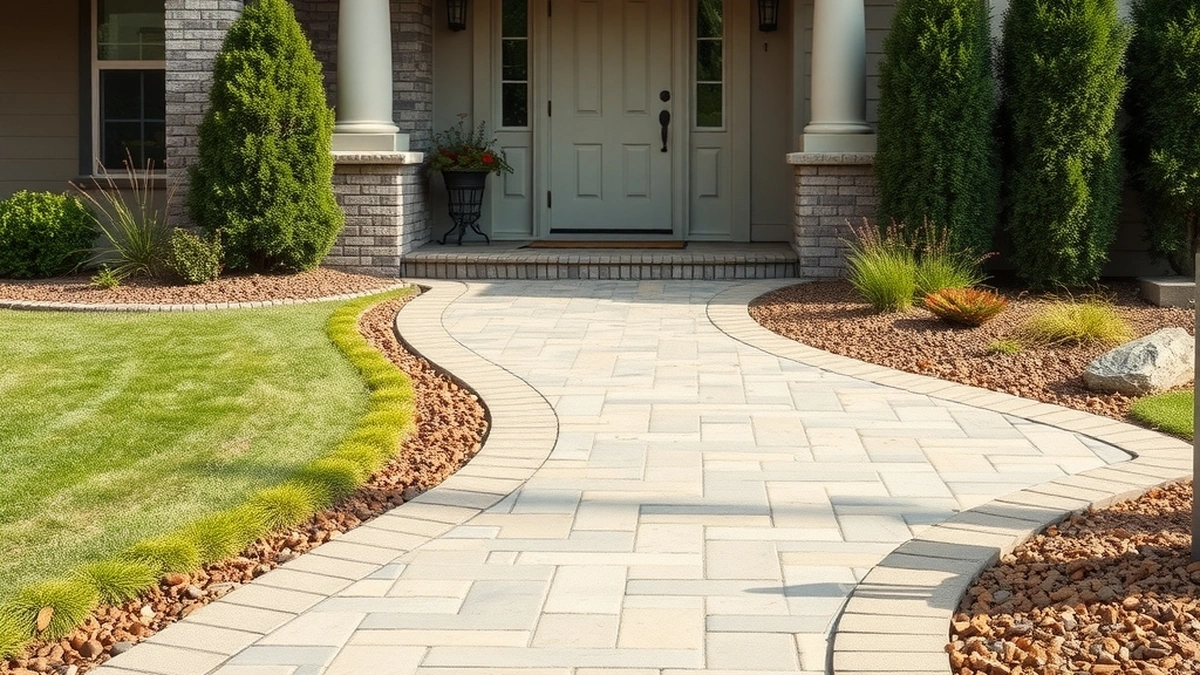
A paver walkway costs $8 to $30 per square foot installed, which is roughly $32 to $120 per linear foot at a 4-foot width. Short paths cost more per foot because of minimum job charges.
- Cost per square foot
- $8–$30
- Cost per linear foot, 4 ft wide
- $32–$120
- 40 ft walkway total
- $1,280–$4,800
- Typical minimum job
- $1,500–$2,500
Some links on this page are affiliate links.If you buy through them we may earn a commission at no extra cost to you. We do not accept payment for rankings. Read the full disclosure.
A paver walkway costs $8 to $30 per square foot installed, which works out to roughly $32 to $120 per linear foot at a 4-foot width. The per-foot number is the one homeowners remember, but width and job minimums move it more than material choice does on a path this small.
Cost per Linear Foot
A paver walkway is a narrow segmental path, usually 3 to 5 feet wide, built on 4 to 6 inches of compacted base with edge restraint on both sides. Linear feet are just square feet divided by width, so the arithmetic is simple.
At 4 feet wide, each linear foot is 4 square feet. Four square feet at $8 is $32 per foot; at $30 it is $120 per foot. At 3 feet wide the same rates give $24 to $90 per foot, and at 5 feet they give $40 to $150.
Material drives the spread. Concrete pavers at $8 to $15 per square foot produce $32 to $60 per foot at a 4-foot width. Brick at $10 to $20 produces $40 to $80. Travertine at $15 to $30 produces $60 to $120.
Width Is the Hidden Variable
| Width | Sq ft per linear ft | Per foot at $8 | Per foot at $15 | Per foot at $30 |
|---|---|---|---|---|
| 3 ft | 3 | $24 | $45 | $90 |
| 4 ft | 4 | $32 | $60 | $120 |
| 5 ft | 5 | $40 | $75 | $150 |
Most homeowners default to 4 feet without thinking about it, then discover the step from 3 to 5 feet adds 67 percent to the material and labor. Decide the width from use: a garden path can be 3 feet, a front entry should be at least 4, and a path that carries groceries or a wheelbarrow wants 5.
Cost by Walkway Length
| Length at 4 ft wide | Square feet | Installed total |
|---|---|---|
| 20 ft | 80 | $640–$2,400 |
| 40 ft | 160 | $1,280–$4,800 |
| 60 ft | 240 | $1,920–$7,200 |
These totals use the full $8 to $30 range and assume an accessible site with no demolition. A front walk from the driveway to the door at 40 feet is the most common residential size, and it prices between about $1,300 and $4,800 depending on material.
Small Jobs and Minimum Charges
This is where walkway budgets go sideways. A contractor has to mobilize a truck, deliver aggregate and pavers, and dedicate a crew for at least part of a day regardless of whether the path is 25 feet or 80.
A minimum job charge of $1,500 to $2,500 is common. On a 20-foot, 4-foot-wide walkway of 80 square feet, a $2,000 minimum works out to $25 per square foot — even though the underlying rate might be $12. That is not overcharging; it is the fixed cost of showing up.
Two ways around it: bundle the walkway with a patio or driveway so mobilization is shared, or build it yourself, which is one of the more reasonable DIY hardscape projects.
Curves, Steps, and Tight Access
A straight path is the cheapest geometry. Every curve adds cuts: the inside radius compresses, the outside radius opens, and units have to be trimmed on both sides. A gentle arc is manageable; a tight switchback can double the cutting time.
Steps add more. Each step needs a riser, a tread, and proper base under both, and code limits riser height. A three-step garden stair can add several hundred to well over a thousand dollars depending on width and materials.
Access matters too. A path along the side of a house with a 3-foot gate cannot receive pallets by forklift, so material moves by wheelbarrow. That is hours of labor a square-foot rate never shows.
What a Walkway Actually Needs
Under the pavers: 4 to 6 inches of compacted aggregate in 2-inch lifts, about an inch of bedding sand, edge restraint on both sides, and joint sand. Slope should run away from the house at roughly 1/8 inch per foot so water does not stand at the door.
Permeable walkways are an option where runoff matters, at $12 to $25 per square foot, and they need an open-graded base rather than standard aggregate. Pavers in grass is a cheaper alternative for a garden path where a full base is overkill.
DIY or Hire
- Measure the run in linear feet and multiply by the chosen width for square feet.
- Call 811 before digging, especially along a house where irrigation and utilities run.
- Excavate to pavers plus one inch of sand plus 4 to 6 inches of base.
- Compact base in 2-inch lifts, checking slope with a 4-foot level.
- Set edge restraint on both sides before laying the field.
- Lay from a string line, cut the curves, sweep joint sand, and compact once more.
A 40-foot walkway at 160 square feet is a weekend project for one person with a rented plate compactor. What you can and cannot do yourself covers the tool list and the failure points.
What Changes the Price Most
In order of impact: width, material, curves, access, and length. A 3-foot concrete path along an open lawn is the cheapest version of this project; a 5-foot travertine path with two steps and a tight side yard is the most expensive.
For the material side, concrete pavers cost breaks down the budget option, and paver patio cost shows how a walkway bundled with a patio shares mobilization. If the path is part of a larger front-yard plan, paver patio walkway design covers layout and proportion.
Frequently asked questions
How much does a paver walkway cost per foot?
At a 4-foot width, $32 to $120 per linear foot, based on $8 to $30 per square foot installed. Narrower paths cost less per foot; wider paths and curves cost more.
How wide should a paver walkway be?
Three feet is the minimum for one person, 4 feet feels comfortable and handles two people passing, and 5 feet suits a main entry or a path that doubles as a gathering space.
Why is my 25-foot walkway so expensive per foot?
Small jobs carry mobilization, delivery, and minimum crew charges that do not shrink with the path. A 25-foot walkway can price near a 50-foot one because the setup is the same.
How deep does a walkway base need to be?
Four inches of compacted aggregate is the practical minimum for foot traffic, with more where the subgrade is soft. Patios usually get 4 to 6 inches, and driveways need 8 to 12.
Can I save money by using gravel instead of pavers?
Gravel costs far less, but it needs edging, top-ups, and weed control, and it does not stay level under a downspout. Pavers cost more up front and require almost no annual material.
Does a curved walkway cost more?
Yes. Curves require cutting units on both sides or using a flexible edge, and the tighter the radius, the more cuts. A gently curved path adds labor; a tight S-curve adds a lot.
Sources
Some links are affiliate links.If you buy through them we may earn a commission at no extra cost to you. We do not accept payment for rankings. Read the full disclosure.