Paver Installation Cost: A Complete Guide
Get a clear breakdown of paver installation costs in the US. From materials to labor, learn how much your project will run.
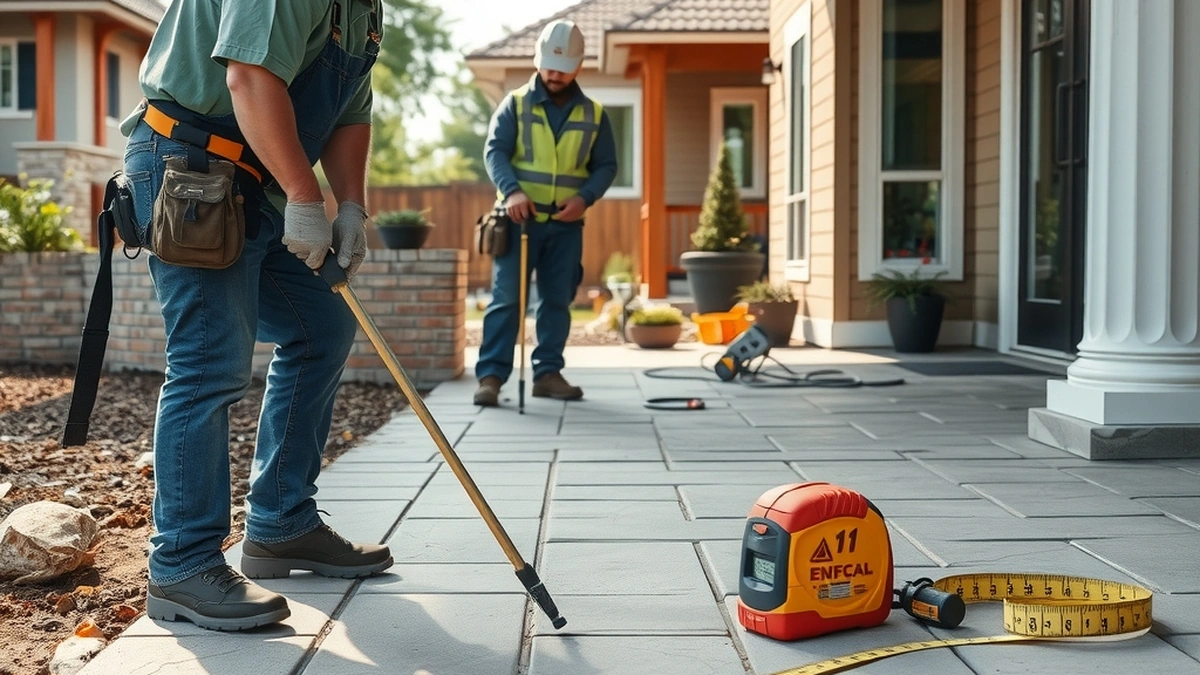
Expect to pay between $12 and $25 per square foot for paver installation, depending on material type, project size, and regional labor rates.
- Typical range
- Varies by system and site
- First step
- Measure the space and confirm the load
- Professional help
- Recommended for structural or electrical work
Some links on this page are affiliate links.If you buy through them we may earn a commission at no extra cost to you. We do not accept payment for rankings. Read the full disclosure.
Paver installation cost runs $12 to $25 per square foot for a complete job, with concrete pavers at the bottom of that band and travertine at the top. On a 400 sq ft patio that is $4,800 to $10,000, and the split between material and labor is rarely the split people expect. The base and the labor around it usually carry more of the bill than the units do.
What a Full Installation Covers
A complete installation is excavation, base, bedding, units, cutting, edge restraint, joint sand, compaction, and cleanup. A quote that names only “pavers and labor” is missing at least four of those, and the missing items are the ones that fail.
Depth matters. A patio base is typically 4 to 6 inches of compacted aggregate; a driveway base is deeper and the units are 80 mm instead of 60 mm. The same square footage can therefore have two very different prices and both be correct.
The Installed Rate by Material
| Material | Installed rate | 400 sq ft |
|---|---|---|
| Concrete pavers | $8–$15 per sq ft | $3,200–$6,000 |
| Brick pavers | $10–$20 per sq ft | $4,000–$8,000 |
| Permeable pavers | $12–$25 per sq ft | $4,800–$10,000 |
| Travertine pavers | $15–$30 per sq ft | $6,000–$12,000 |
Those are installed rates, not material prices, and they are estimates that shift with region and access. The multiplication is direct: 400 × $8 = $3,200 and 400 × $15 = $6,000.
Line Items on a 400 sq ft Patio
Take a concrete paver patio at the midpoint of $11.50 per sq ft, which totals $4,600. Here is how that money typically divides, as a planning estimate rather than a quote.
- Units at $3 to $6 per sq ft: $1,200 to $2,400.
- Base aggregate: 6 inches over 400 sq ft is 200 cubic feet, or 200 ÷ 27 = 7.4 cubic yards. At roughly $40 to $60 per cubic yard delivered, that is $296 to $444.
- Bedding sand: 1 inch over 400 sq ft is 33 cubic feet, a little over 1 cubic yard, roughly $50 to $90.
- Cutting, restraint, joint sand, compaction, and labor: whatever remains, about $1,700 to $3,000 depending on the layout.
The striking part is the third bullet. Labor and the small materials around the units are usually the largest single block, which is why a fancy paver on a cheap crew is a worse buy than a plain paver on a good one.
Base, Bedding, and Compaction
The base is placed in lifts — typically 2 to 4 inches at a time — and compacted between lifts. Dumping 6 inches and compacting once leaves the lower half loose, and loose base consolidates under the first season of traffic into the low dish that holds water.
Bedding is an inch of coarse sand, screeded level and not compacted before the units go down. Too much bedding and the pavers rock; too little and they sit on the aggregate and chip at the edges. This is a craft step, and it is the one most often rushed at the end of a long day.
Demolition and Haul-Away
Removing an existing surface is a separate cost. A concrete slab has to be broken and hauled, and the debris weighs more than the pavers going down. Expect a demolition and disposal line on any replacement job, quoted per job rather than per square foot, plus the cost of rebuilding whatever the old surface sat on.
Where the old patio was already failing, the base under it is usually the reason, so demolition often uncovers base repair at $4 to $8 per sq ft. On 400 sq ft that is $1,600 to $3,200, and it is the number that turns a $4,600 job into a $7,800 one.
Haul-away has a second cost that nobody quotes: the dumpster has to sit somewhere. If the only flat spot is the street, check whether the permit allows it, because a failed inspection on the morning the crew arrives is an expensive way to learn the rule.
Steps, Borders, and Cuts
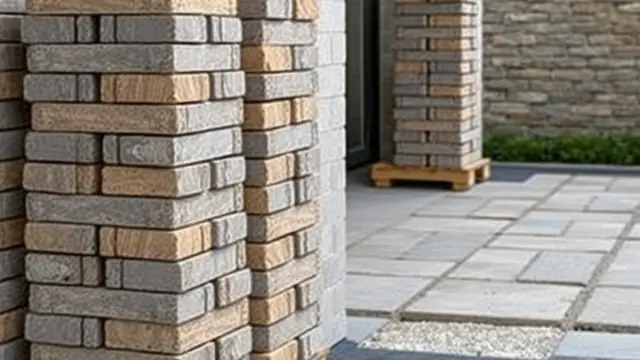
Steps, pillars, seat walls, and curved borders are priced by the linear foot or as a lump sum, because they are carpentry and masonry rather than paving. A soldier course around the perimeter adds cutting time but hides the cut edges, and it is one of the visible differences between a good job and an average one.
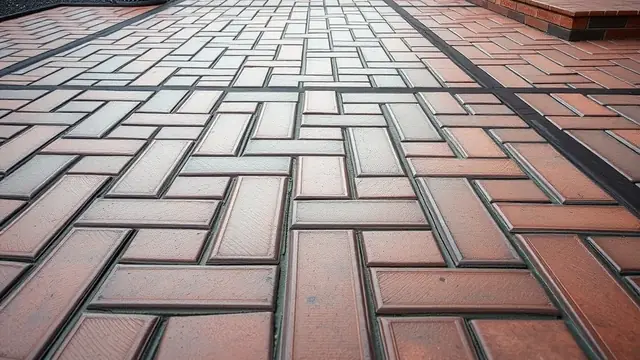
Complex patterns cost more than the pattern looks like it should. Herringbone and basketweave generate more offcuts than a running bond, and diagonal layouts generate more again.
Sealing and the First Year
Sealing is optional and runs $1 to $3 per sq ft, so $400 to $1,200 on 400 sq ft. It should wait a season: the pavers need to dry, any efflorescence needs to finish coming out, and the joint sand needs to settle. Sealing a new patio in the same week it is finished is how cloudy films happen.
Expect some joint sand loss in the first year regardless. Top it up, compact again, and the surface settles into itself.
Comparing Bids in Five Steps
- Put the square footage and the paver thickness in millimeters at the top of every bid.
- Require base depth in inches and the compaction method in writing.
- Ask whether demolition, haul-away, and base repair are included or excluded.
- Check that edge restraint and joint sand are line items rather than assumptions.
- Price sealing separately so the three bids compare the same scope.
A bid that is 30 percent cheaper almost always has one of those five missing. Ask which one before deciding it is a bargain.
For the per-foot rate in isolation, see patio pavers cost per square foot; for total project budgets, paver patio cost. The base specification is in paver base preparation, and the installation sequence itself is in paver patio installation. If you are weighing a crew against doing it yourself, diy paver patio is the honest version of that comparison.
Frequently asked questions
What is the most important measurement?
Start with the ceiling or clearance number; it decides which systems can fit.
What does a typical project cost?
Costs vary by system and site access; the guide shows the line items and a planning range.
Can I install this myself?
Some tasks are DIY-friendly, but structural, electrical, and load-bearing work should be done by a licensed professional.
How long does installation take?
A simple setup is a weekend; a full build with electrical or structural work can take several weeks.
What should I check before buying?
Confirm dimensions, load ratings, and the manufacturer's installation requirements for your exact model.
Where can I find local help?
Ask a licensed contractor or installer who has worked with the same system and can inspect your site.
Sources
Some links are affiliate links.If you buy through them we may earn a commission at no extra cost to you. We do not accept payment for rankings. Read the full disclosure.